
Concrete vs Asphalt Driveway: An Honest Comparison
March 31, 2026
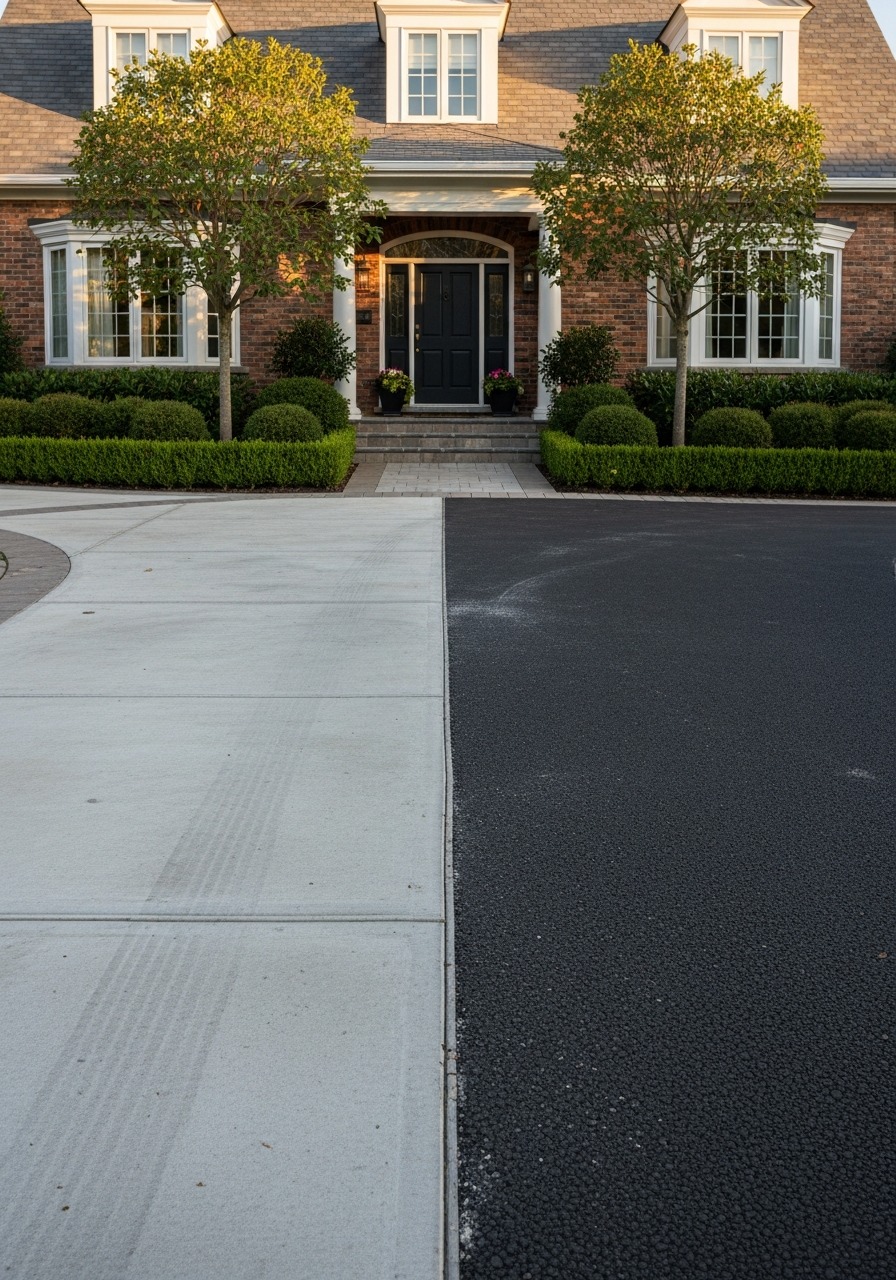
Concrete driveways cost $4–8 per sq ft installed; asphalt runs $3–6. On a 500 sq ft driveway, concrete costs $500–1,000 more upfront — but lasts 30–50 years versus 15–30 for asphalt. Which wins depends on your climate, budget, and how much ongoing maintenance you're willing to do.
Upfront Cost: Asphalt Wins
Asphalt driveways cost $3–6 per sq ft installed; concrete runs $4–8 per sq ft. On a standard two-car driveway (400–600 sq ft), asphalt saves roughly $500–1,200 upfront. If budget is the primary constraint, asphalt is the practical choice. The cost gap narrows significantly over time once you factor in asphalt's maintenance requirements — seal coating every 3–5 years and occasional crack filling add $200–600 per round.
Lifespan: Concrete Wins
A properly installed concrete driveway lasts 30–50 years with minimal maintenance. Asphalt typically lasts 15–30 years before requiring replacement. In equivalent climates with equivalent installation quality, you'll replace an asphalt driveway once or twice in the time a concrete one still has years left. Over a 30-year horizon, the total cost of ownership often tilts toward concrete despite the higher upfront price.
Climate Matters: Asphalt Handles Cold Better
This is where asphalt has a genuine advantage. Asphalt is flexible — it contracts and expands with freeze-thaw cycles without cracking as easily as rigid concrete. In climates with harsh winters and repeated freeze-thaw cycles, asphalt holds up better to that stress. Concrete in those climates requires properly placed expansion joints and quality installation to avoid surface cracking. If you're in Minnesota, Wisconsin, or similar climates, asphalt's flexibility is a meaningful advantage.
Hot Climates: Concrete Wins
In hot, sunny climates, the equation reverses. Asphalt softens in extreme heat — it can become tacky underfoot in direct summer sun and is prone to rutting under heavy vehicle weight. Concrete holds its structure in heat and stays harder underfoot. In Arizona, Nevada, or the deep South, concrete's stability in heat is the more important variable. Lighter-colored concrete also reflects more heat, reducing surface temperature compared to black asphalt.
Appearance and Finish Options
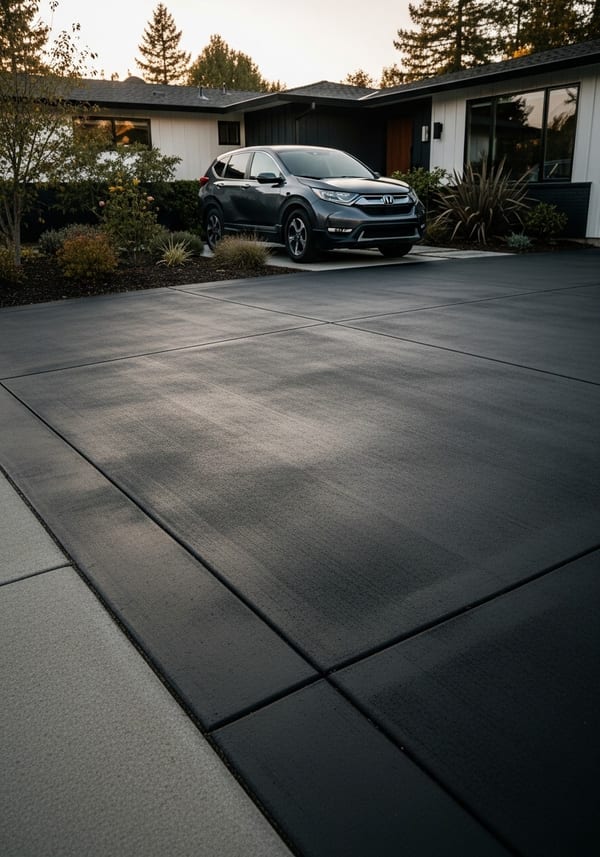
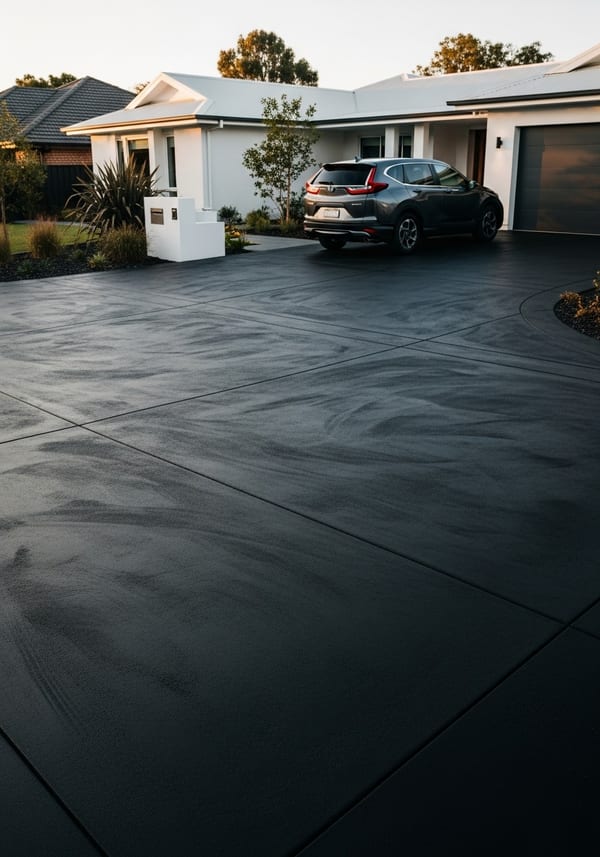
Concrete has the clear advantage on aesthetics. Plain broom-finish concrete looks clean and intentional. Stamped concrete ($12–20/sq ft) adds pattern and color that asphalt simply can't replicate. Asphalt is available in standard black — which looks good when freshly sealed but fades to gray-brown over time. If curb appeal matters, concrete wins on every available finish option. Tools like PourCanvas let you preview how different concrete finishes would look on your specific driveway before you commit.
Get the full inspiration pack — free.
30+ curated patio, driveway and walkway design images delivered to your inbox.
Maintenance: Asphalt Requires More Attention
Concrete needs resealing every 5–10 years; prompt attention to cracks prevents water infiltration. Asphalt needs seal coating every 3–5 years ($200–500 per application), crack filling as needed, and eventual resurfacing. Asphalt's maintenance cycle is more frequent and more involved — over 25 years, seal coating alone adds $1,200–3,000 to total cost. Both materials require crack repair — but concrete cracks are more difficult to make invisible, while asphalt patches are more forgiving. If you're also planning a patio or walkway in concrete, bundling all projects with one contractor typically saves 10–15% on mobilization.
Which Should You Choose?
Choose concrete if: you're in a hot or mild climate, want design options beyond plain black, and plan to stay in the home long enough to recoup the upfront premium. Choose asphalt if: you're in a cold climate with hard freeze-thaw cycles, want the lowest possible upfront cost, or plan to sell within 5–10 years. The higher upfront cost of concrete makes the most sense as a long-term investment — asphalt makes sense when the budget ceiling is firm and climate conditions favor flexibility. One underrated factor: if you're also planning a concrete patio or front walkway, choosing concrete for the driveway keeps all surfaces in the same material family — same contractor, same sealer products, same maintenance schedule. An asphalt driveway adjacent to a concrete walkway creates an odd aesthetic discontinuity that most homeowners notice over time even if they can't pinpoint why.
Total Cost of Ownership: 25-Year Comparison
On a 500 sq ft driveway over 25 years: concrete runs $2,000–4,000 installation + $500–1,500 maintenance = $2,500–5,500 total. Asphalt runs $1,500–3,000 installation + $2,000–5,000 seal coating + $1,000–2,000 resurfacing at year 15 = $4,500–10,000 total. The 25-year cost math typically favors concrete — but the assumption is no major cracking on the concrete side. In northern freeze-thaw climates, concrete cracking repair can add $1,000–3,000 to the 25-year total, narrowing the gap. Get a local contractor's input on which material performs better in your specific climate before making a decision based on national averages alone.
Front Walkway and Patio: Concrete Keeps the Family Together
One of the practical advantages of choosing concrete for a driveway is that it creates material consistency with a concrete patio or front walkway — all surfaces can be maintained by the same contractor, on the same resealing schedule, with compatible products. An asphalt driveway adjacent to a concrete patio requires different maintenance products, different contractors, and produces an aesthetic mismatch that most homeowners notice even if they can't articulate why. If you're planning a driveway replacement alongside a patio or walkway project, concrete on all surfaces delivers the most cohesive result and simplifies long-term ownership.
Asphalt or Concrete: What Buyers Prefer
Buyer preferences differ by market and home price point. In warm-climate markets (California, Florida, Texas), stamped or integrally colored concrete driveways are strongly preferred — they signal care and design intention. In northern markets where freeze-thaw cracking is common, some buyers view concrete driveways with skepticism and prefer asphalt for its flexibility and lower repair costs. Talking to a local real estate agent about driveway material preferences in your specific market before replacing a driveway is worthwhile — regional buyer preferences vary more than most homeowner guides acknowledge. For homes in the $500,000+ range in most markets, concrete is broadly preferred; below that threshold, the buyer pool is more accepting of asphalt as long as it's well-maintained.
The AI tool is almost ready.
Drop your email and we'll notify you the moment it launches — free to use.