
Driveway Resurfacing: What's Worth the Money?
March 27, 2026
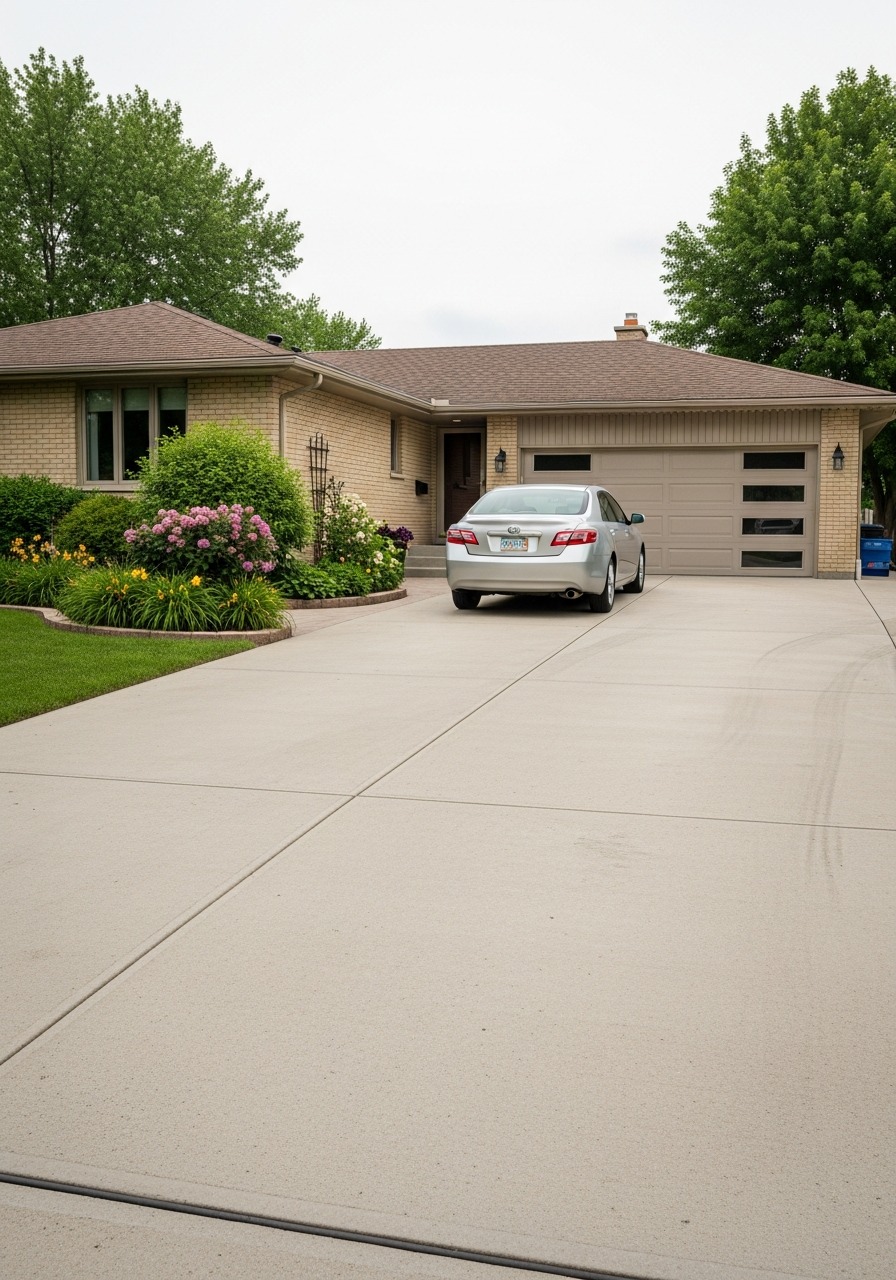
Driveway resurfacing costs $2–8 per sq ft depending on method. Full replacement runs $4–20 per sq ft. On a 400 sq ft driveway, resurfacing saves $800–4,800 over replacement — if the base qualifies. The key word is "if": overlaying a failing base just delays the problem. Here's a straight comparison of concrete overlay, asphalt resurfacing, and full replacement so you can make the right call. The same structural assessment logic applies to patios and walkways.
Concrete Overlay
A concrete micro-topping or overlay applied over an existing concrete or asphalt driveway costs $3–8 per sq ft. It bonds to the existing surface and can be stamped, stained, or textured. It works only on structurally sound bases — overlaying a cracked, heaving slab just delays the problem. Minimum overlay thickness is typically 1/4"–3/8" for durability under vehicle traffic; thinner applications chip and delaminate faster.
Asphalt Resurfacing
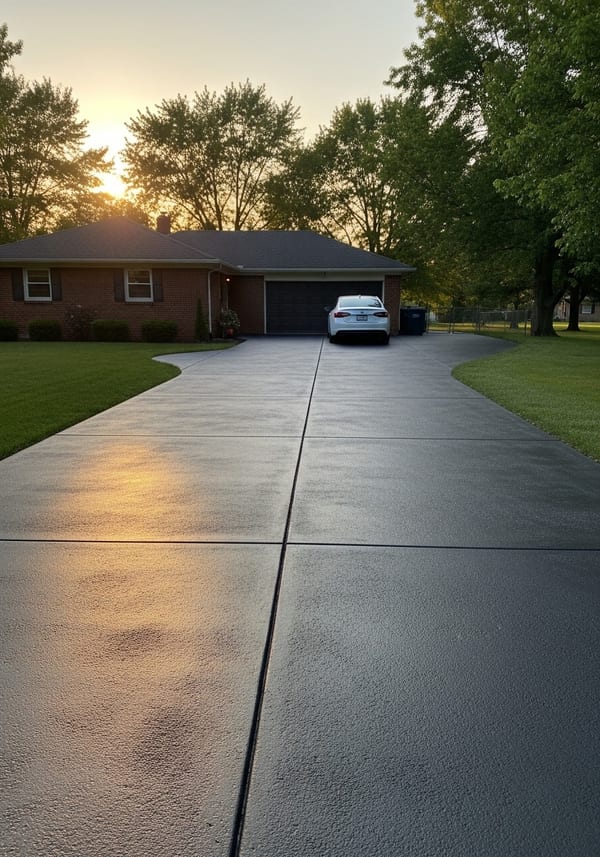
Asphalt driveways can be resurfaced (new layer of asphalt over existing) for $2–5 per sq ft. It's the cheapest resurfacing option but doesn't address any base issues. It also won't help if the existing asphalt has significant cracking — those cracks will reflect through the new layer within a season or two. Asphalt resurfacing makes the most sense as a temporary measure when the driveway is structurally sound but aesthetically worn.
Full Concrete Replacement
If the existing surface or base is compromised, replacement is the right call. New concrete driveways cost $4–8 per sq ft for plain broom finish, $8–14 for exposed aggregate, and $12–20 for stamped. It's more expensive upfront but avoids spending resurfacing money on a surface that continues to fail. If you're also planning a patio or front walkway upgrade, bundling all three into one replacement project saves on mobilization and ensures color consistency.
When to Resurface vs Replace
Resurface if: the driveway is cosmetically worn but structurally intact, cracks are hairline (under 1/4" wide) and stable, and the surface drains correctly without pooling. Replace if: cracks are wider than 1/4" or actively shifting, the surface heaves or settles creating height differentials, or drainage is compromised and water runs toward the foundation.
Crack Repair Before Resurfacing
Any resurfacing job requires crack repair as a first step. Cracks filled with polyurethane or epoxy filler must cure for 24–48 hours before the overlay goes down. Skipping this step leads to the cracks telegraphing through the new surface — the most common reason resurfacing jobs fail within the first year. For cracks wider than 1/4", saw-cutting and routing before filling creates a better bond.
Get the full inspiration pack — free.
30+ curated patio, driveway and walkway design images delivered to your inbox.
Driveway Resurfacing Cost vs. Full Replacement
On a 500 sq ft concrete driveway: resurfacing with a plain overlay costs $1,500–4,000; a decorative stamped overlay runs $4,000–7,500; full replacement costs $2,000–10,000 depending on finish. The resurfacing savings are meaningful at the low end — a $3/sq ft plain overlay saves $1,500–3,000 versus a new pour. At the decorative end, the savings shrink: a stamped overlay at $12–15/sq ft isn't much cheaper than a new stamped pour at $12–20/sq ft, and the overlay won't perform or last as long. The decision rule: use resurfacing for cosmetic renewal of a structurally sound slab; use full replacement for any slab with structural issues, drainage problems, or significant thickness inconsistency.
Resurfacing a Driveway in Conjunction with a Patio or Walkway
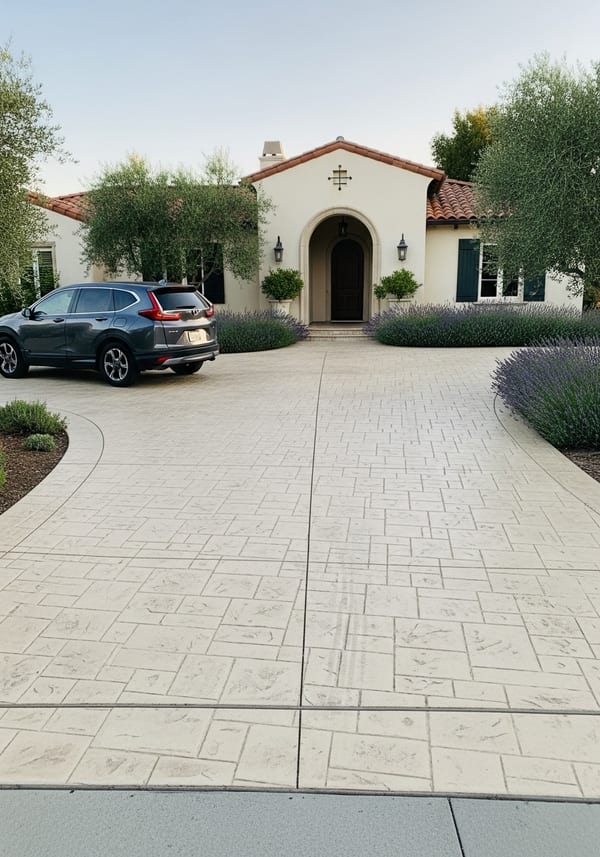
If the driveway, front walkway, and patio were poured at different times with different finishes, a resurfacing project is an opportunity to unify them visually. A coordinated overlay across all three surfaces using the same material, color, and texture creates the visual coherence of a planned exterior — even if the underlying slabs are different ages. The overlay cost for all three surfaces bundled in one project is typically 15–20% lower per-sq-ft than three separate jobs. The timing window matters: all three surfaces need to be resurfaced in the same season for the color to match, since even the same product applied months apart will show some variation in weathering.
When to Resurface vs. Replace: A 4-Question Test
Answer these four questions before calling a resurfacing contractor. (1) Are any cracks wider than 1/4" or showing height differential between sides? If yes, the base has moved — overlay won't fix it. (2) Does water pool on the surface? If yes, drainage is compromised — overlay won't fix it. (3) Is more than 25% of the surface spalled, pitted, or deteriorated to depth? If yes, structural integrity is insufficient for overlay adhesion. (4) Does the surface flex when driven on? (rare, but indicates base failure.) Pass all four: resurfacing is viable. Fail any one: replace the slab. Most driveways that are just cosmetically worn — dull color, minor surface crazing, light staining — pass all four and are ideal resurfacing candidates.
Asphalt Driveway Resurfacing vs. Concrete
Asphalt driveways can be resurfaced (new asphalt layer over existing) for $2–5/sq ft — less than a concrete overlay. But asphalt-over-asphalt resurfacing doesn't address base problems and doesn't change the surface to a more durable material. Converting an asphalt driveway to concrete requires full removal of the existing asphalt before pouring — you can't overlay concrete on asphalt reliably, as the two materials expand and contract at different rates and the overlay cracks within 1–3 years. Budget full removal at $1–3/sq ft on top of the new concrete cost. The total cost of asphalt removal plus a new concrete driveway is higher than replacing asphalt with new asphalt, but the concrete result lasts 30–50 years versus 15–20 for asphalt — often the better long-term value on a property you plan to hold long-term.
Bundling Driveway Resurfacing with Walkway and Patio Work
If you're already calling a concrete contractor for driveway resurfacing, it's worth getting quotes for the front walkway and patio at the same time. Mobilization costs — equipment transport, crew travel, mix truck minimums — are fixed per job regardless of surface area. Bundling three surfaces into one project typically reduces per-sq-ft cost by 10–20% compared to three separate jobs. It also ensures color and texture match across the connected surfaces, which is hard to guarantee if you space jobs out over multiple seasons. A coordinated driveway, walkway, and patio resurfacing project is one of the most cost-effective ways to unify an exterior's appearance in a single season.
The AI tool is almost ready.
Drop your email and we'll notify you the moment it launches — free to use.