
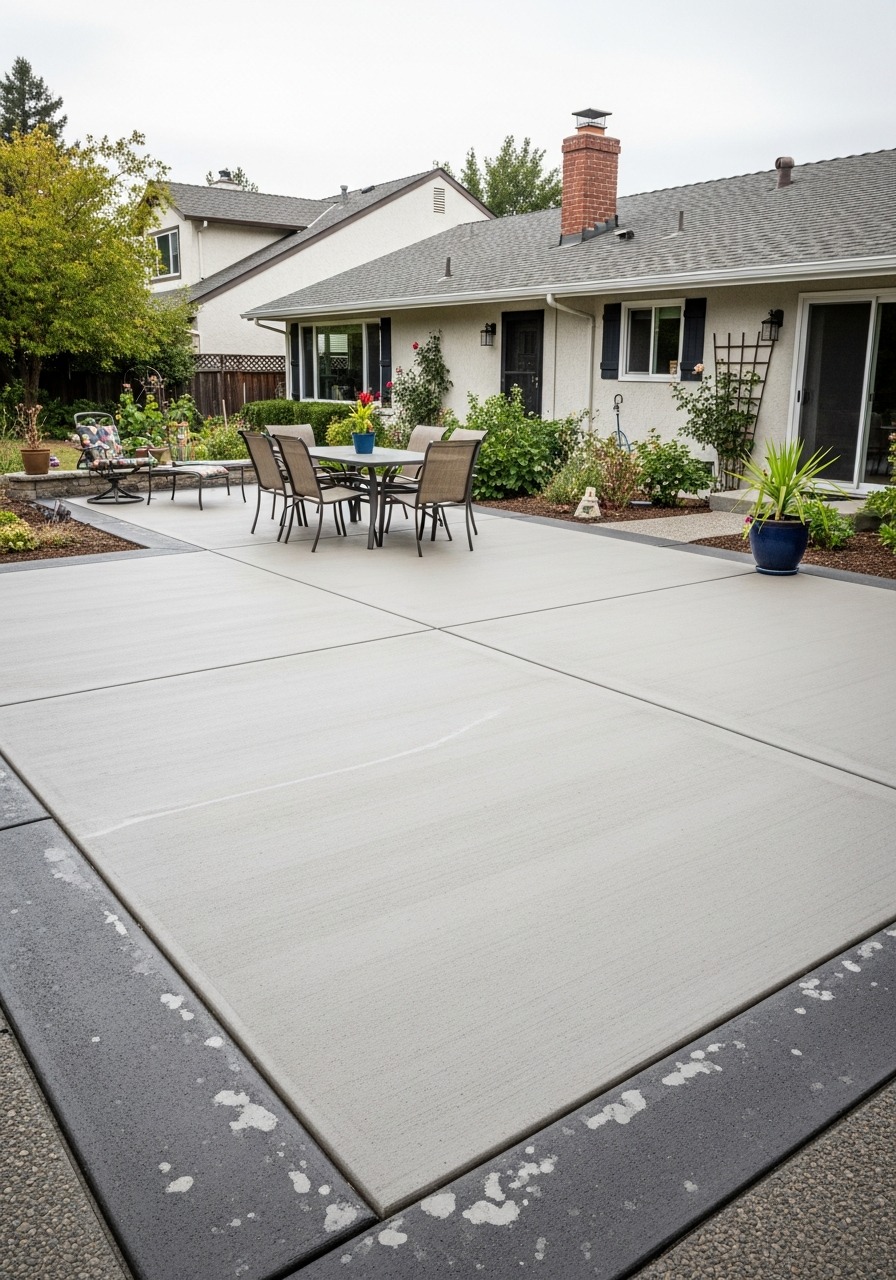
Should You Resurface or Replace Your Concrete Patio?
March 27, 2026
Resurfacing a concrete patio costs $3–15 per sq ft depending on finish. Full replacement runs $6–18. On a 300 sq ft patio, that's a savings of $900–3,000 if the slab qualifies. The catch: resurfacing only works when the existing slab is structurally sound. Here's how to assess yours and make the right call — the same decision framework applies to concrete driveways.
What Resurfacing Actually Is
Concrete resurfacing means applying a thin overlay (typically 1/4"–3/8") of a polymer-modified concrete mix over your existing slab. The overlay bonds to the existing surface and can be stamped, textured, or stained to look like new concrete.
When Resurfacing Works
Resurfacing is appropriate when: the existing slab is structurally sound (no major cracks, no heaving), the surface is just cosmetically worn, stained, or spalled, and the slab is level and properly draining. Cosmetic deterioration is what overlays fix — not structural problems.
When to Replace Instead
Replace the slab if: there are cracks wider than 1/4" or cracks that are shifting (indicating soil movement), the slab has heaved or settled unevenly, water pools on the surface (drainage problem), or more than 25% of the surface is spalled or deteriorated. Overlaying a bad slab just delays the inevitable.
Cost Comparison: Resurface vs Replace
Resurfacing typically costs $3–7 per sq ft for a basic overlay, or $8–15 per sq ft for a decorative stamped overlay. Full replacement runs $6–18 per sq ft. On a 300 sq ft patio, resurfacing saves $900–3,000 over replacement — a meaningful difference if the slab qualifies.
DIY vs Contractor
Basic resurfacing products exist for DIY use, but the prep work (cleaning, etching, crack repair) determines whether the overlay bonds and lasts. Poorly prepped surfaces delaminate within a year. Decorative overlays with stamping or staining are almost always contractor work — the timing and technique require experience.
Get the full inspiration pack — free.
30+ curated patio, driveway and walkway design images delivered to your inbox.
How to Assess Your Existing Slab: A 4-Point Check
Before calling a resurfacing contractor, assess the slab yourself. Check 1 — crack type: hairline cracks (under 1/8") on a level slab are resurfaceable; cracks wider than 1/4" or with height differential between sides are structural and require more than an overlay. Check 2 — drainage: does water pool on the surface? If yes, the slab may have settled unevenly and an overlay won't fix the drainage problem. Check 3 — spalling: is the surface flaking, pitting, or crumbling? Light surface scaling is resurfaceable; if the paste has deteriorated through more than 1/4" of depth, structural integrity is compromised. Check 4 — delamination: tap the surface with a metal object — a hollow sound indicates the existing concrete surface is separating from the base and won't support a bonded overlay. Passing all four checks means resurfacing is a viable option. Failing any one of them, full replacement is the more reliable path.
Resurfacing Cost vs. Replacement: The Real Numbers
On a 300 sq ft patio, concrete resurfacing costs $900–4,500 ($3–15/sq ft). Full replacement runs $1,800–5,400 ($6–18/sq ft). The cost overlap at the high end of resurfacing and low end of replacement is real — a decorative stamped overlay at $12–15/sq ft isn't much cheaper than a fresh stamped pour at $12–18/sq ft, and the overlay won't last as long. The resurfacing savings are most meaningful at the budget end: a $3–7/sq ft plain overlay ($900–2,100 for 300 sq ft) is genuinely half the cost of a new plain slab. At the decorative end of the range, weigh whether the overlay's 10–15 year lifespan justifies paying 80–90% of replacement cost. Driveways follow the same math — the savings from resurfacing a 500 sq ft driveway are $1,500–5,000 depending on finish, but only if the base qualifies.
Decorative Overlay Options for Patios
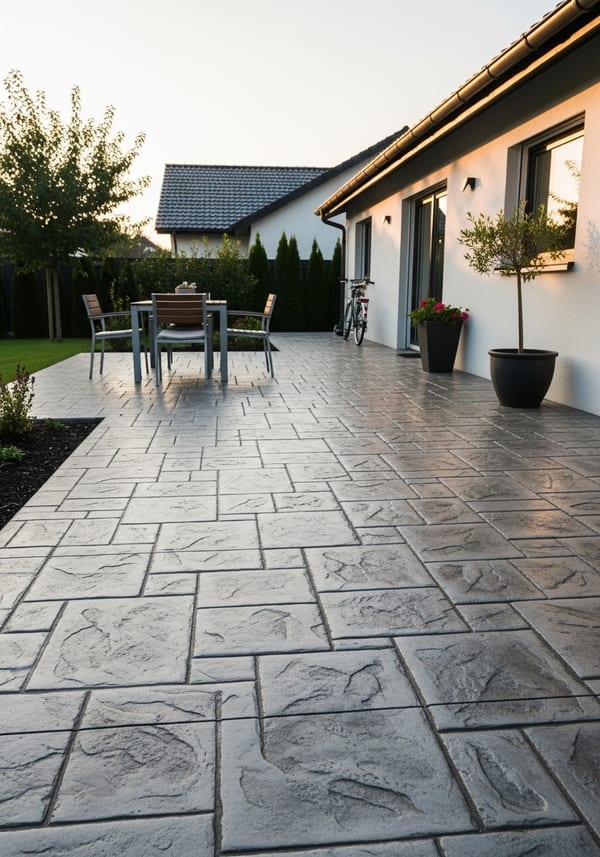
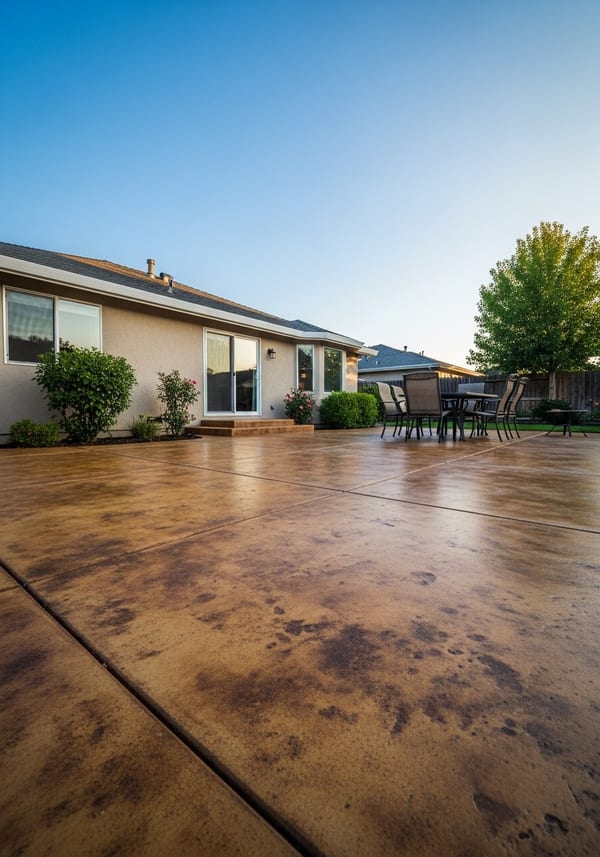
A resurfacing overlay isn't just a plain grey refresh — it can be stamped, stained, or given an exposed aggregate finish. Micro-topping overlays (1/8"–3/16" thick) applied with a trowel can accept acid stain or water-based stain after curing. Stampable overlays (3/8"–1/2" thick) can be stamped with any standard concrete pattern during the application window. Spray-applied textured coatings can replicate broom finish, aggregate texture, or a stone-spray appearance. The decorative options are genuinely broad — homeowners who assume resurfacing means "plain grey patch" are often surprised by what's achievable. PourCanvas can show you what different overlay finishes would look like on your specific patio before you commit to a contractor.
Timing and Seasonal Considerations
Concrete overlays are temperature-sensitive. Application in temperatures below 50°F or above 95°F risks poor bonding and premature curing. In most U.S. climates, spring and fall are the best windows for resurfacing work. Summer afternoon heat in southern states can cause the overlay to cure faster than the installer can work it. Winter resurfacing in cold climates requires heated enclosures — which adds cost and is rarely worthwhile on a residential project. Plan resurfacing in the shoulder seasons to get the best material performance and the most competitive contractor pricing. If you're also resurfacing a driveway or walkway at the same time, bundling both surfaces in a single contractor visit spreads the mobilization cost and typically reduces the per-sq-ft rate by 15–20%.
Self-Leveling Overlays vs. Trowel-Applied: Which to Choose
Two main application methods exist for concrete overlays. Self-leveling overlays are poured and flow to a flat surface — they require minimal labor once mixed but depend on proper perimeter forming to contain the material. They're the right choice for slabs that are relatively flat and only need a fresh surface. Trowel-applied micro-toppings are hand-worked and require more skill to apply evenly, but they're better suited to surfaces with minor undulations and work well for thin (1/8") applications on sound concrete. Cost difference: self-leveling overlays typically run $4–8/sq ft; micro-toppings run $3–6/sq ft with an experienced applicator. Both can be stained or sealed after curing. For driveways, a thicker trowel-applied overlay (3/8"–1/2") that can accept vehicle weight is the standard; for patios, thin micro-topping is often sufficient unless the surface is heavily pitted.
The AI tool is almost ready.
Drop your email and we'll notify you the moment it launches — free to use.