
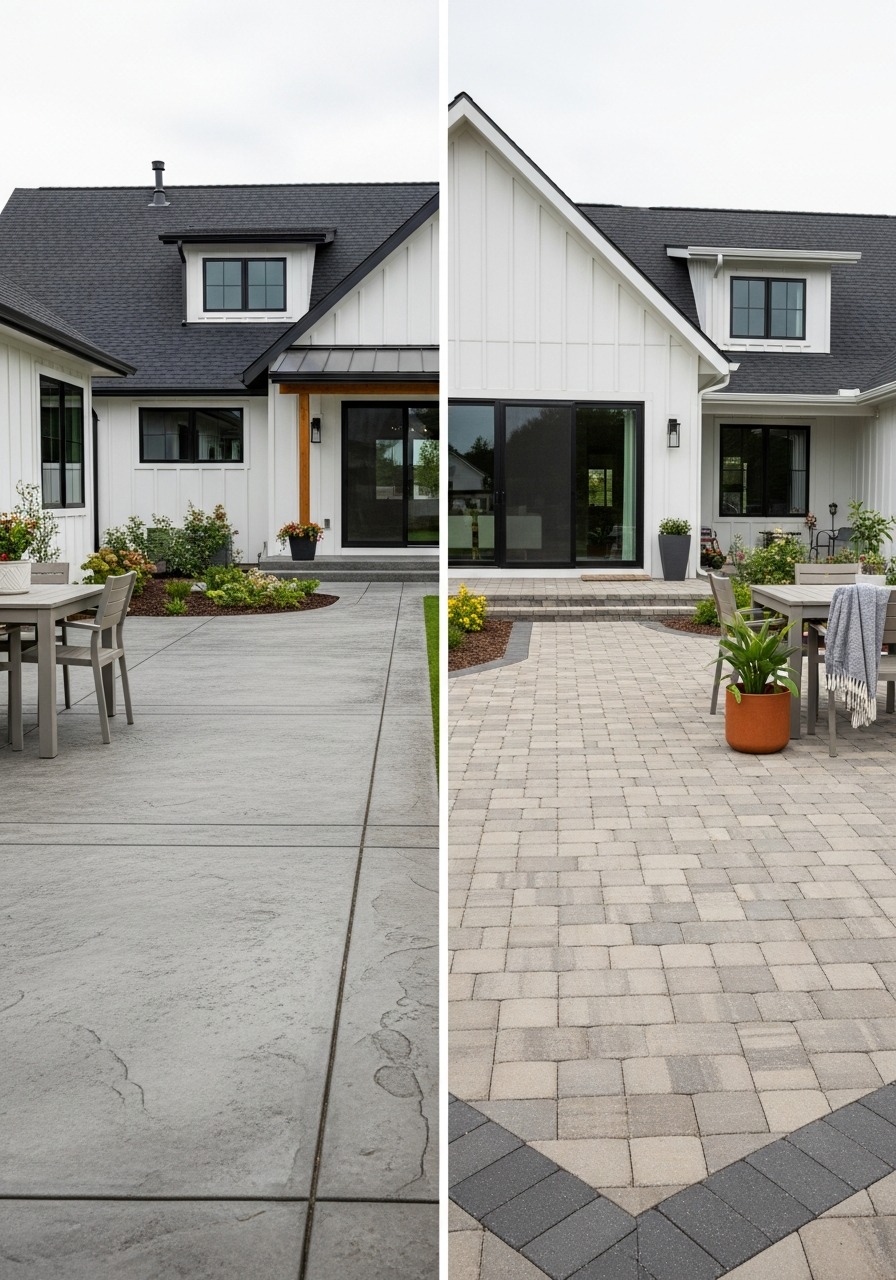
Concrete Patio vs Pavers: An Honest Comparison
March 27, 2026
Concrete patios cost $6–18 per sq ft installed. Paver patios run $15–30 per sq ft. On a 400 sq ft patio, that's a difference of $3,600–$4,800 at the low end — before you factor in repairs, maintenance, and longevity. Both materials are legitimate choices. This comparison tells you which is right given your budget, climate, and how much you care about long-term repairability. The same logic applies to concrete vs. paver driveways.
Cost: Concrete Wins
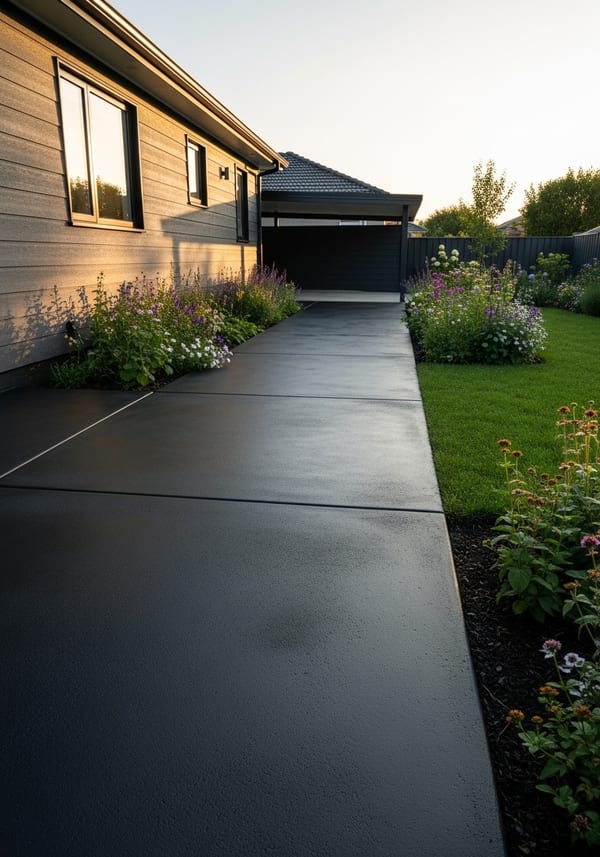
A poured concrete patio runs $6–18 per sq ft installed depending on finish. Paver patios cost $15–30 per sq ft. On a 400 sq ft patio, that's a difference of $3,600–$4,800 at minimum. Concrete's lower cost is the single biggest reason most homeowners choose it.
Repairs: Pavers Win
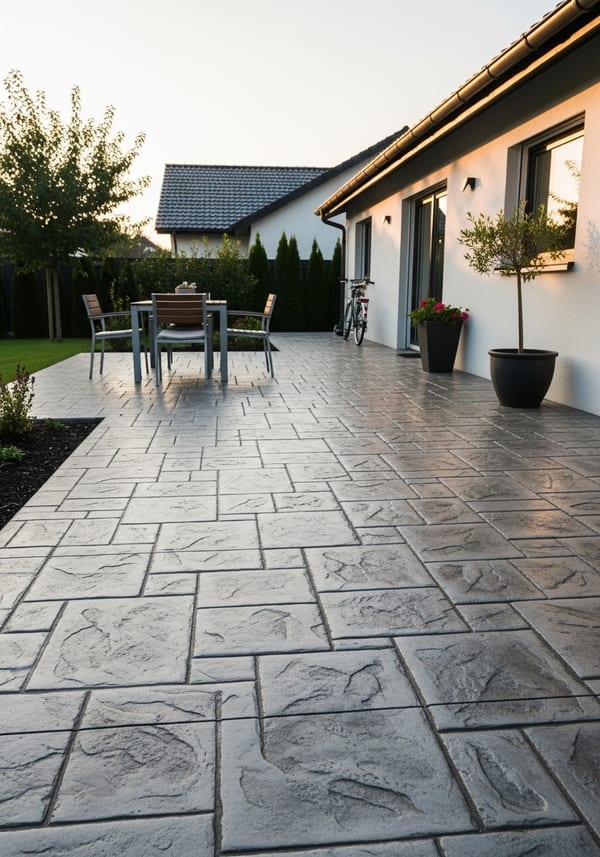
This is where pavers pull ahead. A cracked concrete slab is difficult and expensive to repair invisibly — patches almost always show. A cracked paver can be lifted and replaced with a matching unit in an hour. If you're in a climate with hard freeze-thaw cycles, that repairability matters.
Maintenance: Draw
Both require periodic maintenance. Concrete needs resealing every 2–3 years. Pavers need joint sand replenishment and occasional re-leveling of sunken units. Neither is maintenance-free — but neither requires significant ongoing expense if you stay on schedule.
Appearance: Depends on Finish
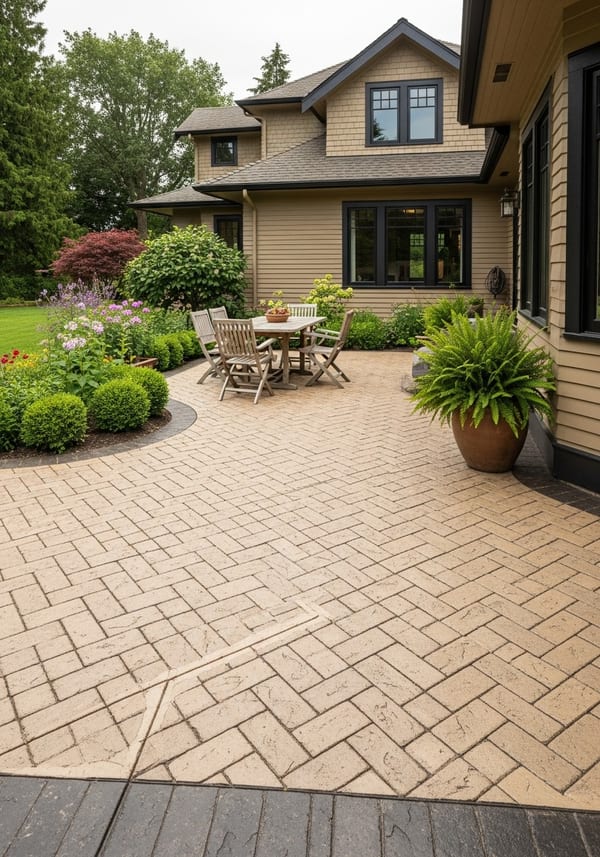
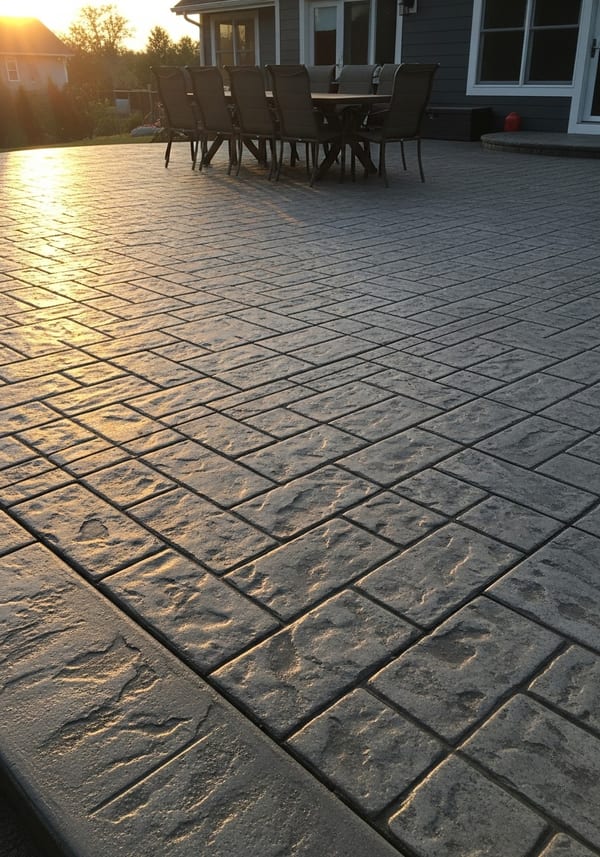
Plain concrete looks plain. Stamped and colored concrete can look exceptional. Pavers naturally have variation and texture. Up close, high-quality pavers have a depth and authenticity that stamped concrete doesn't fully replicate — but from a normal outdoor viewing distance, the difference shrinks considerably.
Longevity
Both last 25–50 years with proper installation and maintenance. Concrete is more vulnerable to cracking from tree roots and soil movement. Pavers flex slightly and tend to handle ground movement better — individual units shift rather than the whole surface cracking.
Get the full inspiration pack — free.
30+ curated patio, driveway and walkway design images delivered to your inbox.
The Bottom Line
Choose concrete if: you have a moderate budget, want a clean/modern look, and aren't in a severe freeze-thaw climate. Choose pavers if: you're willing to pay more upfront, want easy long-term repairability, or have an irregular space where the flexibility of individual units is an installation advantage.
Concrete vs. Pavers for a Driveway
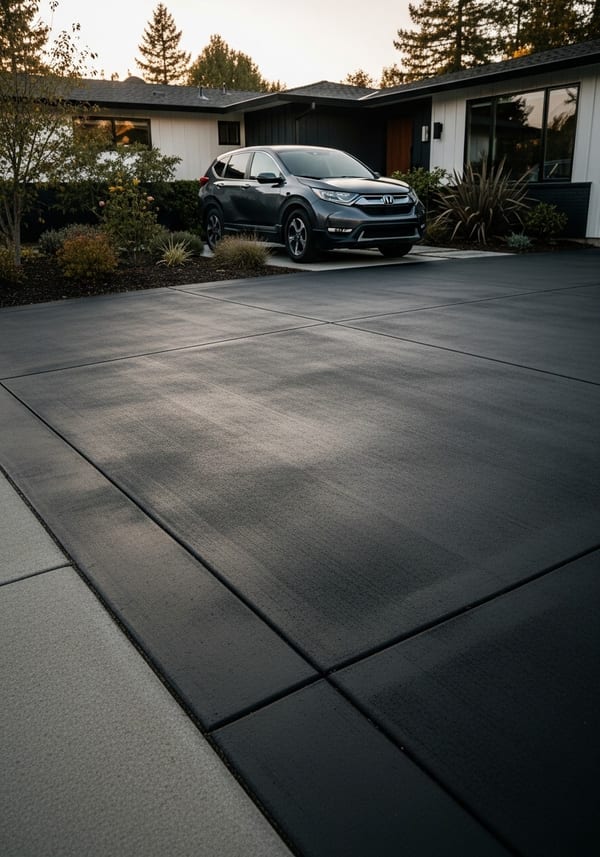
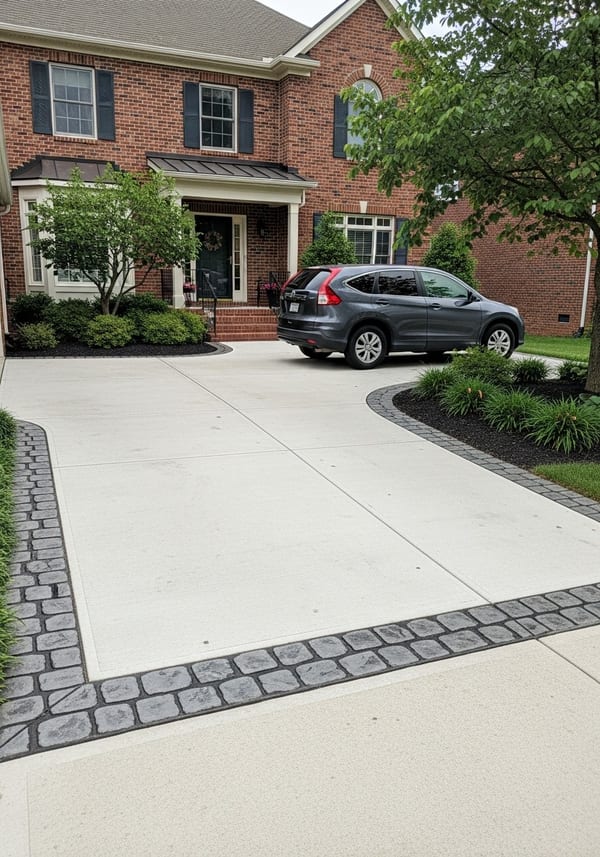
The same comparison plays out on driveways, with one important difference: vehicle weight. Pavers on a driveway require a mechanically compacted base that costs more than the typical patio base preparation — improper base prep leads to uneven settling under vehicle load. Concrete driveways are less sensitive to base quality variations. In cold climates, paver driveways also require more aggressive joint sand replenishment because road salt, snowplow passes, and repeated freeze-thaw cycles disturb the joint material faster than on a sheltered patio. For driveways in northern climates, sealed concrete is often the more practical long-term choice even for homeowners who prefer pavers aesthetically.
Concrete vs. Pavers for a Walkway
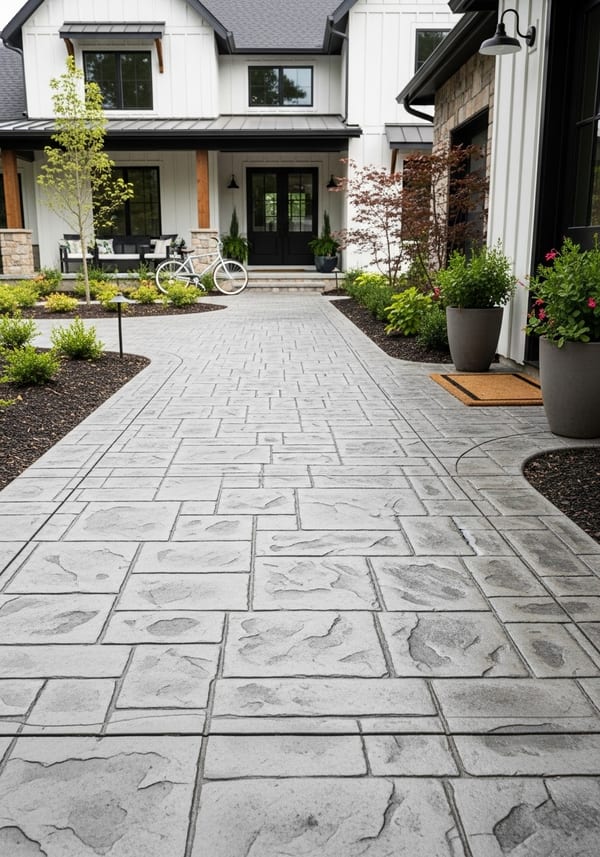
For front walkways, the pavers-vs-concrete decision is more evenly balanced than for patios. Natural stone or clay brick pavers on a walkway ($20–35/sq ft) have a texture and authenticity that reads well at close range — important because walkways are the surface visitors interact with most closely. Stamped concrete ($12–18/sq ft) replicates the look convincingly from 5+ feet away. For a primary front entry on a higher-value home, real stone or brick pavers on the walkway can be a worthwhile premium. For most residential applications, stamped concrete is the stronger value — half the cost, indistinguishable from the street, and lower long-term maintenance than jointed pavers in cold climates.
Concrete Maintenance Over Time: 10-Year Timeline
Year 1: seal new concrete after 60-day cure. Years 2–3: inspect surface; reseal stamped or colored finishes if water no longer beads on the surface. Years 4–5: fill any hairline cracks with polyurethane filler before winter if in a freeze-thaw climate. Years 6–10: the patio, driveway, and walkway continue to require periodic sealing; properly maintained surfaces should show minimal deterioration. Year 10+: some surface wear and minor cracking is normal; a resurfacing overlay ($3–8/sq ft) can refresh a cosmetically worn but structurally sound slab and extend its life another 10–15 years for a fraction of the cost of full replacement. The 10-year maintenance cycle for concrete is simpler than most homeowners expect — the single most impactful habit is consistent sealing every 2–3 years.
Drainage and Grading: What Determines Long-Term Performance
The surface material is less important to the long-term performance of any hardscape than the drainage and grading beneath it. Concrete poured over poorly compacted subgrade, on expansive soil, or without adequate drainage breaks and heaves regardless of quality. The minimum requirements for a durable concrete surface: a 4-inch compacted gravel sub-base, proper slope (1/8" per foot minimum away from the house foundation), and control joints every 8–12 feet to manage shrinkage cracking. Pavers are slightly more forgiving of poor drainage since individual units can be re-leveled, but they still require a proper base for long-term stability. When getting quotes for any concrete surface — patio, driveway, or walkway — ask specifically about sub-base preparation and drainage planning.
Warranties on Concrete Patio Work
Most reputable concrete contractors offer a 1-year warranty on residential patio work — covering installation defects like significant cracking or surface delamination within 12 months of the pour. A few offer longer terms (2–5 years) for stamped and decorative work. What warranties typically don't cover: surface crazing or minor hairline cracking (considered normal concrete behavior), color fading from sealer neglect, or damage from impact or chemical exposure. Ask for the warranty terms in writing before signing a contract. A contractor who refuses to offer any written warranty is a red flag — most professionals in this trade stand behind their work. Compare warranty terms alongside price when evaluating quotes: a 2-year warranty from a slightly more expensive contractor may be the better overall value if the base price difference is modest.
The AI tool is almost ready.
Drop your email and we'll notify you the moment it launches — free to use.