
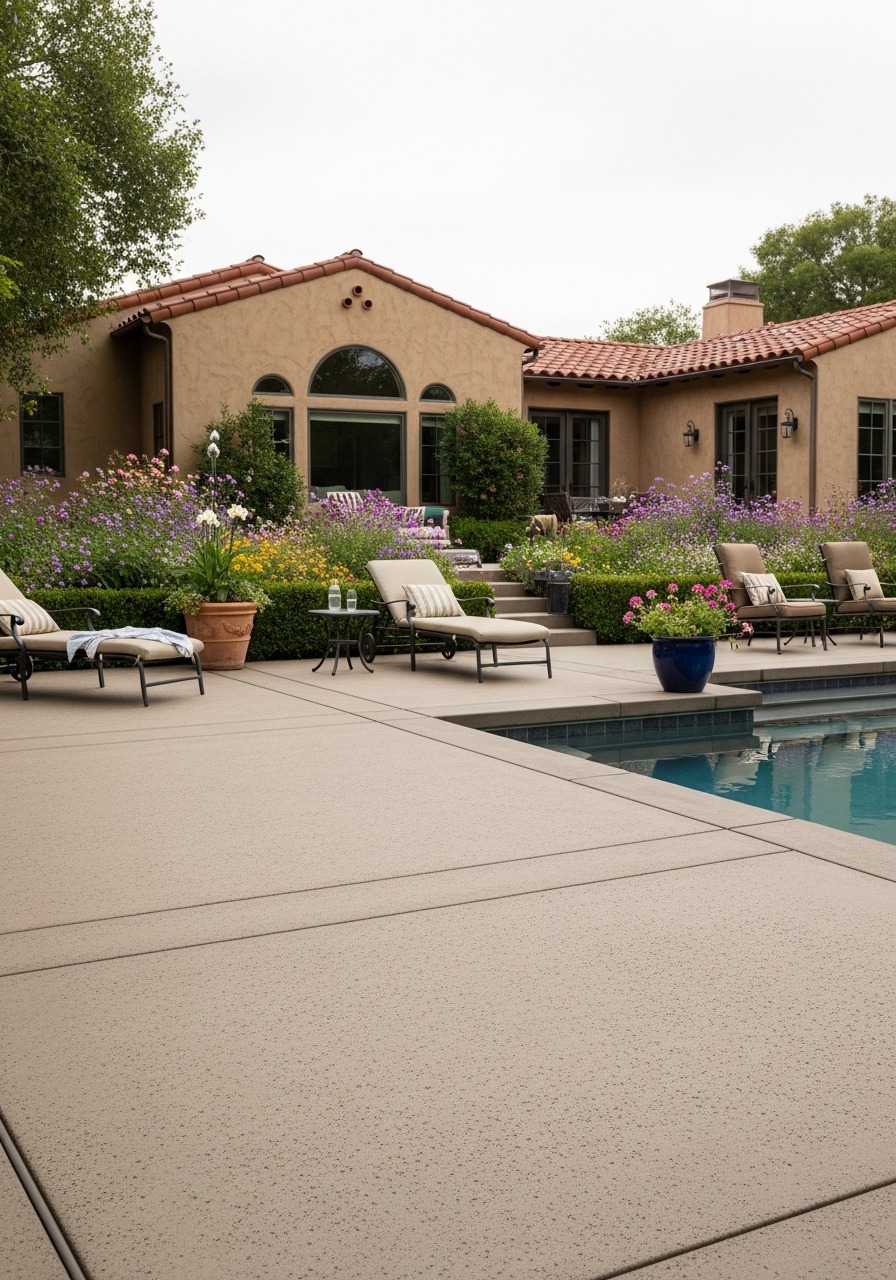
Pool Deck Concrete Ideas: What to Choose and What to Spend
March 31, 2026
A concrete pool deck costs $6–18 per sq ft installed depending on finish — $3,000–9,000 for a typical 500 sq ft deck. Broom finish is the most practical choice; stamped delivers the most visual impact; exposed aggregate splits the difference on both cost and performance. The right finish depends on how much slip resistance you need, how hot your climate is, and how much maintenance you're willing to do. Here's a straight comparison of every concrete pool deck option available in 2026.
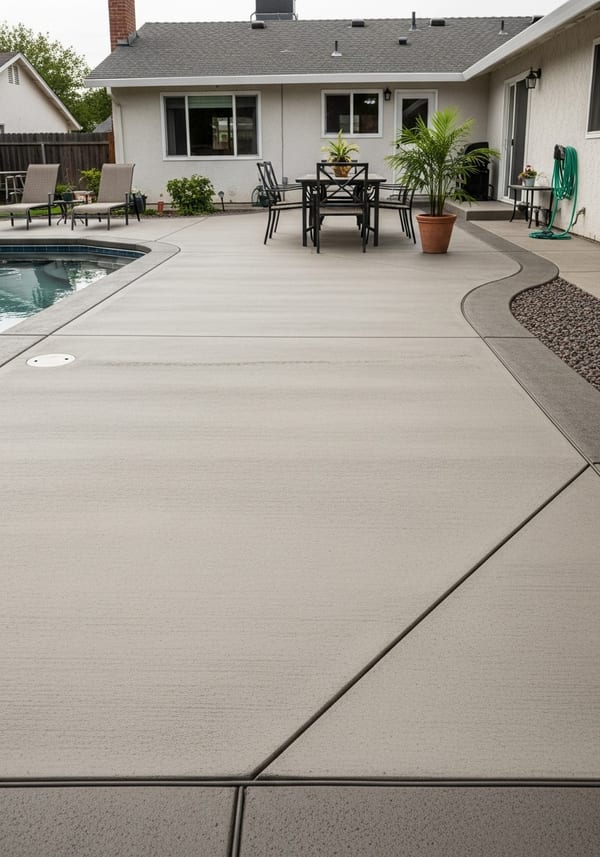
Broom Finish: The Practical Baseline
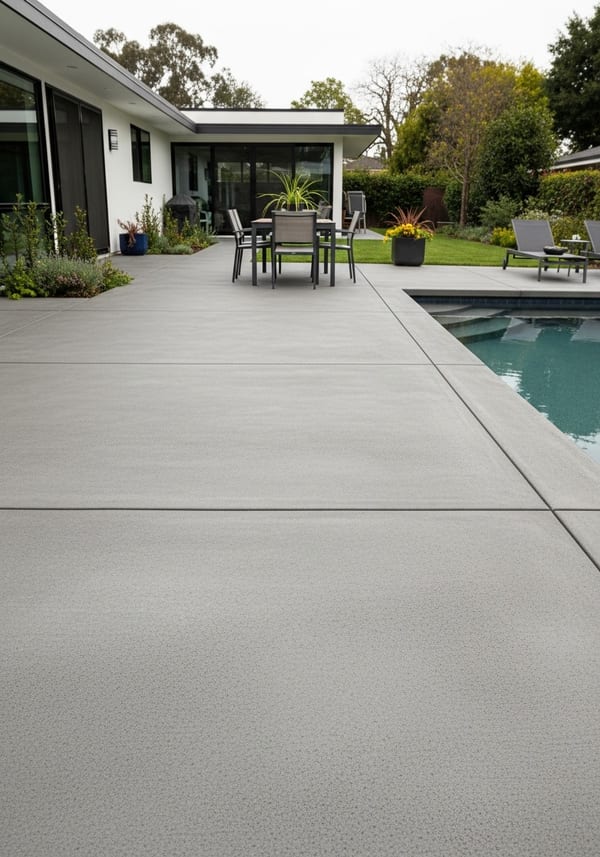
A broom-finish concrete pool deck costs $6–10 per sq ft installed. For a standard 500 sq ft deck, that's $3,000–5,000. The broom texture provides enough grip for wet feet without the harshness of coarser aggregate finishes, and it's easy to clean with a pressure washer. In a cool grey or warm buff color, it reads as clean and intentional — not like a default choice. It's also the easiest finish to repair and extend if you add a pool house or landscaping later, since color-matching plain concrete is straightforward. The main limitation: broom finish offers fewer visual options than stamped or aggregate surfaces.
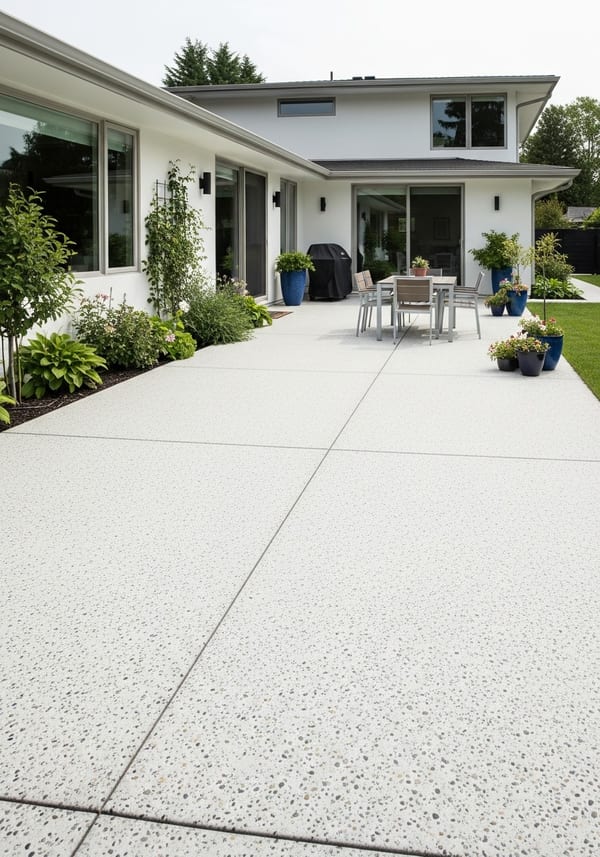
Exposed Aggregate: Slip Resistance Without the Stamp Premium
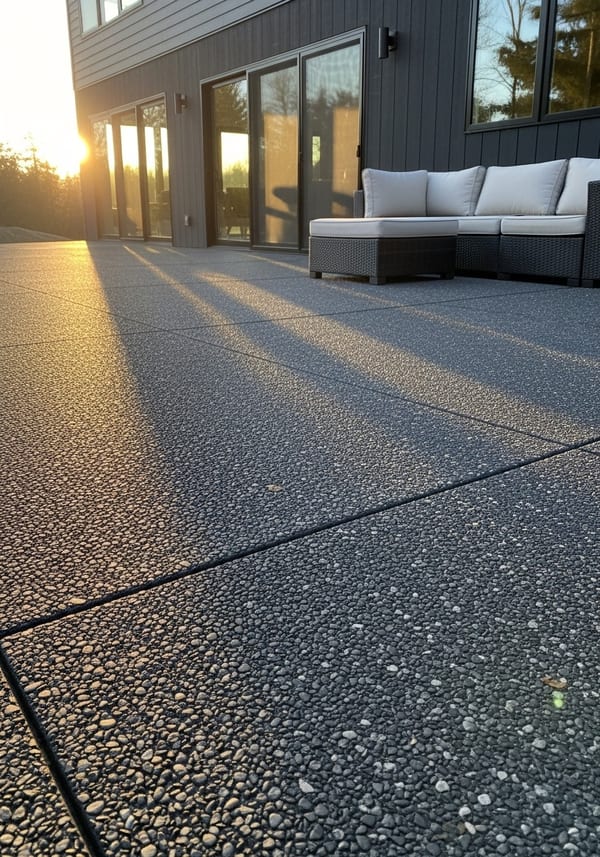
Exposed aggregate pool decks cost $8–14 per sq ft — the middle ground between plain and stamped. The washed surface reveals the stone aggregate below, creating a texture that's more slip-resistant than broom finish and holds up to pool chemical splash better than most surfaces. In a pea gravel or river stone mix, it looks genuinely attractive. The trade-off: coarser aggregate surfaces can be rough underfoot for bare feet, particularly in medium-stone sizes. Specify a fine aggregate (pea gravel) if comfort is the priority. Also hides chemical staining and organic debris better than smooth surfaces — a practical advantage for a surface that sees daily water splash.
Stamped Concrete: Maximum Visual Impact
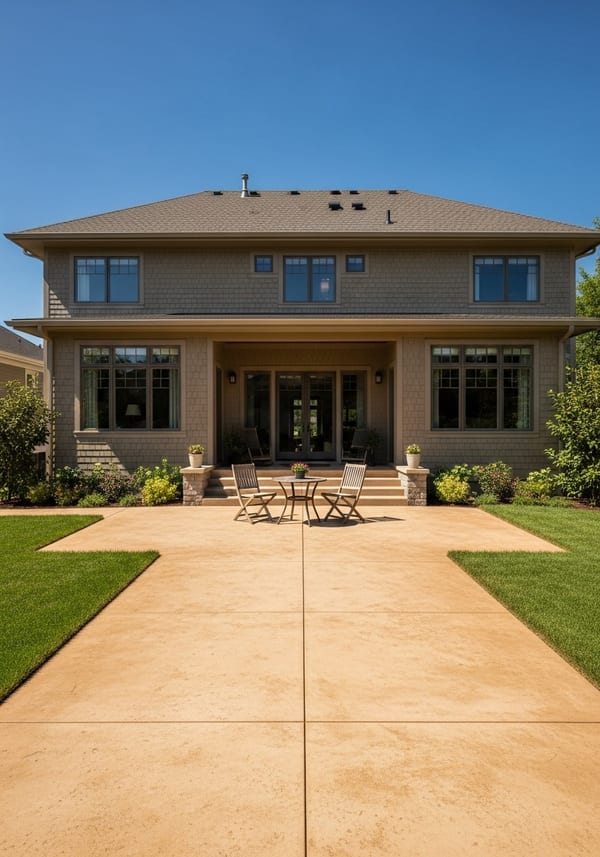
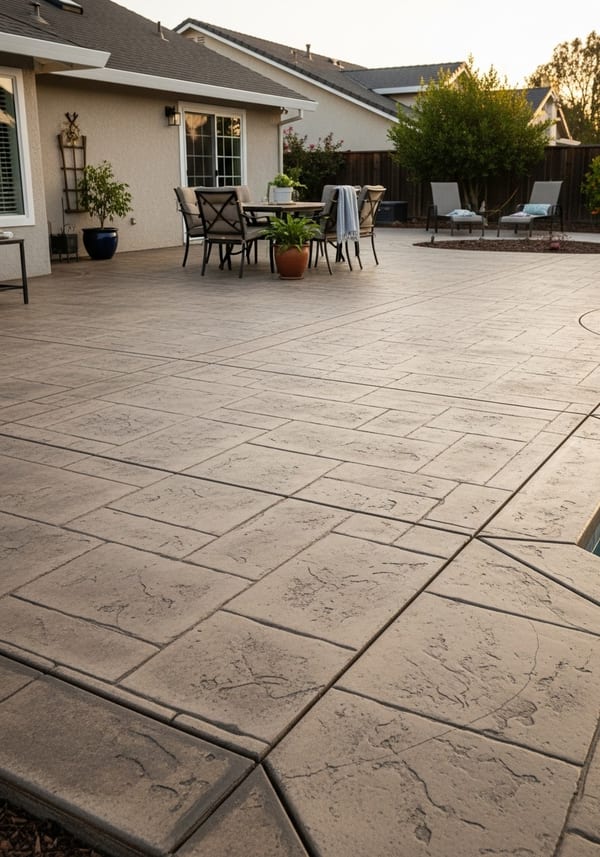
Stamped concrete pool decks run $12–18 per sq ft. The most popular patterns around pools are travertine-look stamps (neutral, warm tones that complement water and tile), ashlar slate in grey or buff, and large-format flagstone. The visual impact is significant — a well-done stamped deck reads as natural stone from any normal distance. The practical consideration: film-forming sealers required to maintain stamped finishes can become slippery when wet if the wrong product is used. Specify a sealer with added anti-slip additive, or use a matte-finish sealer rather than a high-gloss wet-look product. Pool deck stamping is higher-stakes work than patio stamping — ask for pool-specific references.
Broom Finish vs. Exposed Aggregate vs. Stamped: Which to Choose
Choose broom finish if: budget is the primary constraint, or you want the easiest long-term maintenance and repair. Choose exposed aggregate if: you want better slip resistance than broom finish, more visual texture, and a finish that ages gracefully without color maintenance. Choose stamped concrete if: visual impact is the priority, you're willing to maintain the sealer annually, and your contractor has direct pool deck stamping experience. In hot climates, lighter tones of all three finishes stay cooler underfoot — dark stamped concrete in a hot Arizona sun can reach temperatures uncomfortable for bare feet.
Get the full inspiration pack — free.
30+ curated patio, driveway and walkway design images delivered to your inbox.
Heat and Barefoot Comfort: The Climate Factor
Any dark concrete surface — charcoal broom finish, dark aggregate, dark-stamped finishes — absorbs significantly more heat than lighter tones. In climates with hot summers, a dark pool deck can reach 40–60°F above air temperature in direct afternoon sun — uncomfortable and potentially damaging to bare feet. Lighter grey, buff, and white-aggregate finishes stay noticeably cooler. This is one of the more consequential design decisions for a pool deck: go 2–3 shades lighter than you think you need if your pool gets full afternoon sun. Travertine-stamped concrete in a warm ivory or buff tone is the most heat-conscious stamped option.
Pool Deck Cost Summary: 500 sq ft
Budget guide for a 500 sq ft pool deck in 2026: broom-finish plain concrete, $3,000–5,000; exposed aggregate, $4,000–7,000; stamped concrete (travertine, flagstone, or slate patterns), $6,000–9,000. Add 15–25% for demo of an existing deck. A quality sealer costs $150–400 to apply professionally on a 500 sq ft deck and should be reapplied every 2–3 years for stamped finishes and every 3–5 years for plain or aggregate surfaces. Tools like PourCanvas let you see how different finishes and tones would look around your specific pool layout before you commit to a contractor.
Coordinating Pool Deck, Patio, and Walkway Finishes
Homes with a pool often have a patio adjacent to the deck and a walkway connecting the house to both. When those three surfaces use consistent finish language — same aggregate color, same tone direction, compatible patterns — the exterior reads as designed rather than assembled over time. The most common coordination mistake is matching the pool deck to the patio exactly but using a completely different material or color on the front walkway. A general rule: the pool deck can lead in finish choice; the patio can be identical or a close variant; the front walkway should use the same material family even if the specific pattern differs. On a stamped travertine pool deck, a travertine-stamped walkway or a similar warm-buff flagstone-stamped front path creates strong visual continuity without identical repetition.
Pool Deck vs. Patio Maintenance: What's Different
Pool decks age differently from patios because of two factors: pool chemical exposure and constant wet-dry cycling. Chlorine and pool algaecides that splash onto the deck surface degrade standard acrylic sealers faster than UV alone — a pool deck sealer typically needs reapplication every 1–2 years versus every 2–3 for a patio sealer. Penetrating silane-siloxane sealers are more resistant to chemical degradation than film-forming acrylics on pool deck surfaces, though they provide less color enhancement. The constant wet-dry cycling (pool use in summer, dry in winter) also creates more thermal movement in the slab than a sheltered patio experiences, which means control joint placement on a pool deck should be at tighter intervals — 8 feet rather than 10–12. Plan for these maintenance differences when budgeting a pool deck project.
The AI tool is almost ready.
Drop your email and we'll notify you the moment it launches — free to use.