
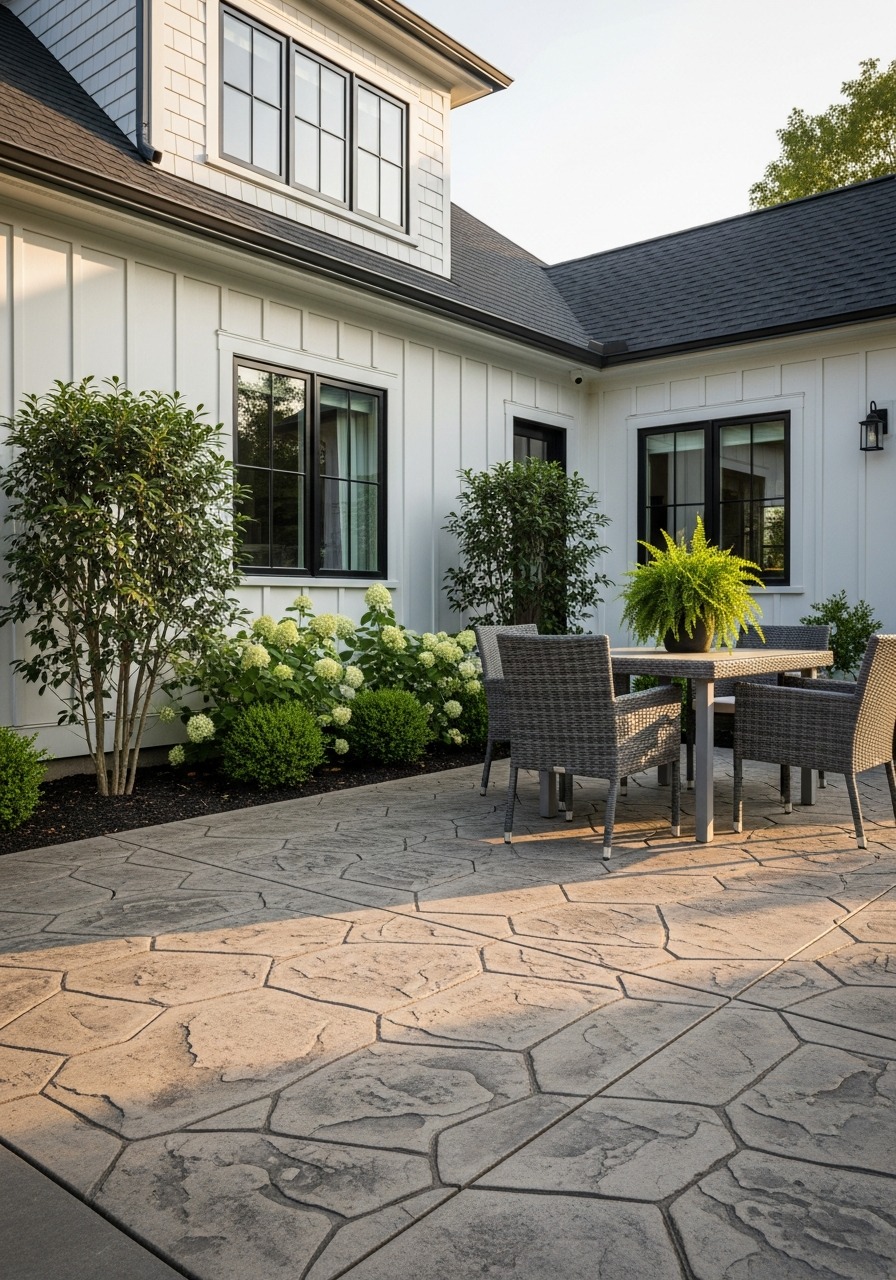
Small Concrete Patio Ideas That Actually Work
March 27, 2026
A small concrete patio — say 100–150 sq ft — costs $600–2,700 depending on finish. What separates one that feels intentional from one that feels like an afterthought has nothing to do with size and everything to do with pattern direction, color choice, and how the edge meets the yard. These ideas punch above their square footage. If you're also redoing a front walkway, the same proportion principles apply.
Run Patterns Diagonally
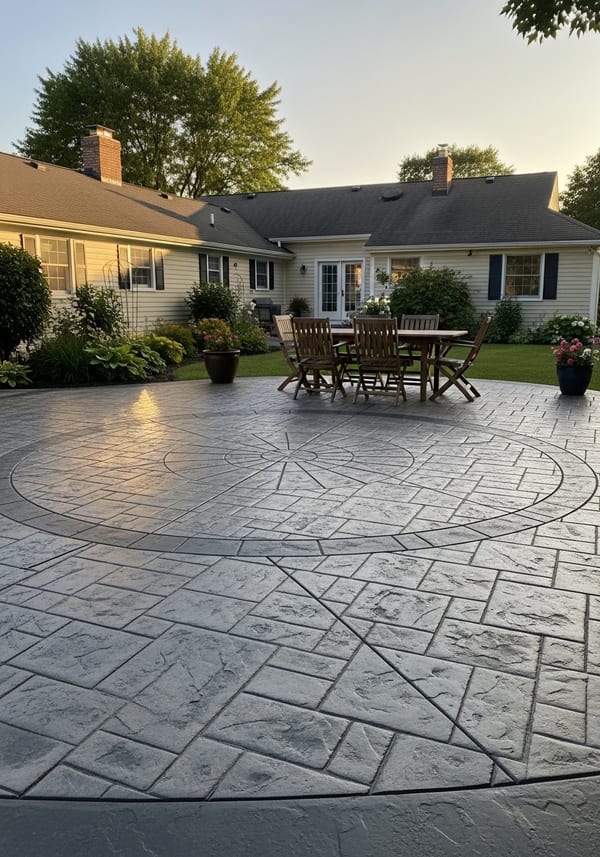
Stamped concrete patterns laid at 45 degrees to the house read as larger than the same pattern laid parallel. The diagonal pulls the eye toward the corners of the space, which makes the area feel wider. This works especially well with a running bond brick or plank pattern. No additional cost — it's a forming and stamping decision, not a material one.
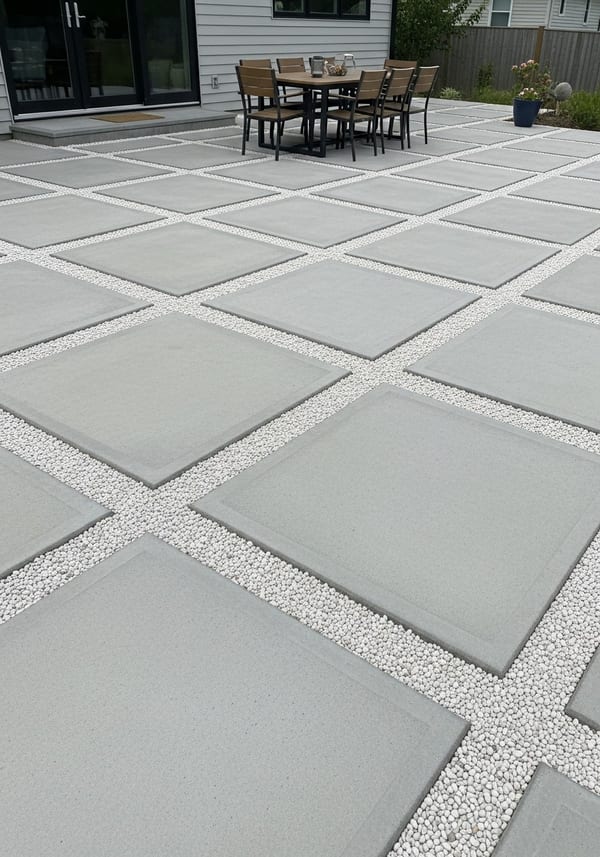
Eliminate Borders
A decorative border adds visual weight and effectively shrinks the usable area. On a small patio, skip the border — or use a very thin, same-color score line instead. Let the slab read as one continuous surface. Skipping the border also saves $1–3 per sq ft on stamping labor.
Extend Into the Lawn
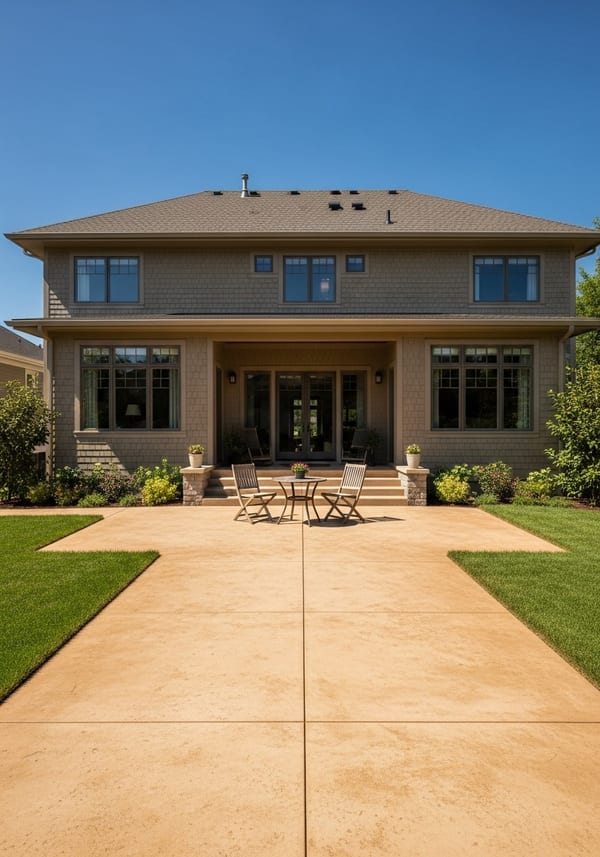
Consider stepping stones or a poured extension that reaches into the lawn rather than a hard rectangular cutoff. This blurs the boundary between patio and yard, making both feel larger. Small poured pads cost $50–150 each installed — a low-cost way to extend the perceived footprint.
Use Larger Fake Stones
Counterintuitively, larger stamp patterns (big flagstone, large plank) make small spaces feel bigger. Smaller, busier patterns (cobblestone, small brick) chop up the surface visually and make the space read smaller. PourCanvas lets you preview different pattern scales on your actual space before committing.
Light Colors Expand Space
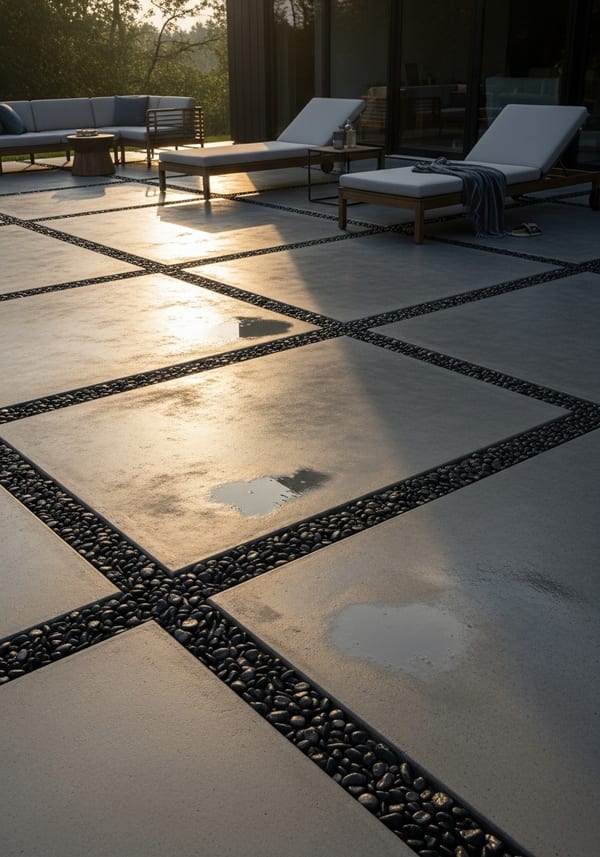
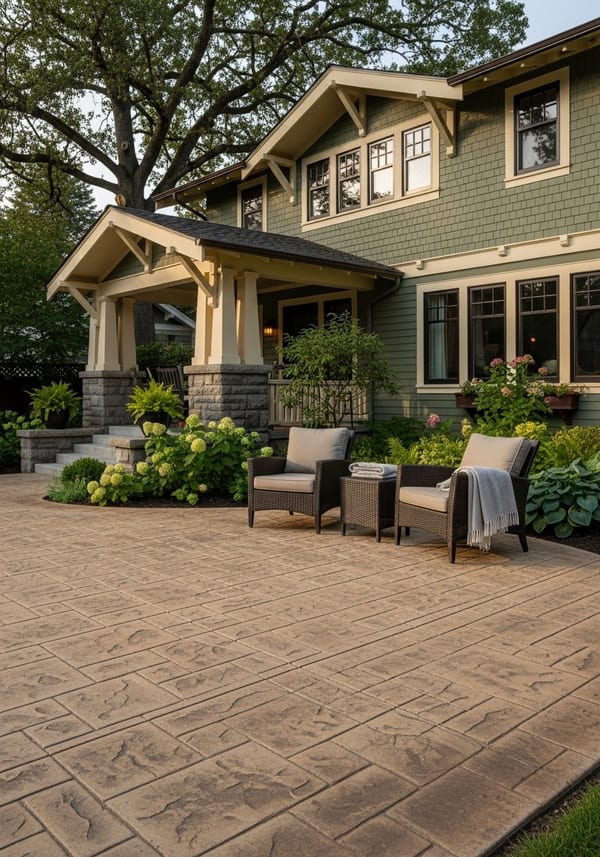
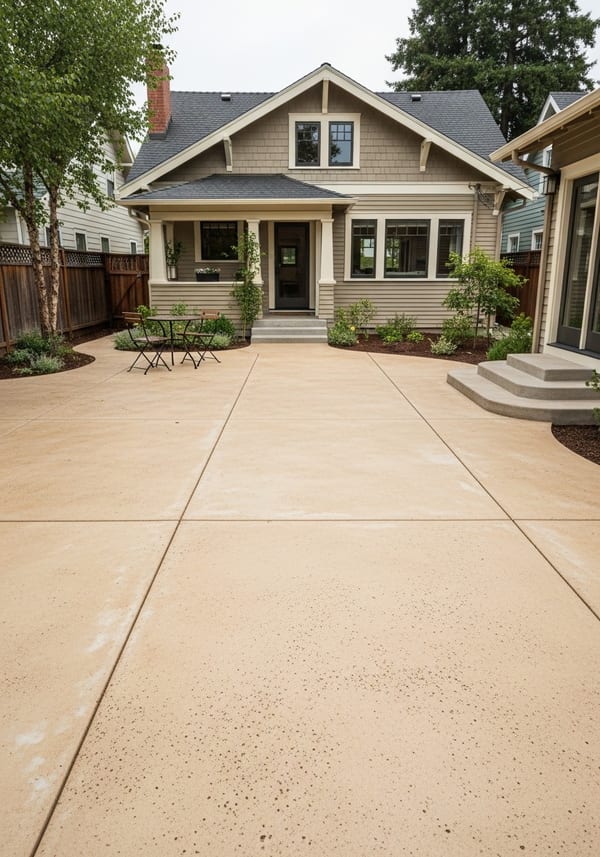
Light gray, buff, or sandstone color washes reflect more light and make the space feel more open. Charcoal and dark colors absorb light and visually tighten the space. In a small patio, err lighter unless you have a specific design reason for contrast. Lighter colors also stay cooler underfoot in direct sun.
Get the full inspiration pack — free.
30+ curated patio, driveway and walkway design images delivered to your inbox.
Stamped vs. Plain Concrete: Which Is Worth It on a Small Patio
Stamped concrete ($12–18/sq ft) costs roughly double plain broom finish ($6–10/sq ft). On a 120 sq ft small patio, that's a difference of $720–960 — a meaningful sum for a modest surface. Stamped concrete makes sense on a small patio when the rest of the exterior is polished and the patio is the primary design statement. Plain finish with a quality color wash ($8–14/sq ft) is the stronger value choice when you want a finished look without the premium. The design tricks in this article — diagonal patterns, light colors, no border — work with either finish.
Furniture and Space Planning for a Small Patio
A common small patio mistake is scaling the furniture to the patio rather than to how people actually use outdoor space. A small bistro table and two chairs (occupying 25–30 sq ft) typically leaves enough room for comfortable movement on a 100–120 sq ft patio. Adding a full outdoor sofa set to the same space makes it feel crowded regardless of how good the concrete looks. Plan the furniture arrangement before finalizing the patio dimensions — the right size is the one that fits your intended use, not the maximum that fits the yard. If you're adding a small patio to a yard that also has a driveway or walkway project planned, consider how traffic flow between the house, patio, and driveway will work with furniture in place.
Fencing and Screening for Small Patio Privacy
Screening matters more on small patios than on large ones — close sight lines to neighbors or the street reduce usability regardless of how well the concrete is done. A 6-foot privacy fence or dense evergreen screening along the back edge of a small patio costs $20–40 per linear foot installed and transforms how the space feels without adding a square foot of concrete. On a small backyard patio, the perimeter treatment is often more important to the user experience than the surface finish. A well-screened 100 sq ft patio is more pleasant than an exposed 200 sq ft one. If you're also considering a driveway or walkway project, screens and hedges along those routes add the same sense of enclosure and privacy for minimal additional cost.
Overhead Shade: The Upgrade That Changes Everything
For a small patio used for outdoor dining or lounging, shade coverage often matters more than the concrete finish choice. A 10x10 pergola (roughly $2,000–6,000 installed) or a cantilever umbrella ($200–600) transforms a small patio from a hot afterthought into an actual outdoor room. Shade options should be factored into the overall patio planning — a pergola requires post footings that are best planned and poured during the original concrete work, not cored in afterward at $200–400 per footing. If you're pouring a small patio and think you may want a pergola later, have the contractor set post sleeves in the slab corners during the pour. It's a $100–200 add-on during construction and a $600–800 cost if done as a retrofit.
Small Patio vs. Large Patio: When to Expand
A small patio that feels cramped for its intended use is better expanded at pour time than retrofitted later. Expanding a cured slab requires breaking the existing edge, installing new forms, and pouring an abutting slab — the color will rarely match exactly and the expansion joint between old and new concrete will be visible. On a 100 sq ft patio, adding 40 sq ft at the time of the original pour costs roughly $240–720 in additional concrete work. Adding the same 40 sq ft as a retrofit 2 years later costs $400–1,200 plus the visible joint. If you're debating whether to go small and expand later, the answer is almost always to go a step larger from the start — the marginal cost at pour time is far lower than retrofit expansion. PourCanvas can help you preview what a 140 sq ft version would look like in your yard versus a 100 sq ft layout before you finalize the scope.
The AI tool is almost ready.
Drop your email and we'll notify you the moment it launches — free to use.