
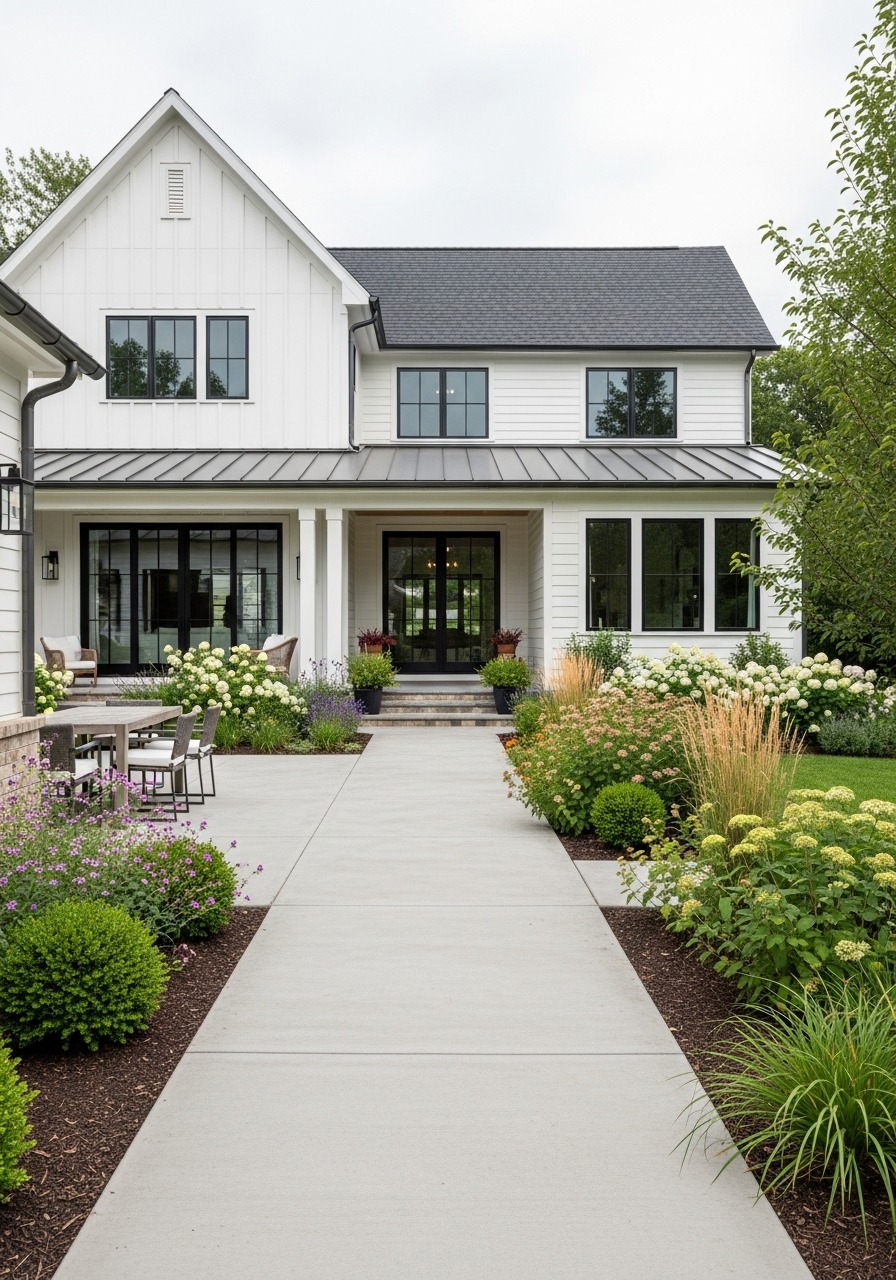
Backyard Walkway Ideas for Every Landscape Style
March 31, 2026
A backyard concrete walkway ranges from $50 per stepping stone pad to $12–18 per sq ft for a stamped path. The cost depends almost entirely on how much continuity you want — individual pads are DIY-friendly and low cost; a poured stamped path is a contractor job with a bigger budget. These ideas cover both ends of the range and everything in between. If you're also building a patio, coordinating the walkway finish to the patio surface creates a more cohesive outdoor space.
Poured Concrete Path with Planting Gaps
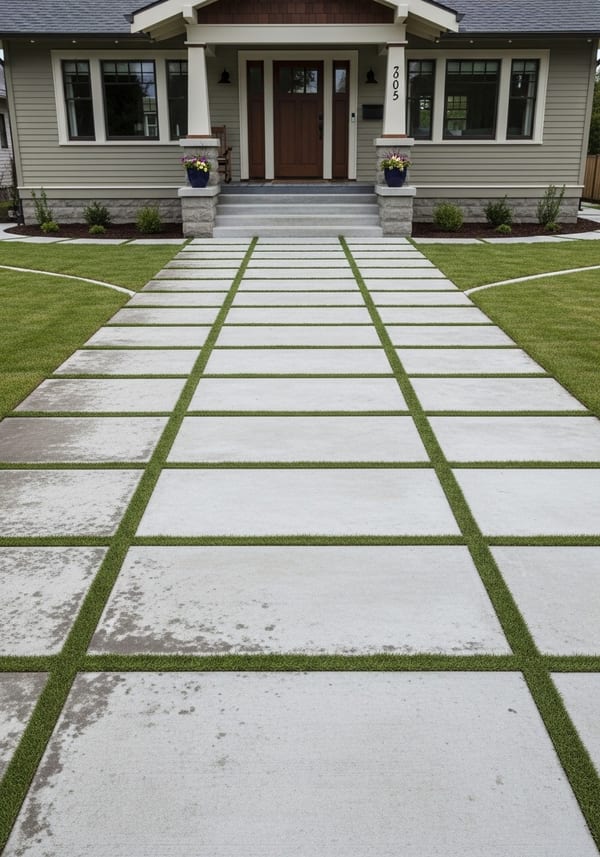
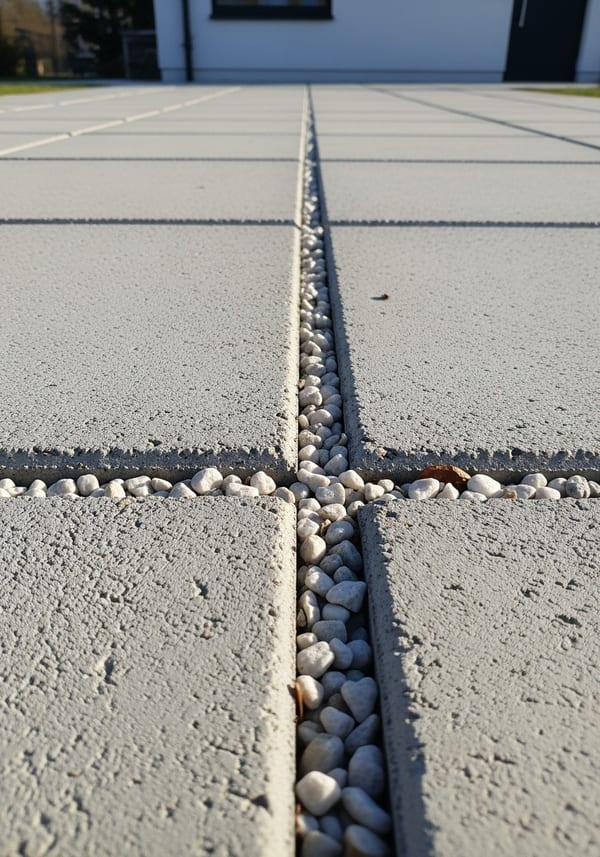
A poured concrete path with intentional gaps for ground cover plants (thyme, creeping Jenny, mondo grass) softens the hard edge of the concrete without sacrificing the clean, structured look. Plan the gaps into the pour by leaving out sections — don't try to cut them in after. The gap width matters: 4"–6" is wide enough for plants to fill in over a season without feeling like a tripping hazard; 8"+ gaps feel unfinished until the ground cover matures. Creeping thyme is the most forgiving option — handles light foot traffic, suppresses weeds, and releases a faint scent when brushed. If you're using this approach on a path adjacent to a concrete patio, use the same base pigment for the path sections so the two surfaces read as a coordinated suite rather than separate projects.
Stepping Stones in Gravel
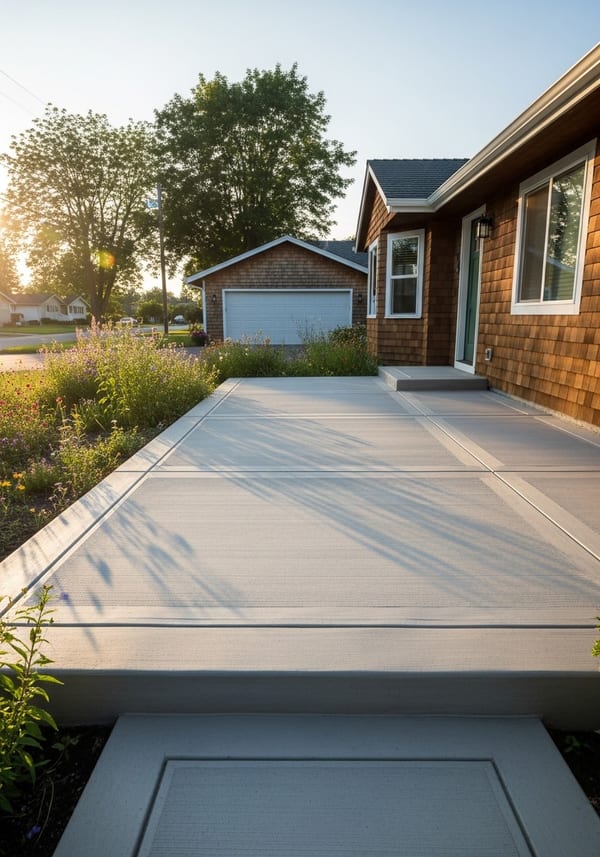
Large concrete pads (20"×20" or 24"×36") set into a decomposed granite or gravel field is one of the lowest-cost backyard path options. The pads can be cast with a simple broom finish or a light exposed aggregate texture, and the gravel surround eliminates edge maintenance. Use landscape fabric under the gravel to suppress weeds — without it, the gravel path requires pulling weeds annually. Buff or tan decomposed granite ($30–60 per cubic yard) suits warm concrete tones; charcoal grit or grey granite fines suit cooler pigment. Lay the pads on a 2-inch compacted sand base to allow minor height adjustment. Match the pad color to your driveway or patio if they're visible from the same vantage point — even a simple broom-finish pad in the same grey tone as a broom-finish driveway creates visual cohesion at low cost.
Curved Path to a Focal Point
Curve your backyard path toward a specific destination — a seating area, a garden feature, or a gate — and the curve itself creates visual interest. A slight curve slows the eye and makes the path feel longer than it is, which makes small backyards feel more spacious.
Poured Path vs. Stepping Pads: Which Is Right for Your Yard
A continuous poured concrete path ($6–18/sq ft depending on finish) gives a clean, intentional look and requires minimal long-term maintenance. Stepping pads ($50–250 each installed) are the lower-cost option and work well in informal gardens, but they can feel underdone in a polished landscape. Choose a continuous path if the walkway is a primary route you'll use daily; stepping pads if it's an occasional or decorative connection.
Rustic Flagstone-Look Pads
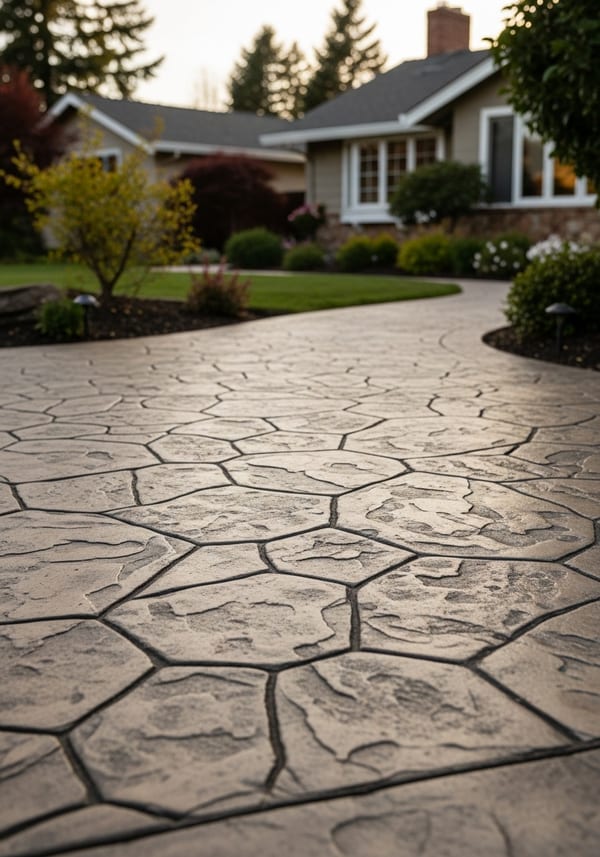
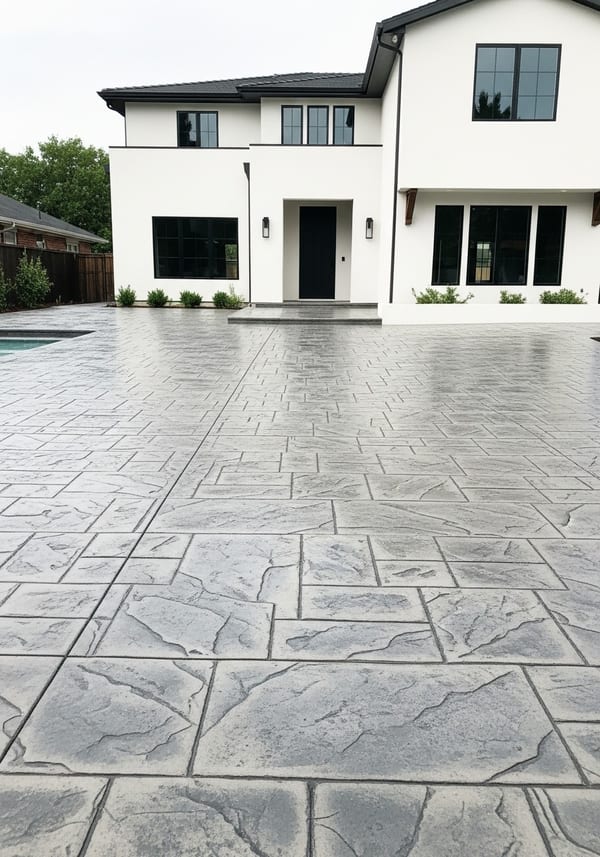
Random flagstone stamping on individual poured pads gives a natural, organic feel that suits cottage-style and English garden landscapes. Space the pads slightly irregularly (varying by 1–2 inches) to avoid the too-perfect look of machine-placed pavers. For color, a warm buff or sandstone base with a charcoal color wash in the stamp recesses replicates the aged stone look convincingly — skip a single-tone flat pour, which reads as stamped concrete immediately. Each pad should be 18"×18" minimum; smaller pads look flimsy and out of scale in most yards. You can cast these yourself: a wood form, a standard stamped-concrete pour, and a borrowed stamp from a local rental house turns a weekend into $150–300 worth of materials for a 10–12 pad path.
Get the full inspiration pack — free.
30+ curated patio, driveway and walkway design images delivered to your inbox.
Connecting the Backyard Path to the Patio
A backyard walkway's most important design decision is how it terminates. If it leads to a concrete patio, the path and patio finish should match — or at minimum share a palette. The clearest way to achieve this is to pour the path and patio in the same project, using the same mix and sealer. If the patio was poured separately, a concrete overlay or acid stain application can bring the two surfaces into visual alignment without full replacement. The connection point where the path meets the patio is where a mismatch is most visible — this is also where you want a cleanly formed transition joint rather than a rough butt joint. A contractor experienced in both surfaces will plan this joint from the start.
Sealing and Weed Management for Concrete Paths
Concrete backyard paths take less daily foot traffic than front walkways but more biological challenge — organic matter, moisture, shade, and root intrusion are more present in most rear gardens. Sealing every 3–4 years is sufficient for plain broom or aggregate paths in most climates. Apply a silane-siloxane penetrating sealer to repel moisture and slow organic staining. For stepping pads set in gravel or ground cover: apply landscape fabric under the gravel surround to suppress weed germination. Reapply the gravel or decomposed granite annually to maintain thickness — it compacts and washes out over time.
Budget Breakdown for a Backyard Path Project
A typical 40-foot backyard path project in concrete: 160 sq ft of plain broom finish at $6–10/sq ft = $960–1,600 installed. Switching to stamped concrete: $1,920–2,880. Stepping stone alternative: 20 pads at $50–150 each = $1,000–3,000. DIY stepping pads: 20 pads at $15–25 in materials = $300–500 plus your time. Site prep — grading and removal of existing grass or gravel — adds $300–600 for a typical backyard path scope. Regional labor rates in California and the Northeast run 30–50% higher than the national figures above.
Backyard Path Drainage: The Detail Most Homeowners Miss
A backyard concrete path poured without attention to drainage can redirect water toward the foundation or create pooling in low areas of the yard. Before any backyard path pour, confirm that the finished surface will slope at least 1/8" per foot away from any structure. If the existing grade is flat or toward the house, a competent contractor will build in cross-slope or install a channel drain at the low end — typically $200–600 for a standard backyard path scope. Skipping this detail is one of the most common reasons homeowners are unhappy with a concrete path installation six months after it's poured: the path itself is fine, but the drainage consequences weren't considered.
Adding Edging to Define the Path
Backyard concrete paths benefit from clear edging to define the border between the path and the lawn or garden beds. Options include concrete edging (poured as an integral border, $1–3/lf added cost), steel or aluminum landscape edging ($0.50–1.50/lf material only), or natural stone borders placed along the path edge. For stepping stone paths, the border between the pads and the surrounding ground cover is self-defining if the ground cover fills in consistently. For continuous poured paths, a cleanly formed and beveled edge is the most low-maintenance approach — no edging material to install, just a crisp pour edge that stays sharp for decades.
The AI tool is almost ready.
Drop your email and we'll notify you the moment it launches — free to use.