Concrete steps cost $150–400 per step installed, depending on size and finish. A standard 3-step front entry stoop with a landing runs $1,500–3,000. Entry steps are the highest-impact hardscape upgrade per square foot — every visitor touches them. Here's what determines the cost, which finishes hold up, and how to avoid the design mistakes that make concrete steps look institutional rather than intentional. If you're also planning a front walkway, coordinating the step finish to the path material is the single most effective design decision you can make.
What Concrete Steps Cost in 2026
A single concrete step costs $150–400 installed, including forming, pouring, and finishing. A 3-step entry stoop with a small landing (roughly 20–30 sq ft of total concrete) runs $1,500–3,000 for a plain broom finish. Add stamping or exposed aggregate and the range moves to $2,500–5,000. For reference, natural bluestone or limestone steps cost $200–450 per step for the stone alone — installed totals run $3,000–8,000 for a comparable entry. Concrete delivers 60–70% of the visual impact at 30–50% of the cost.
Stamped Concrete Steps vs. Plain Finish: Which Is Worth It
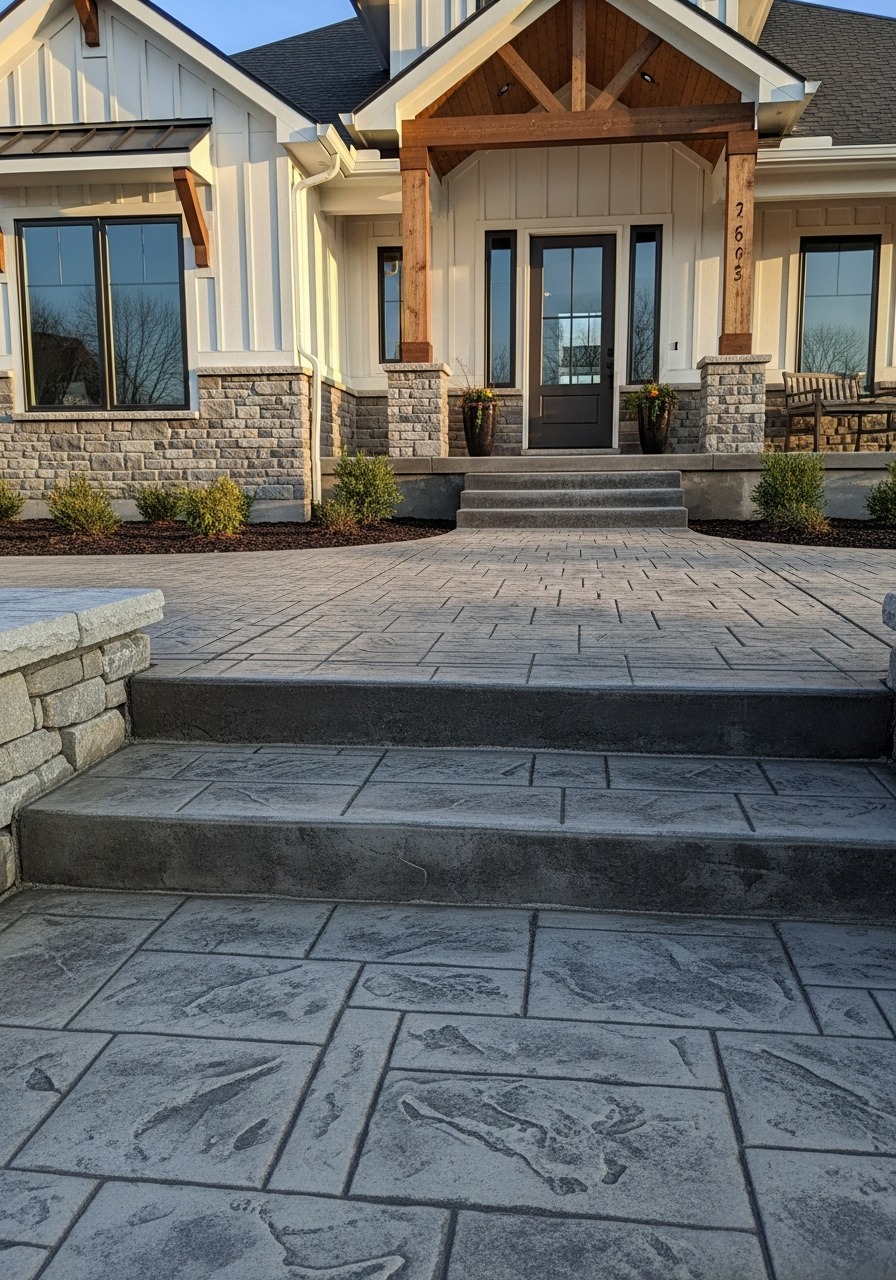
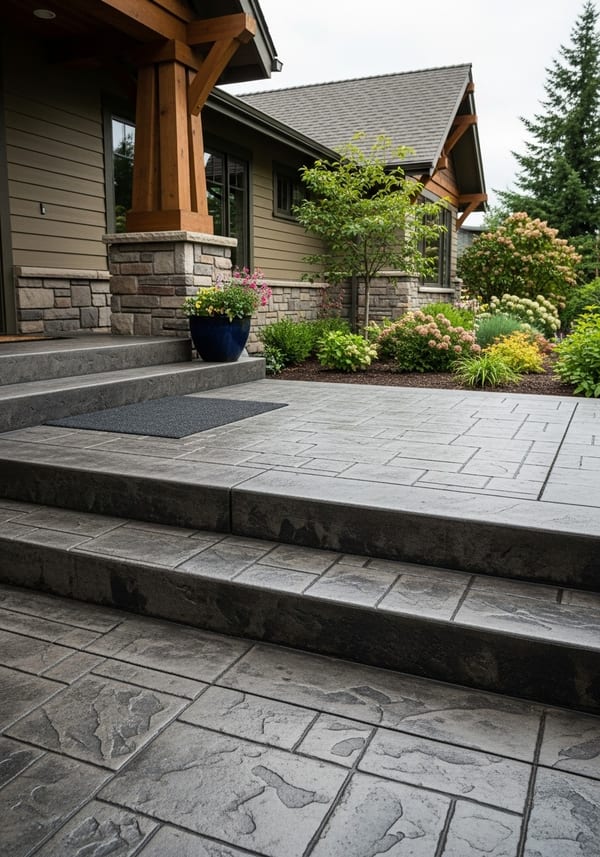
Plain broom-finish steps ($150–250/step) are durable, slip-resistant, and appropriate for most homes. Stamped steps ($250–400/step) add pattern — typically an ashlar slate, flagstone, or cobblestone stamp on the treads — and match the front walkway finish if that surface is also stamped. The upgrade is worth it when the steps are a prominent design feature and the rest of the entry is polished. If the walkway is plain, stamped steps can look mismatched. Match the step finish to the walk finish: that consistency is what makes an entry look designed rather than assembled.
Riser and Tread Dimensions That Matter
Standard entry steps use 6"–7" risers and 11"–12" treads — the proportions feel natural for most adults. Wider treads (13"–16") feel more generous and give decorative stamps more surface to read clearly. Taller risers (7"+) make steps feel steeper and less welcoming — avoid on a primary front entry. If you're replacing existing steps, match the riser height exactly to the threshold so the door swing still clears comfortably. The landing at the top of entry steps should be at least 5 feet deep — enough to stand comfortably while opening the door without stepping backward onto the steps. A 5"×5" landing pour adds roughly $150–300 to step costs and transforms the functionality of the entry. If the front walkway is the same width or narrower than the step landing, the two surfaces should meet cleanly with a consistent score line rather than a misaligned butt joint. Plan this connection at the design stage, not during the pour.
Edge Details and Nosing
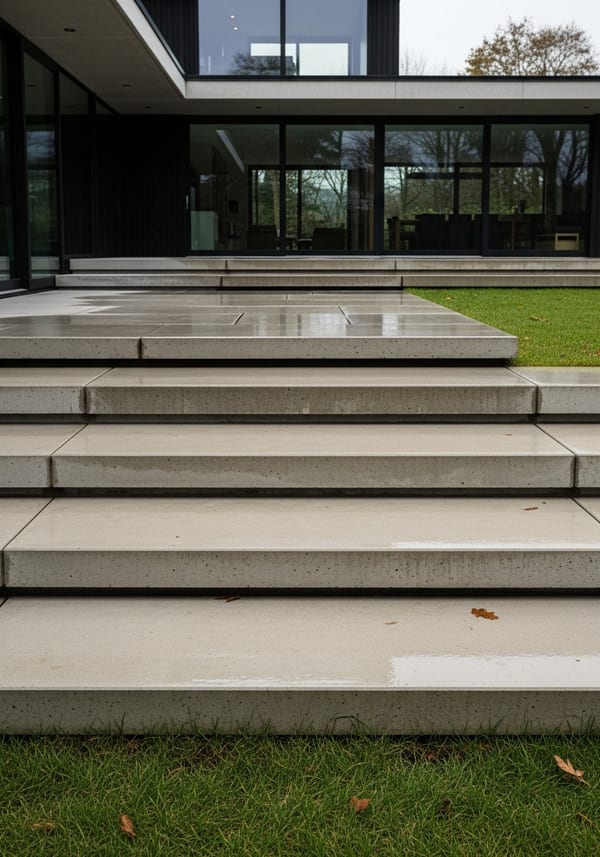
A bullnose edge (rounded tread front) is the standard — it looks clean and reduces chipping. A square edge looks crisper and more contemporary but chips more easily if struck by a snowblower or cart. For stamped steps, the nosing detail should continue the pattern to the edge rather than stopping short — a blunt stamp cutoff at the tread edge is the most common sign of inexperienced step work. The riser face (the vertical front of each step) is often overlooked in residential step design. A smooth-finished riser with a slight bevel at the top edge frames the treads cleanly. On decorative stamped steps, some contractors stamp the riser face with a simplified version of the tread pattern — a detail that elevates the finished look significantly at minimal added cost. If there's a price difference between a stamped tread-only and a stamped tread-and-riser quote, the riser stamping is typically worth the premium for a prominent front entry.
Get the full inspiration pack — free.
30+ curated patio, driveway and walkway design images delivered to your inbox.
DIY vs. Contractor for Concrete Steps
Concrete step pours are not a beginner DIY project. Steps require precise forming, reinforcement with rebar or wire mesh, correct water-to-cement ratios for strength, and proper curing — all within a narrow timing window. A failed step pour is expensive to remove. For plain steps, a competent DIYer with concrete experience can succeed; for stamped or decorative finishes, contractor work is strongly recommended. Get quotes from contractors who specifically show completed step work in their portfolio.
Sealing and Long-Term Care
Concrete steps take more wear than any other hardscape surface — foot traffic, freeze-thaw cycling, and deicing salt all concentrate on the same small area. Sealing every 2 years with a penetrating sealer protects the surface and extends finish life. In cold climates, use magnesium chloride rather than rock salt for ice control — sodium chloride degrades concrete surface over time, especially on stamped or colored finishes. Tools like PourCanvas can show you how different step finishes would look at your specific entry before you commit to a contractor.
Handrail Requirements for Concrete Steps
Building codes in most U.S. jurisdictions require a handrail for any stair run of 4 or more risers. For a standard 3-step front entry stoop, no handrail is code-required — though many homeowners choose to add one for accessibility. A surface-mounted iron handrail added to an existing concrete stoop costs $300–800 installed, depending on railing material and the number of anchor points. For new step construction, plan the anchor sleeve locations into the pour — retrofitting anchors into existing concrete requires coring and epoxy-set fasteners, which is more expensive and leaves visible patches. Tell your contractor upfront if a handrail will be added, even if it's future-planned.
Coordinating Steps with the Front Walkway and Driveway
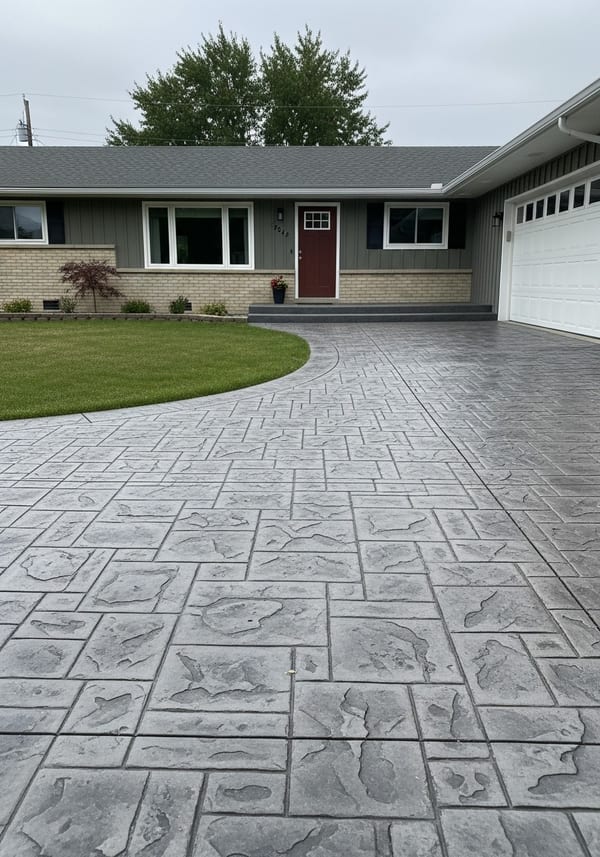
Entry steps are the connection point between the front door, the walkway, and ultimately the driveway or street. Visual continuity across all three surfaces — steps, walkway, driveway — is what makes an exterior look designed rather than assembled. The most effective approach: choose one primary surface finish (stamped flagstone, exposed aggregate, or plain broom) and apply it consistently across all three surfaces. The steps can carry the same stamp as the walkway, with the landing matching the driveway color. If the three surfaces were poured at different times and don't match, a concrete overlay with consistent stain color is the most cost-effective way to unify them without full replacement.