
Concrete Front Walkway Ideas That Actually Look Good
March 31, 2026
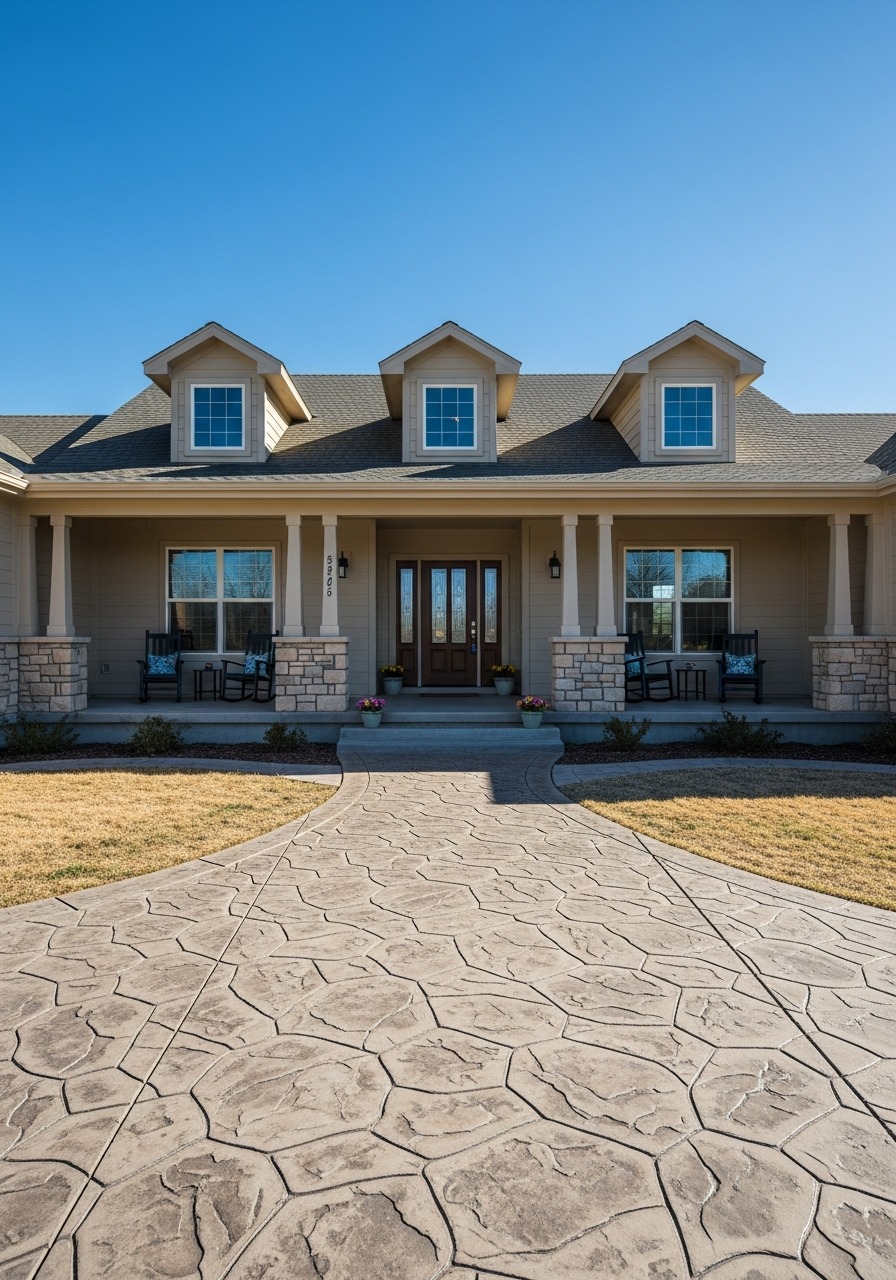
A concrete front walkway costs $720–2,160 for a standard 4-foot-wide, 30-foot run — plain broom finish at the low end, stamped at the high. For most homes, it's one of the highest-ROI curb appeal upgrades per dollar spent. These 10 ideas cover the most effective approaches across home styles and budgets. If you're also redoing a driveway or patio, coordinating the finish and color across all three surfaces adds significant visual coherence to the overall property.
Straight and Wide: The Modern Default
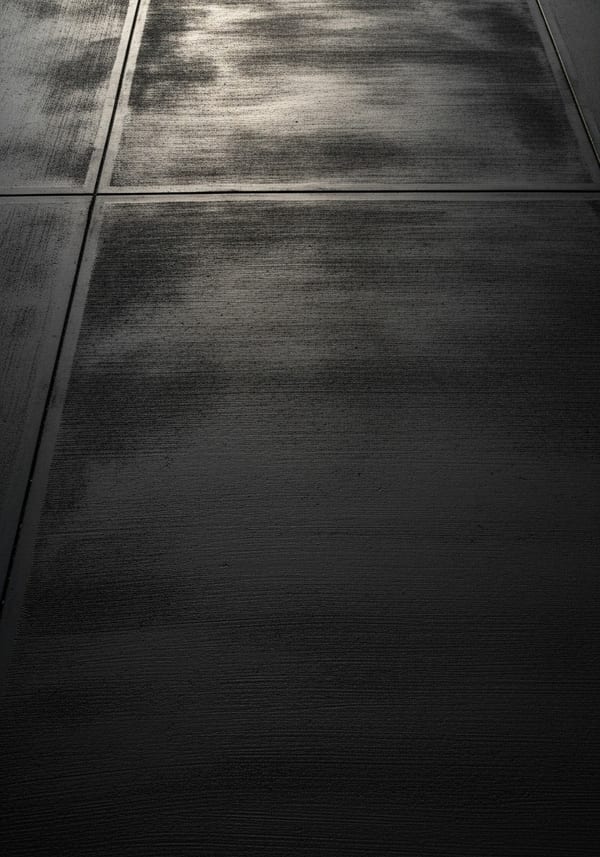
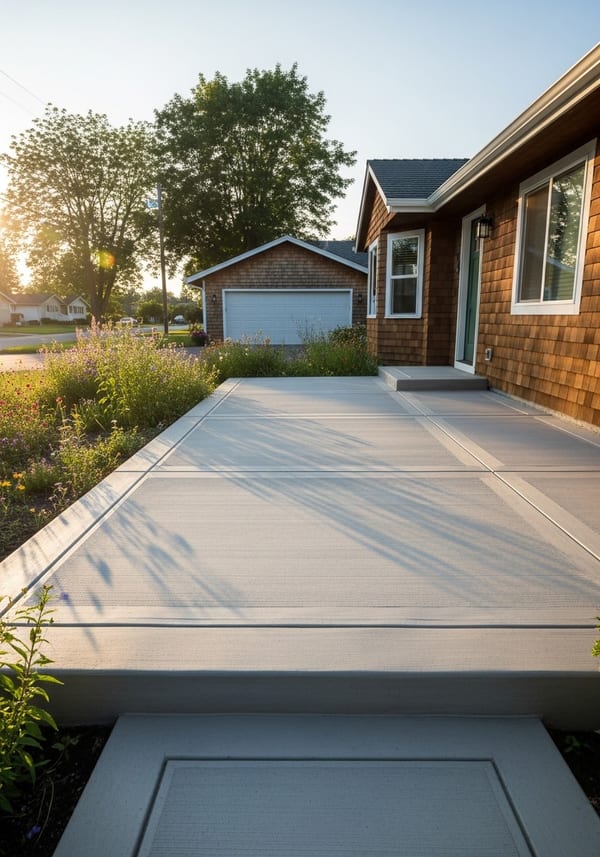
A straight 5-foot-wide walkway in broom-finish concrete costs $6–10/sq ft installed — about $900–1,500 for a typical 30-foot front walk. Add a slight bevel on the edges and a dark-gray color wash and it looks significantly more expensive than it is. The wider format (5 feet vs. the code minimum of 3) is worth the cost: it reads as generous and intentional.
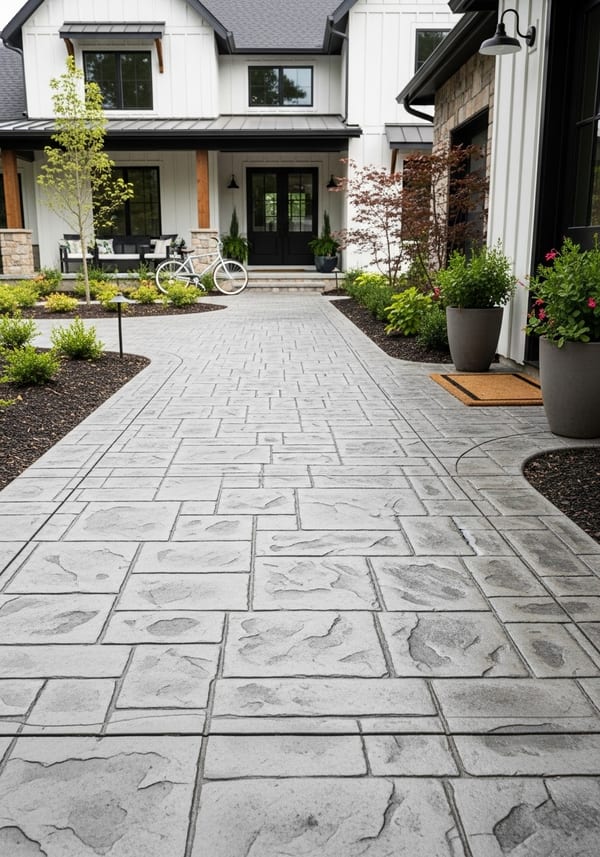
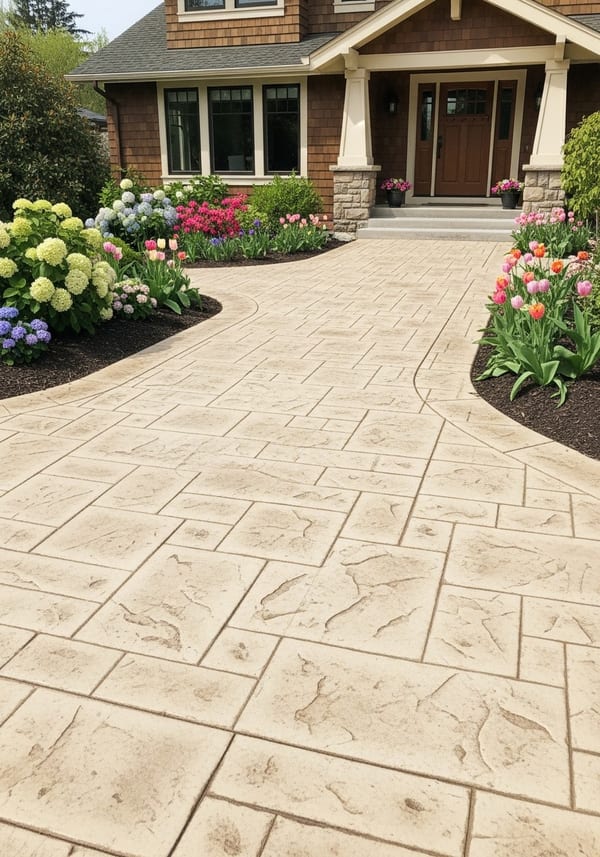
Curved Flagstone-Stamped Path
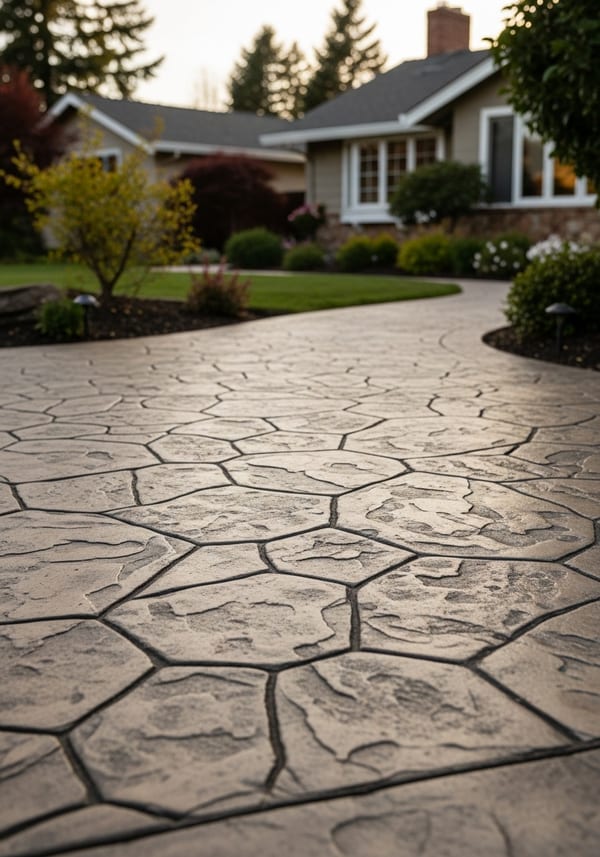
A curved walkway with random flagstone stamping softens the approach to a traditional home and runs $12–18/sq ft. The curve also allows you to route around existing landscaping without removing mature plants. Budget 10–20% extra over a straight walkway of the same finish due to forming complexity. A gentle single arc — curving 2–3 feet off a straight center line — is easier to form than a winding S-curve and looks more composed in most front yard settings. Add a contrasting border strip in a darker tone to define the curve's outer edge and the path reads as designed rather than just bent. If you're also planning a curved driveway apron or patio edge, a consistent curve radius across all three elements creates cohesive geometry.
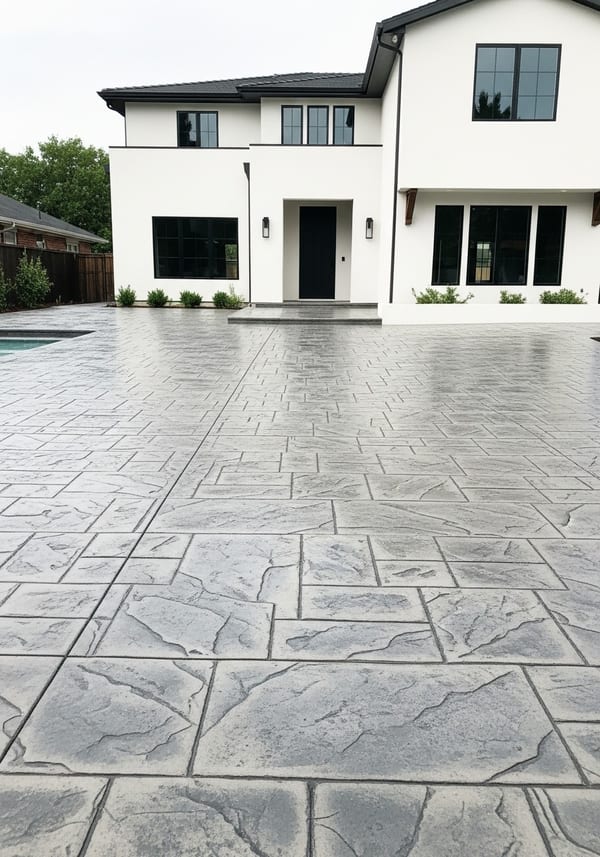
Stamped vs. Plain: Which Finish Is Worth It for a Front Walkway
Plain broom finish ($6–10/sq ft) is the practical choice: durable, easy to maintain, and perfectly appropriate for most homes. Stamped concrete ($12–18/sq ft) doubles the cost but transforms the walkway from functional to designed. The upgrade is worth it when the rest of the property is polished — less so when the walkway is the only design element getting attention.
Stepping-Stone Style
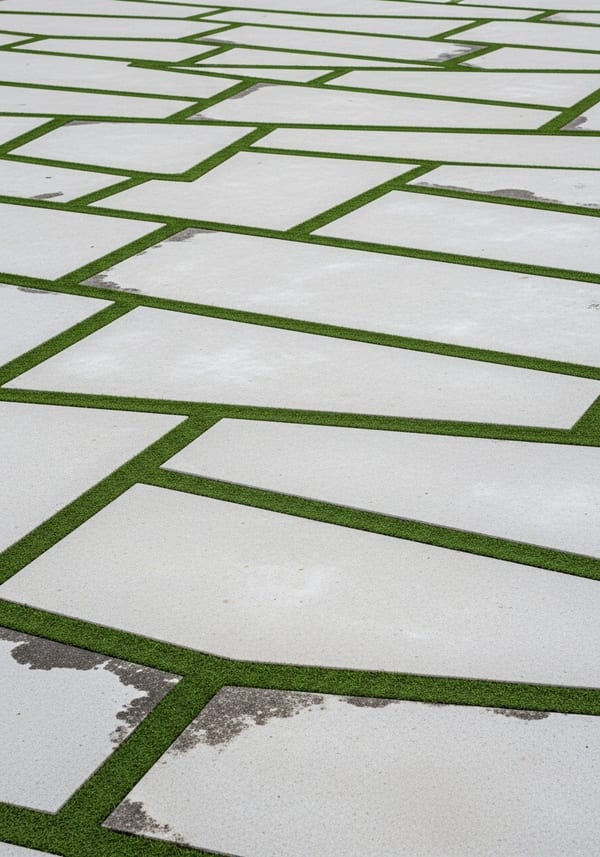
Large individual pads (24"×24" or 24"×36") set into a gravel or grass surround give a modern, intentional look. Each pad can be poured and stamped individually. Cost varies widely — a simple DIY pour runs $50–150 per pad in materials; contractor installation typically runs $100–250 per pad including forming and finishing. The most effective front entry stepping-stone applications use consistently-sized square pads (24"×24" is the standard) spaced 18"–20" apart on center — close enough to feel like a cohesive path, not a hop-scotch course. Match the pad finish to any adjacent hardscape: if the driveway is charcoal broom finish, cast the stepping pads in the same base pigment for continuity. Decomposed granite ($30–60/cu yd) between pads looks cleaner than grass for a primary front entry.
Get the full inspiration pack — free.
30+ curated patio, driveway and walkway design images delivered to your inbox.
Exposed Aggregate with Smooth Borders
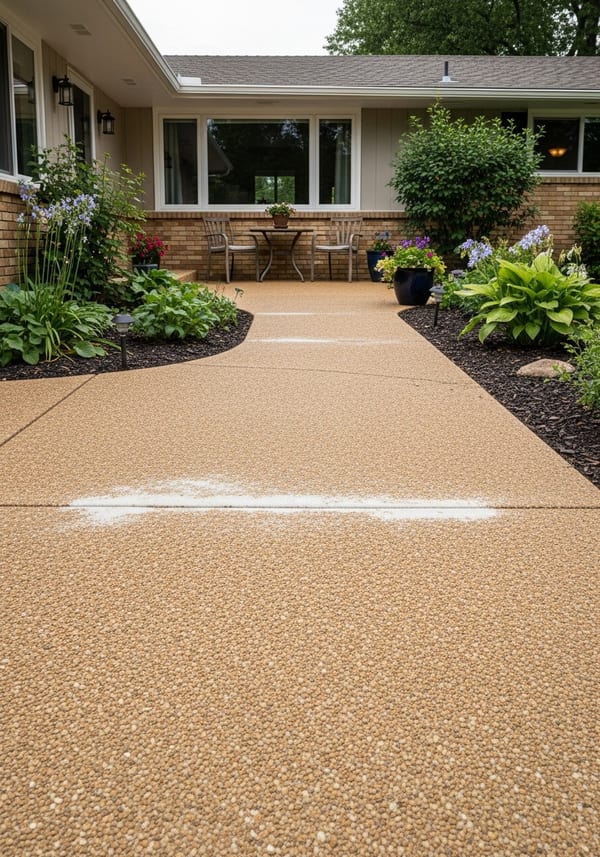
A textured exposed-aggregate field with smooth concrete borders gives the walkway a finished, designed appearance. The border delineates the path from the lawn cleanly and adds definition without the full stamping premium. Exposed aggregate runs $8–14/sq ft — between plain and stamped in both cost and visual impact. PourCanvas can show you how different finish combinations would look on your specific front approach.
Coordinating Your Walkway with the Driveway and Patio
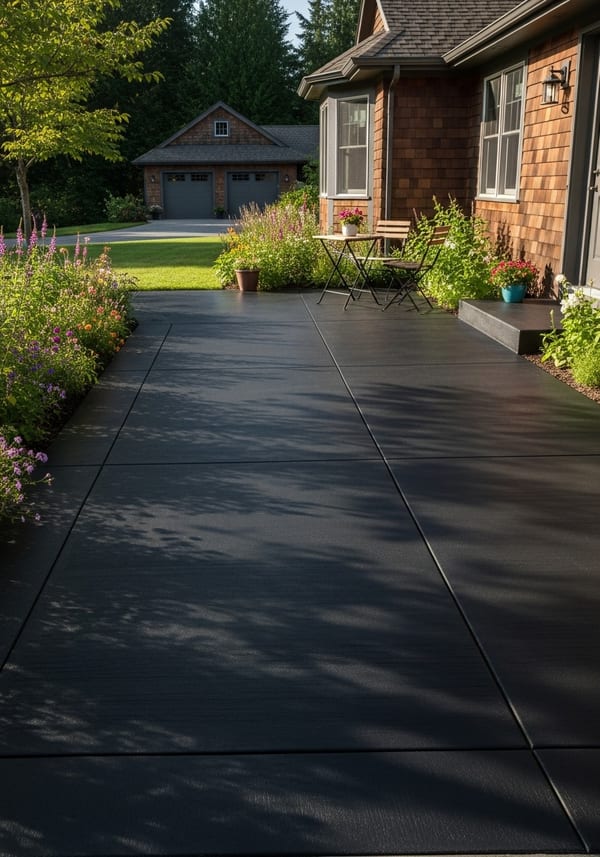
The front walkway, driveway approach, and patio are the three hardscape surfaces most visible from the street. Coordinating their finishes and colors adds visual coherence that makes a property look intentionally designed rather than assembled piece by piece. The most effective approach is to choose a common palette — same base color, compatible textures — and apply it across all three. If the driveway is charcoal broom finish with a scored border, the front walkway in exposed aggregate with a grey-black tone reads as a intentional complement rather than a mismatch. The patio can then carry the stamped version of the same pattern for visual continuity throughout the outdoor space. A contractor who quotes all three surfaces in one project typically prices the combined work 10–20% lower per sq ft than three separate jobs.
Sealing and Maintenance for Front Walkways
A front concrete walkway takes more weather exposure and foot traffic per square foot than almost any other hardscape surface. Sealing every 2–3 years significantly extends the life of the finish, especially for colored or stamped surfaces. For plain broom finish, a penetrating silane-siloxane sealer ($0.20–0.40/sq ft) repels water and deicing chemicals without changing the surface appearance. For stamped and colored walkways, a film-forming acrylic or polyurethane sealer ($1–2/sq ft applied professionally) maintains color depth and protects the stamp detail. In cold climates, always use magnesium chloride rather than sodium chloride (rock salt) for ice control — rock salt degrades concrete surfaces faster and is particularly harsh on colored and stamped finishes.
Permits and HOA Approval for Front Walkway Work
Most municipalities don't require a permit for replacing a residential front walkway — the work stays within the existing hardscape footprint. Adding a new walkway where none existed, or widening significantly, may require a simple permit in some jurisdictions ($50–200). HOA properties are the main exception: many HOAs regulate the front walkway appearance, including color choices and patterns. Get written approval before pouring any decorative finish, since reversing a rejected stamped walkway means full demolition and replacement. When in doubt, ask your contractor — they handle permit questions daily for your region.
Getting Quotes for Your Front Walkway
Get at least three quotes for any concrete walkway project. When requesting quotes, specify: exact dimensions, finish type, whether any existing surface needs removal, whether the path is straight or curved, and whether any steps are needed. Quotes that don't specify finish type or sealing in writing are low-ball estimates subject to change orders. A quality contractor will measure the site, note any drainage or grade issues, and provide a written scope that includes forming, pour, finishing, and sealing — not just the pour cost. Compare quotes against the national per-sq-ft benchmarks in this article to identify outliers in either direction.
The AI tool is almost ready.
Drop your email and we'll notify you the moment it launches — free to use.