
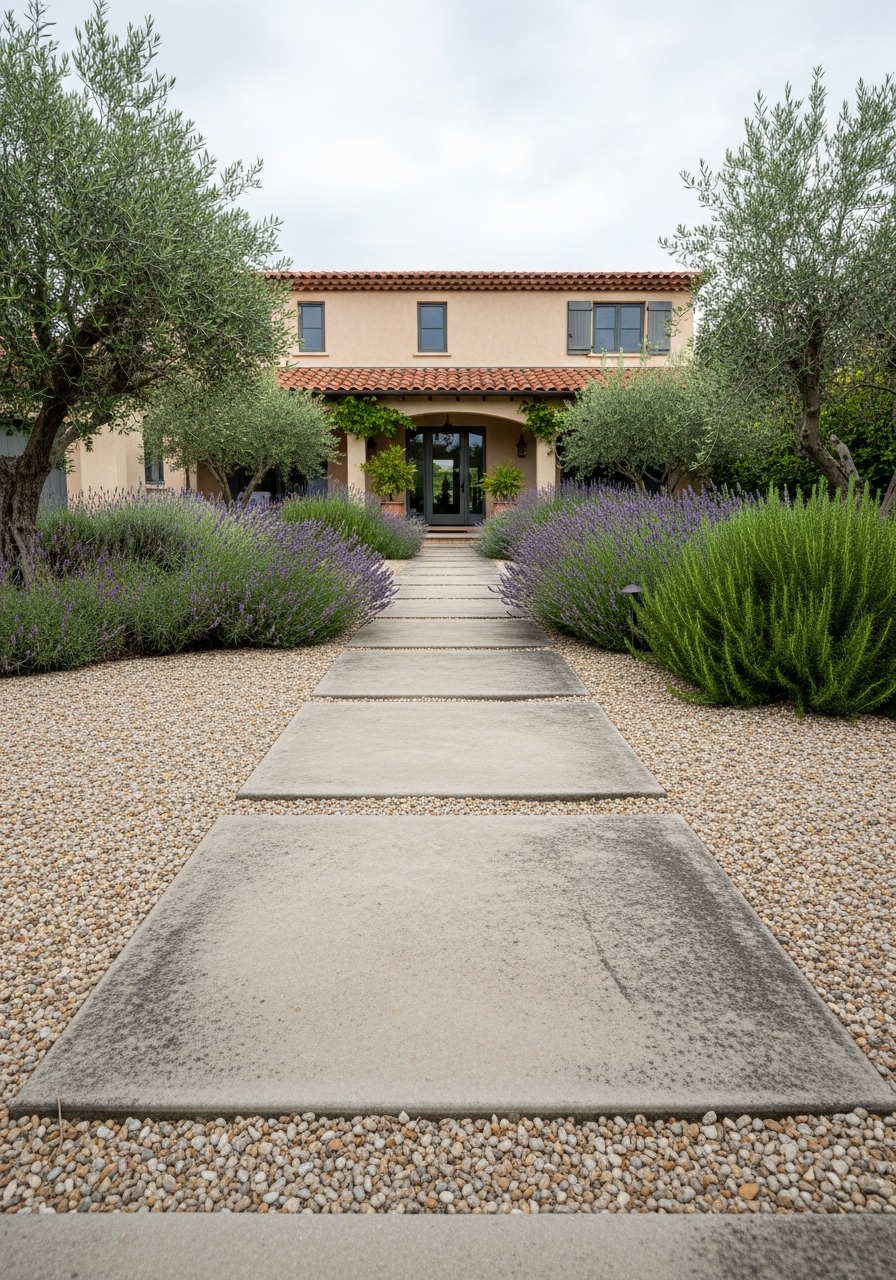
Stepping Stone Walkway Ideas That Work in Any Yard
March 31, 2026
Stepping stone walkways cost $50–250 per pad installed, or $10–30 per pad in materials if you pour them yourself. A 15-pad front path runs $750–3,750 for contractor installation — roughly half the cost of a continuous poured walkway of the same length. The design challenge with stepping stones is avoiding the look of random slabs dropped in the grass. Spacing, size, and material consistency are what separate a designed path from an afterthought.
Stepping Stones vs. Poured Walkway: Which Is Right for Your Yard
A continuous poured concrete walkway ($6–18/sq ft depending on finish) looks polished and handles daily traffic, snow shoveling, and heavy foot flow better. Stepping stones ($50–250/pad installed) cost less per linear foot for infrequent-use paths, suit informal garden settings, and require minimal site prep. Choose a continuous pour for your primary front entrance or any path you use daily; choose stepping stones for secondary garden routes, backyard connections, or paths where you want a more naturalistic feel.
Concrete vs. Natural Stone Stepping Pads
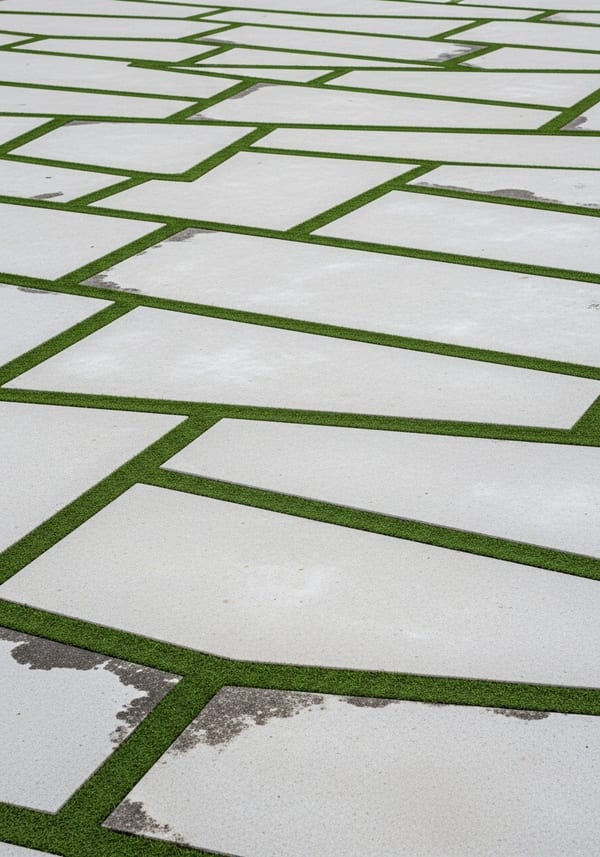
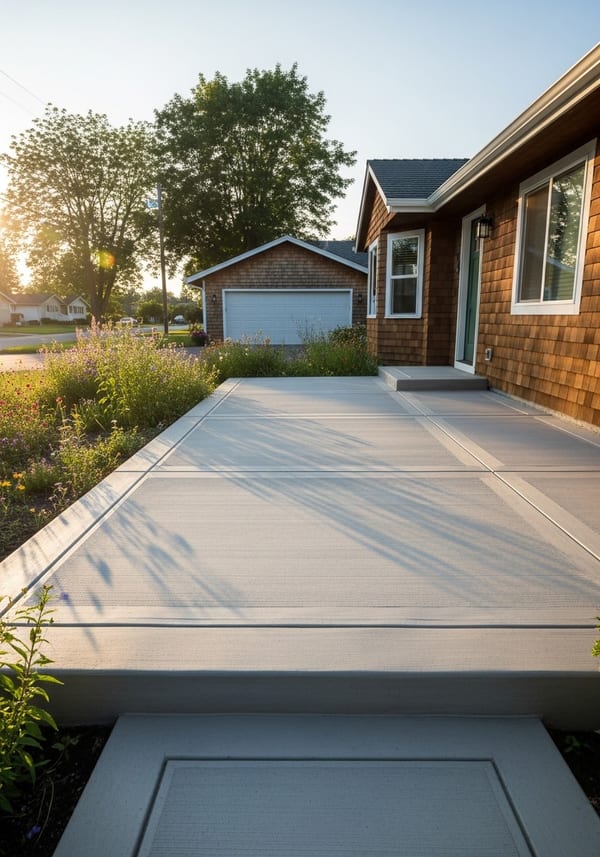
Poured concrete pads ($50–150 each installed) can be cast in any shape and finished with broom texture, exposed aggregate, or a light stamp. They're durable, matchable across a project, and easy to DIY if you have basic concrete experience. Natural stone pavers and flagstones ($80–250 each installed for quality cut stone) have more visual texture and character but cost significantly more and vary in thickness, making level placement harder. Poured concrete wins on cost and consistency; natural stone wins on authentic texture for high-end landscapes.
Spacing: The Rule That Changes Everything
Standard comfortable walking stride between pad centers is 18"–24". At 18" centers, the path feels natural at a normal walking pace. At 24"+ centers, the path feels like it forces unnatural long steps — most people end up stepping between pads, defeating the design. Measure your own stride before setting forms. For larger pads (24"×24" or bigger), the center-to-center distance is effectively the gap between pad edges — a 2"–4" gap on large pads looks intentional; 8"+ gaps look like the pads were placed without measurement.
Size and Shape Options
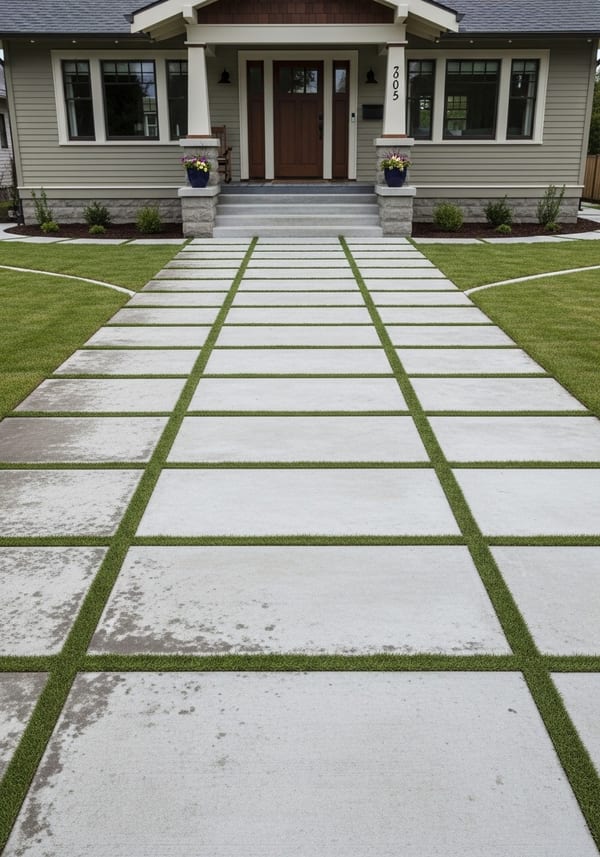
Square pads (18"×18" or 24"×24") suit modern and contemporary landscapes — the geometry is clean and reads as intentional. Irregular or round pads suit cottage, woodland, and naturalistic gardens. Large rectangular slabs (24"×36" or 12"×24") work well for a formal front entry approach where you want something bolder. Mixing pad sizes in an informal path (some 18"×18", some 24"×24") creates organic variety without losing coherence.
Get the full inspiration pack — free.
30+ curated patio, driveway and walkway design images delivered to your inbox.
Ground Cover Between Pads
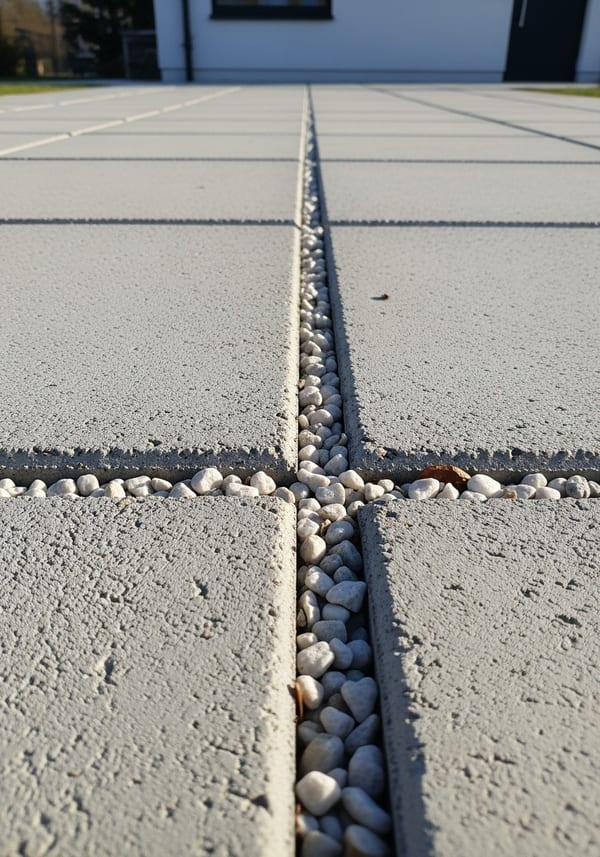
What you put between stepping pads changes the entire character of the path. Decomposed granite or fine gravel is the most low-maintenance option — stable, weed-suppressible with landscape fabric, and available in tones that complement concrete. Buff or tan decomposed granite ($30–60 per cubic yard delivered) suits warm earth-tone pads; grey granite fines suit charcoal or cool-grey concrete. Grass between pads looks great initially but requires careful mowing around each pad and becomes a maintenance burden on a heavily-used path. Creeping thyme, Irish moss, and creeping Jenny are the most popular living ground covers — they fill in over a season, suppress weeds, and handle light foot traffic if the path isn't walked heavily. Creeping thyme is especially durable and releases a pleasant scent underfoot. PourCanvas can show you how different pad styles and spacing would look in your specific yard before you commit.
DIY Poured Stepping Pads
Casting your own concrete stepping pads is one of the most approachable DIY concrete projects. Use 2"×6" lumber as a form, pour standard 3,500 PSI concrete to a 3"–4" depth, and add a broom texture before it sets. A bag of 80 lb concrete ($7–10) fills roughly one 18"×18"×3" pad. Total material cost per pad: $10–20 including the form lumber you can reuse. Cure under plastic for 48–72 hours before handling. For a 15-pad path, that's $150–300 in materials — a significant saving over contractor work.
Stepping Pads vs. Continuous Concrete: Maintenance Comparison
Stepping pads and continuous poured walkways have different long-term maintenance profiles. Individual pads can sink and shift over time as the sub-base settles — a common occurrence after 5–10 years, especially in freeze-thaw climates. Re-leveling a sunken pad requires lifting it (or removing and replacing it), adding gravel sub-base, and resetting. Cost: $50–200 per pad professionally. A continuous poured walkway doesn't shift as individual units — it may crack, but a monolithic slab stays in plane better than individual pads over time. For a primary front walkway you'll use daily, the structural stability of a continuous pour is worth the extra cost. Stepping pads are more appropriate for casual backyard and garden paths where minor settling is acceptable.
Stepping Stone Style Across the Full Yard
Stepping stone paths work at any scale in the landscape — from a 6-pad herb garden path ($50–150 in materials) to a full-length backyard primary route (20+ pads at $1,000–5,000 installed). The most effective property-wide use of stepping pads is as a secondary circulation system that complements the primary front walkway. The front walk is poured concrete (continuous and polished); the backyard garden paths use stepping pads in the same color and texture as the front walkway. The matching finish across surfaces of different types — continuous pour and individual pads — creates visual coherence even when the forms are different. This is one of the most cost-effective ways to make a property's hardscape feel designed throughout. If you're also planning a concrete patio or resurfacing a driveway, spec the stepping pads in the same base pigment direction — charcoal stepping stones beside a charcoal driveway and a charcoal patio creates a consistent material language across the entire property for the cost of a few bags of integral color pigment.
The AI tool is almost ready.
Drop your email and we'll notify you the moment it launches — free to use.