
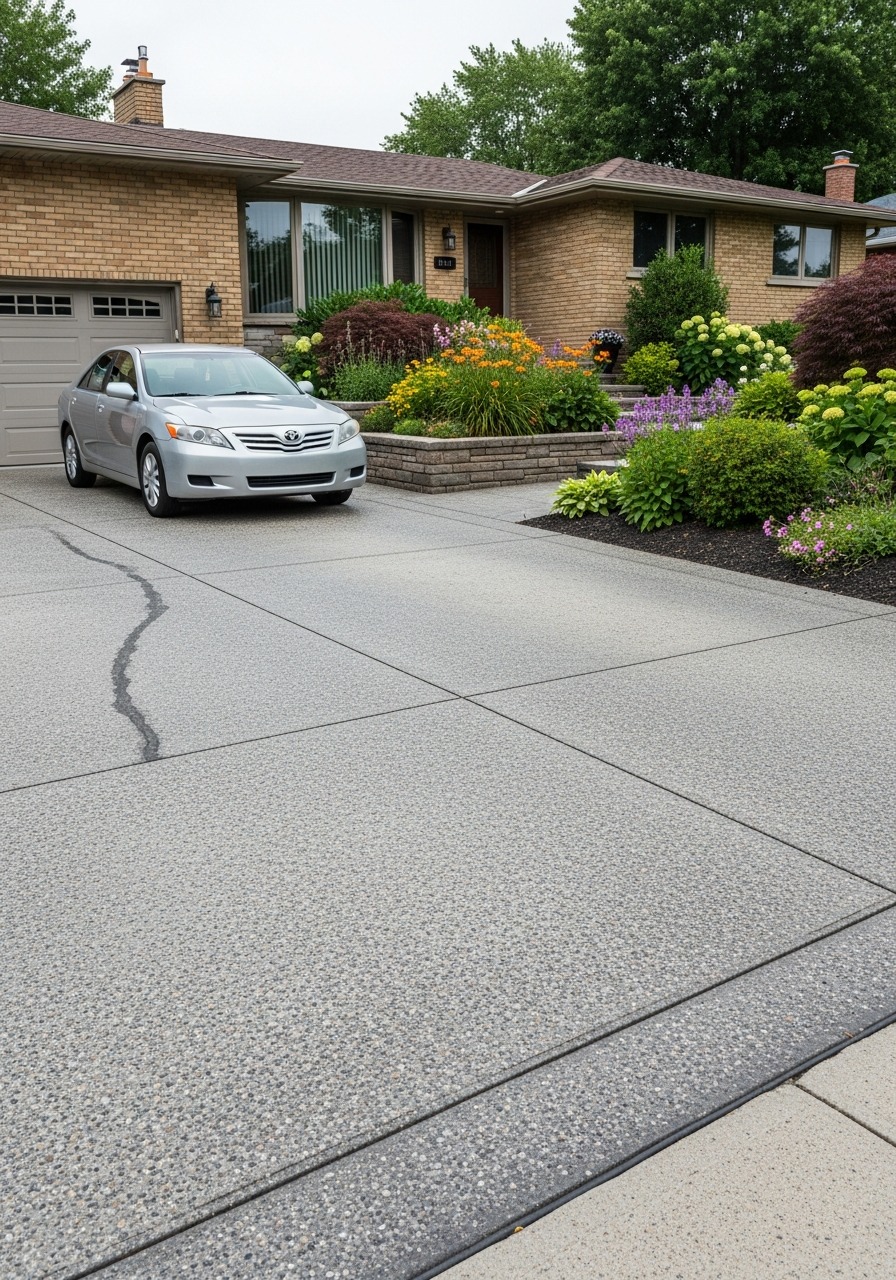
Is an Exposed Aggregate Driveway Right for You?
March 27, 2026
Exposed aggregate driveways cost $8–14 per sq ft installed — the middle ground between plain broom finish ($6–10) and stamped concrete ($12–20). For a 400–500 sq ft two-car driveway, expect $3,200–7,000. It's the right choice when you want a durable, textured surface without committing to a decorative stamped pattern. Here's an honest look at what it delivers and where it falls short. If you're also planning a patio, exposed aggregate is one of the most low-maintenance finishes for that surface too.
What It Is
Exposed aggregate concrete is poured normally, then the surface paste is washed away before it cures to reveal the decorative stone below. The aggregate (stone type and size) can be specified for color and texture. Pea gravel gives a fine, uniform texture; river stone and recycled glass offer more color variation. The process requires precise timing — the surface must be pressure-washed during a narrow window after the pour, before the concrete hardens enough to resist aggregate exposure.
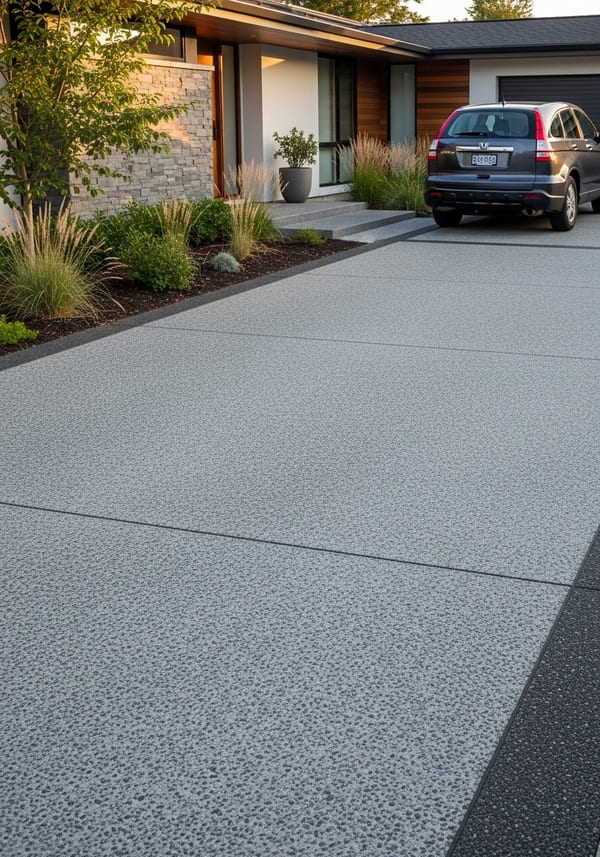
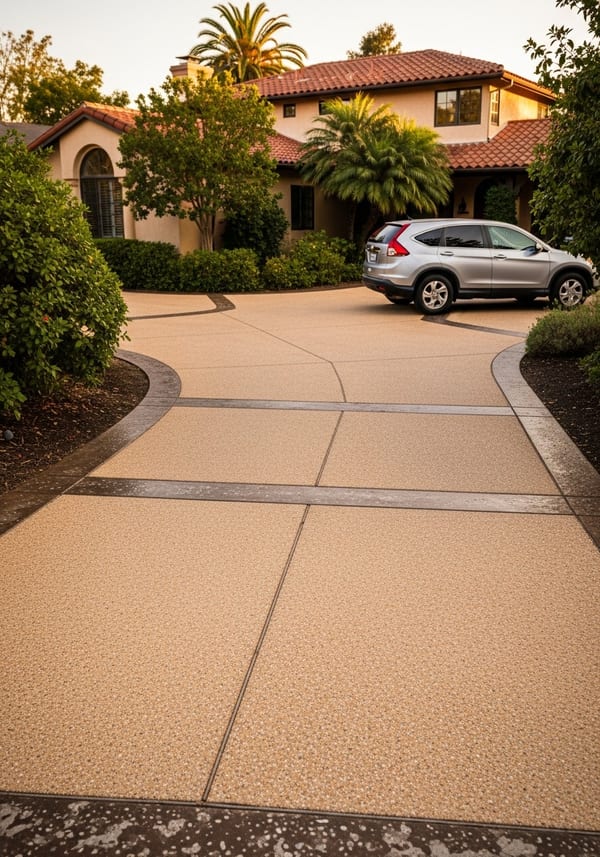
Exposed Aggregate vs. Stamped Concrete: Which to Choose
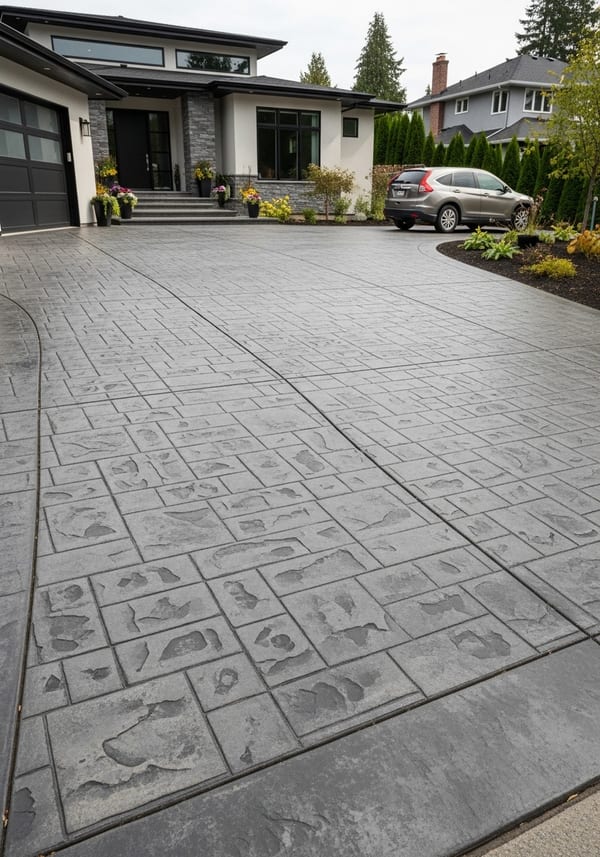
Stamped concrete ($12–20/sq ft) wins on visual impact and design variety — if a specific look is the goal, stamped gives more options. Exposed aggregate ($8–14/sq ft) wins on durability, traction, and low maintenance. Choose stamped if you want a specific visual outcome. Choose exposed aggregate if you want a surface that handles weather and vehicle traffic with minimal fuss and ages gracefully without requiring color upkeep. On driveways specifically, exposed aggregate's durability advantage over stamped is more significant than it is on patios.
Pros
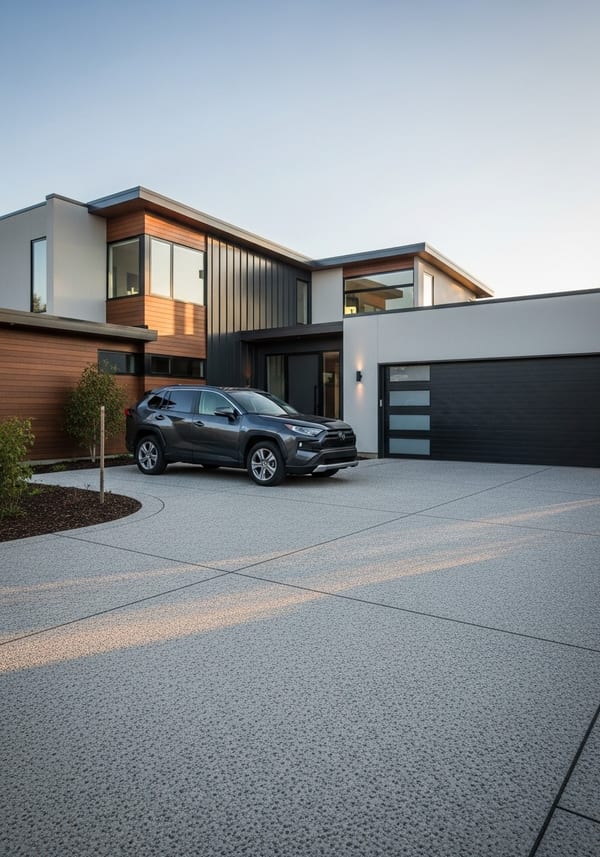
Excellent slip resistance — far better than smooth concrete, and comparable to broom finish without the directional texture. Hides tire marks and surface imperfections well. Stands up to freeze-thaw cycles well when properly sealed. The pea gravel or river stone look is genuinely attractive without requiring the color maintenance that stamped finishes demand. And unlike stamped concrete, exposed aggregate improves with light wear — the aggregate polishes subtly over time.
Cons
Harder to patch seamlessly than smooth concrete — the aggregate mix and weathering make exact matches difficult. Edges chip if heavy equipment hits them. And it's not compatible with snowblower blades, which catch on the texture. If you live in a heavy snow region and use a snowblower, smooth concrete or stamped concrete is a better fit.
Get the full inspiration pack — free.
30+ curated patio, driveway and walkway design images delivered to your inbox.
Aggregate Type and Color: The Most Important Specification
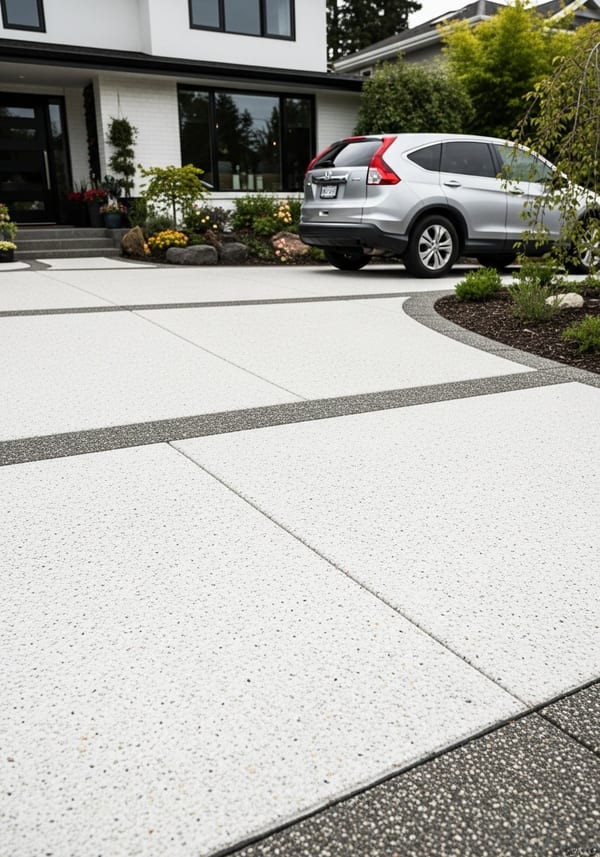
The aggregate mix choice is the single most consequential decision in an exposed aggregate driveway — more than the concrete base color or the sealer. Pea gravel (3/8" round stones) gives a fine, uniform texture that reads as contemporary and suits modern homes. River stone (mixed sizes, 1/4"–3/4") gives more visual variation with a naturalistic feel. Crushed granite in a consistent color is the premium option for a clean, designed look. Aggregate color determines how the driveway reads from the street: warm tan-buff aggregate looks traditional and organic; grey-white aggregate reads as modern and clean; charcoal basalt gives a bold, urban look. Specify the aggregate type and source material in your contract — "exposed aggregate" without a specification leaves the contractor to choose the cheapest available mix, which may not match your intent.
Sealing Exposed Aggregate: Do It Right
Exposed aggregate driveways need a penetrating sealer applied at installation and every 2–3 years thereafter. The right product is a silane-siloxane penetrating sealer — it soaks into the concrete, repels water and oil, and doesn't fill the texture or create a slippery surface. Avoid film-forming sealers (acrylic, polyurethane) on exposed aggregate driveways: they coat the aggregate rather than penetrate, can become slippery when wet, and eventually delaminate from the surface texture rather than breaking down uniformly. The penetrating sealer protects the aggregate from oil staining and prevents the concrete base from absorbing water that freezes and spalls the surface in cold climates. DIY application costs $0.20–0.40/sq ft in product on a 400–500 sq ft driveway.
Exposed Aggregate Driveway vs. Patio vs. Walkway
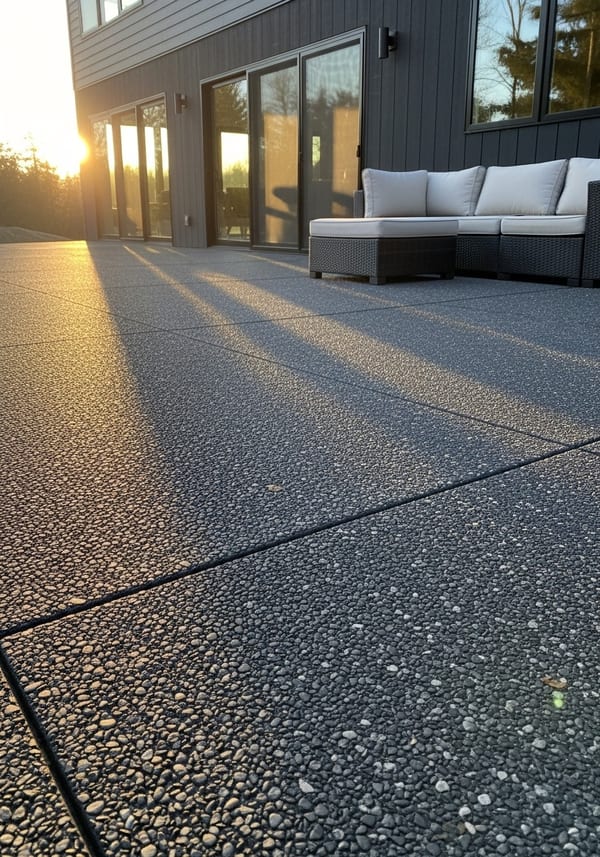
Exposed aggregate is one of the few finishes that works equally well on all three surfaces — driveway, patio, and walkway. The traction advantage makes it particularly suitable for the front walkway (wet from rain, morning dew) and pool deck adjacent areas. On a driveway, the texture hides tire marks and surface wear more effectively than any smooth finish. On a patio, it stays cooler underfoot in direct sun than dark stamped surfaces and ages without the color maintenance that stamped finishes require. If you're planning all three surfaces, exposed aggregate in a consistent aggregate color across all three is the most maintenance-efficient approach — one sealer product, one maintenance schedule, zero color-matching headaches.
Cost Comparison: Exposed Aggregate vs. Other Driveway Finishes
On a standard 500 sq ft two-car driveway: plain broom finish runs $2,000–4,000; exposed aggregate runs $4,000–7,000; stamped concrete runs $6,000–10,000; natural stone or paver driveways run $10,000–17,500+. Exposed aggregate sits in the middle on both cost and visual impact — it's the choice for homeowners who want a step above plain but don't want the maintenance commitment of stamped finishes or the upfront cost of pavers. On a per-year basis over a 25-year lifespan, exposed aggregate and plain broom finish have similar total cost of ownership; the aggregate premium is justified by the better appearance and lower maintenance complexity.
Front Walkway in Exposed Aggregate: Extending the Look
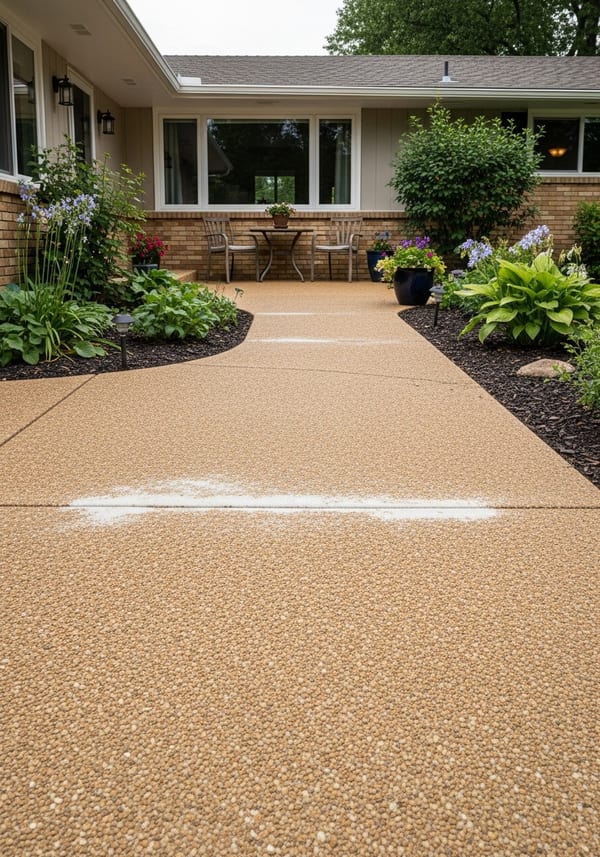
If you're choosing exposed aggregate for the driveway, extending the same finish to the front walkway creates a strongly cohesive exterior. The aggregate species and color should match between surfaces — specifying from the same supplier and the same aggregate batch is the most reliable way to achieve this. Where some variation is acceptable on a large driveway, the walkway is viewed at close range by every visitor and scrutinized more carefully. A pea gravel aggregate walkway in the same warmth direction as the driveway aggregate ties both surfaces together without being matchy-matchy. The patio can use a slightly different finish — a complementary stamped or stained surface — while still reading as part of the same material family.
The AI tool is almost ready.
Drop your email and we'll notify you the moment it launches — free to use.