
Exposed Aggregate Concrete
Updated June 10, 2026
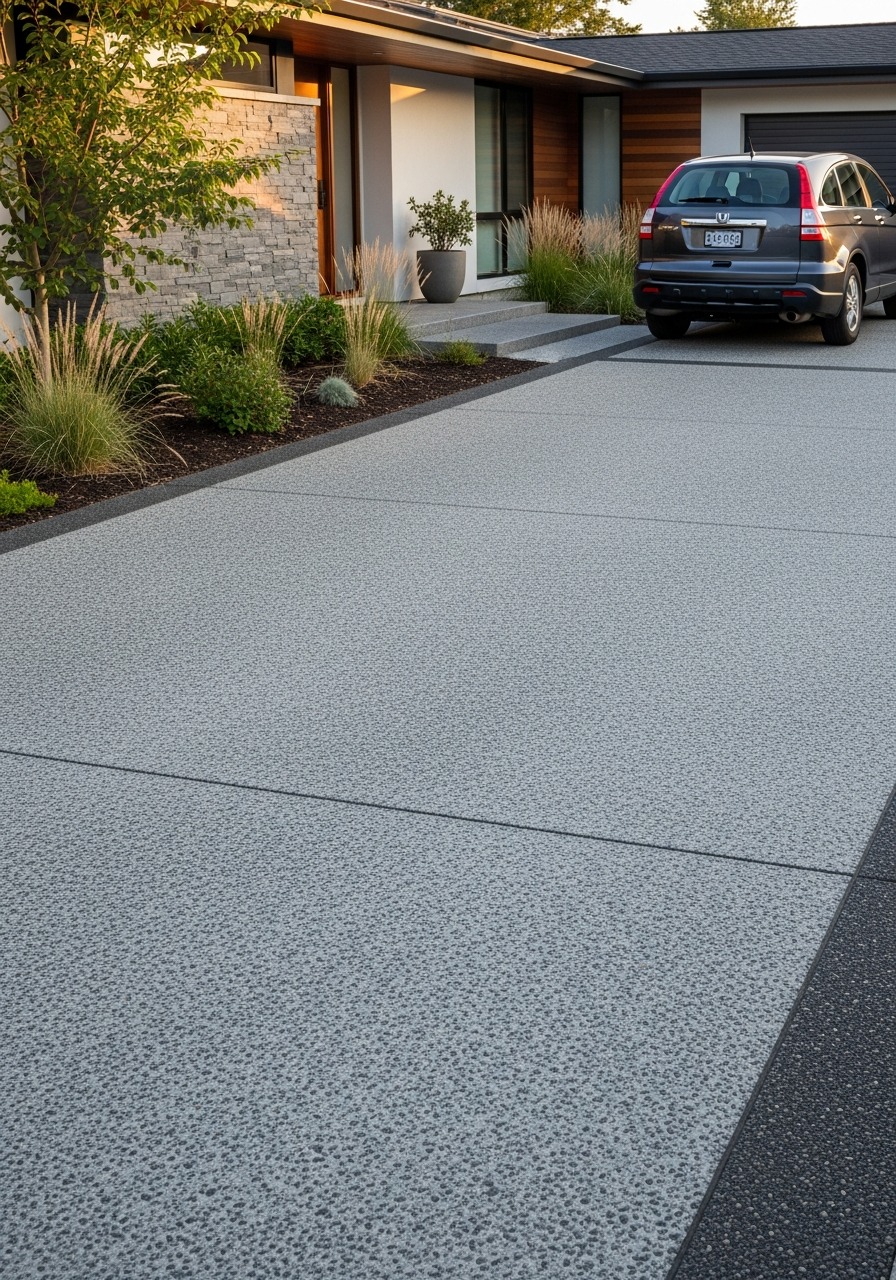
Exposed aggregate concrete reveals the decorative stone beneath the surface by washing away the top paste during cure — it costs $8–14 per sq ft installed, less than stamped concrete. The embedded stones provide natural grip and visual depth, making it the go-to finish for driveways and pool decks where slip resistance matters more than pattern.
Pros
- +Natural slip resistance — no added texture treatment needed
- +Hides surface wear, tire marks, and minor imperfections
- +Wide range of stone and color options
- +No stamping labor premium
- +Works well around pools where wet barefoot traffic is common
Cons
- −Difficult to patch invisibly — repairs almost always show
- −Rough texture can be uncomfortable for barefoot use
- −Not compatible with snowblower blades (texture catches the blade)
- −Catches organic debris and requires frequent sweeping
- −Specialty aggregate significantly increases cost
How It's Made
Concrete is poured with a specified aggregate mix (pea gravel, river stone, crushed granite, or recycled glass). Before the surface fully cures, a surface retarder is applied to slow the top layer. Once the bulk of the slab has set — typically 4–8 hours depending on temperature and humidity — the top paste is washed away with water and a stiff brush, exposing the aggregate below. The stones are revealed but held permanently in the concrete matrix. The NRMCA recommends testing retarder set time on a small sample before committing to the main pour, because ambient conditions can shift the window by hours. Aggregate uniformity across the batch is equally important: if the ready-mix plant switches aggregate sources mid-load, you'll see a visible color shift across the finished slab. Specify single-source aggregate in your order and verify it on-site before the pour begins.
Aggregate Options
The choice of stone determines the look and heavily influences cost. Pea gravel (small, rounded, earthy tones) gives a warm, natural finish and is the most affordable option at most ready-mix plants. River stone (larger, mixed tones) reads as bold and organic but requires a deeper reveal wash, adding labor time. Crushed granite or quartz produces a sharper, more contemporary look with angular facets that catch light differently than rounded stone. White quartz or marble aggregate creates a light, bright surface that pairs well with modern landscaping — it also stays noticeably cooler underfoot in direct sun compared to dark basalt. Recycled glass aggregate (blue, green, clear) is a specialty option that catches light dramatically and appeals to eco-conscious homeowners; expect to pay 15–25% more than standard pea gravel for the material alone. Mixing two aggregate types (e.g., river stone with glass accents) is possible but increases the risk of uneven exposure depth.
Cost
Exposed aggregate runs $8–14 per sq ft installed — less than stamped concrete ($12–18) but more than plain broom finish ($6–10). The aggregate type affects the high end of the range: standard pea gravel is at the lower end; specialty stone or recycled glass pushes toward $14+. For a standard two-car driveway (400 sq ft), budget $3,200–5,600. Regional pricing varies significantly — West Coast and Northeast markets typically run 20–30% higher than national averages due to higher labor rates and material transport costs. Custom aggregate selection also impacts price: ordering a specific stone color or size that isn't stocked locally means a specialty batch surcharge, often $1–3 per sq ft on top of base pricing. If you're comparing bids, confirm whether the quote includes sealing — some contractors quote the pour only and add sealing as a separate line item, which can make a lower bid misleading.
Best Applications
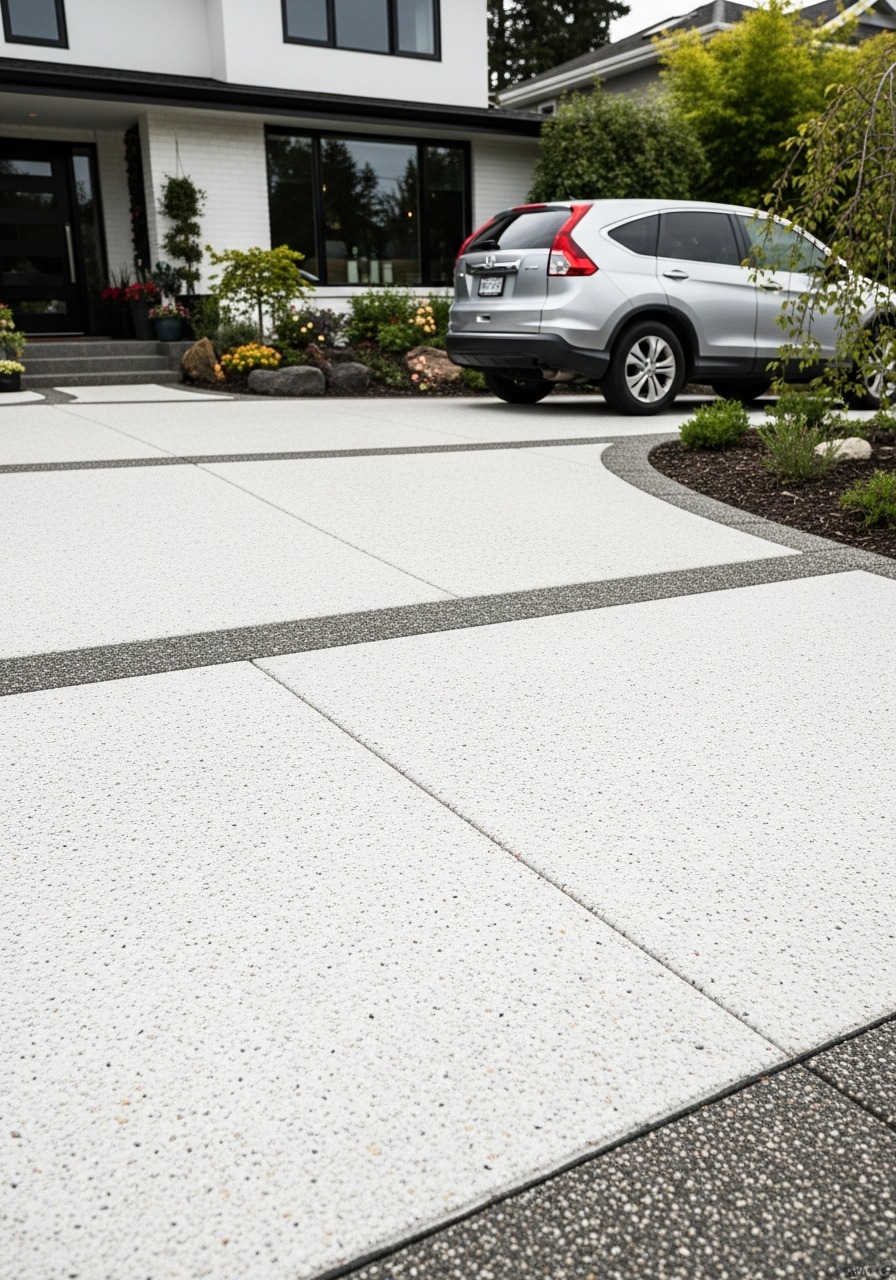
Driveways: the texture handles tire traffic well and disguises oil marks better than smooth concrete. The natural aggregate surface doesn't show tire scuff lines the way a broom-finished or stamped surface does, which keeps the driveway looking clean longer between washes. Pool decks: stays cooler underfoot than dark surfaces, provides natural slip resistance when wet — two properties that make it the most popular decorative finish for residential pool surrounds nationwide. Patios: works particularly well in natural garden settings where the organic stone look ties into the landscape. The color palette of the aggregate can be matched to existing hardscape or garden stone for a cohesive outdoor design. Less suited to spaces where people walk barefoot frequently — the texture can be uncomfortable on bare feet, particularly with angular aggregate like crushed granite.
Maintenance
Seal the surface after installation and every 2–3 years thereafter. A penetrating sealer (not a film-forming one) preserves the texture while protecting against staining — film-forming sealers can peel on exposed aggregate because the uneven surface prevents proper adhesion. Avoid de-icing salts in the first few winters — chlorides degrade concrete from the surface, and the exposed aggregate finish has more surface area for salt to attack. Use sand for traction instead. Pressure washing is effective for cleaning; keep the nozzle at 25 degrees and stay below 2,500 PSI to avoid dislodging smaller aggregate particles over time. For organic stains (leaf tannin, berry juice), an oxygen-bleach solution applied before pressure washing prevents the need for aggressive pressure that can damage the surface.
The AI tool is almost ready.
Drop your email and we'll notify you the moment it launches — free to use.
Limitations
Patching exposed aggregate is difficult: new concrete poured to match an existing surface will differ in stone size, distribution, and color. This means damage repair is almost always visible, even when the same aggregate source is used — the weathering difference between old and new sections is immediately apparent. The texture also catches dirt and organic debris more than smooth concrete, requiring more frequent sweeping — plan on weekly blowing or sweeping in fall if the slab is near trees. In climates with heavy freeze-thaw cycles, air-entrainment in the mix (6–8% air content) and proper sealing are essential to prevent spalling. Snowblower use requires caution: the raised aggregate profile can catch metal blades and chip stones from the surface. Use a rubber-edged blade or set the height at least half an inch above the surface.
Exposed Aggregate Driveway: What to Expect
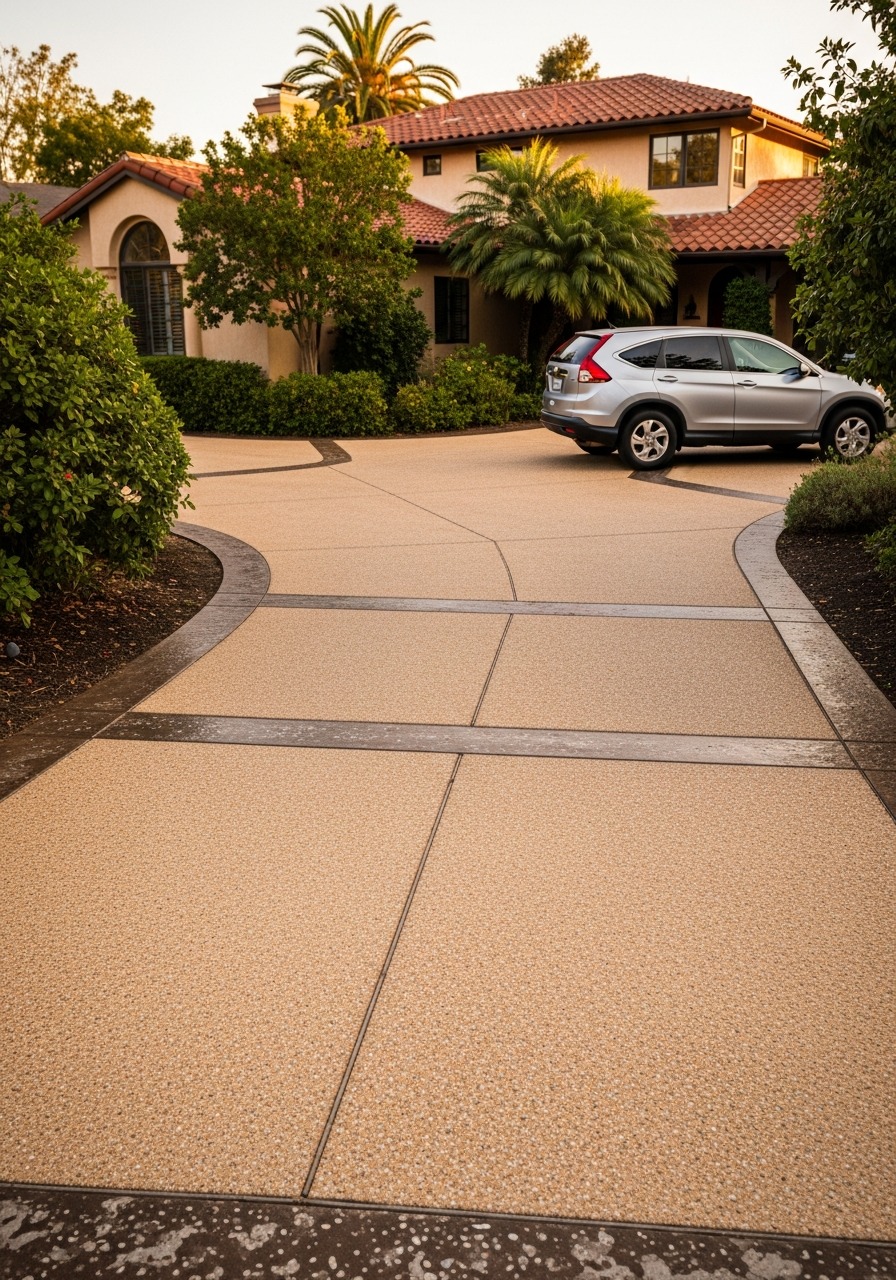
Exposed aggregate is one of the most durable decorative options for driveways because the embedded stones resist tire wear better than surface-applied color treatments. For driveways, specify a minimum slab thickness of 5–6 inches — this is thicker than the 4-inch standard for patios and walkways because the slab needs to handle repeated 4,000+ pound vehicle loads without cracking. Tire marks are less visible on exposed aggregate than on smooth or stamped surfaces because the stone texture breaks up the visual pattern of rubber transfer. In cold climates, avoid chemical de-icing salts for the first two winters and ideally switch to sand or calcium magnesium acetate (CMA) permanently — the textured surface holds salt residue longer than smooth concrete, increasing the freeze-thaw damage cycle. Expansion joints every 8–10 feet help direct any cracking to controlled locations rather than across the middle of the slab.
Exposed Aggregate Patio: Best Uses and Limitations
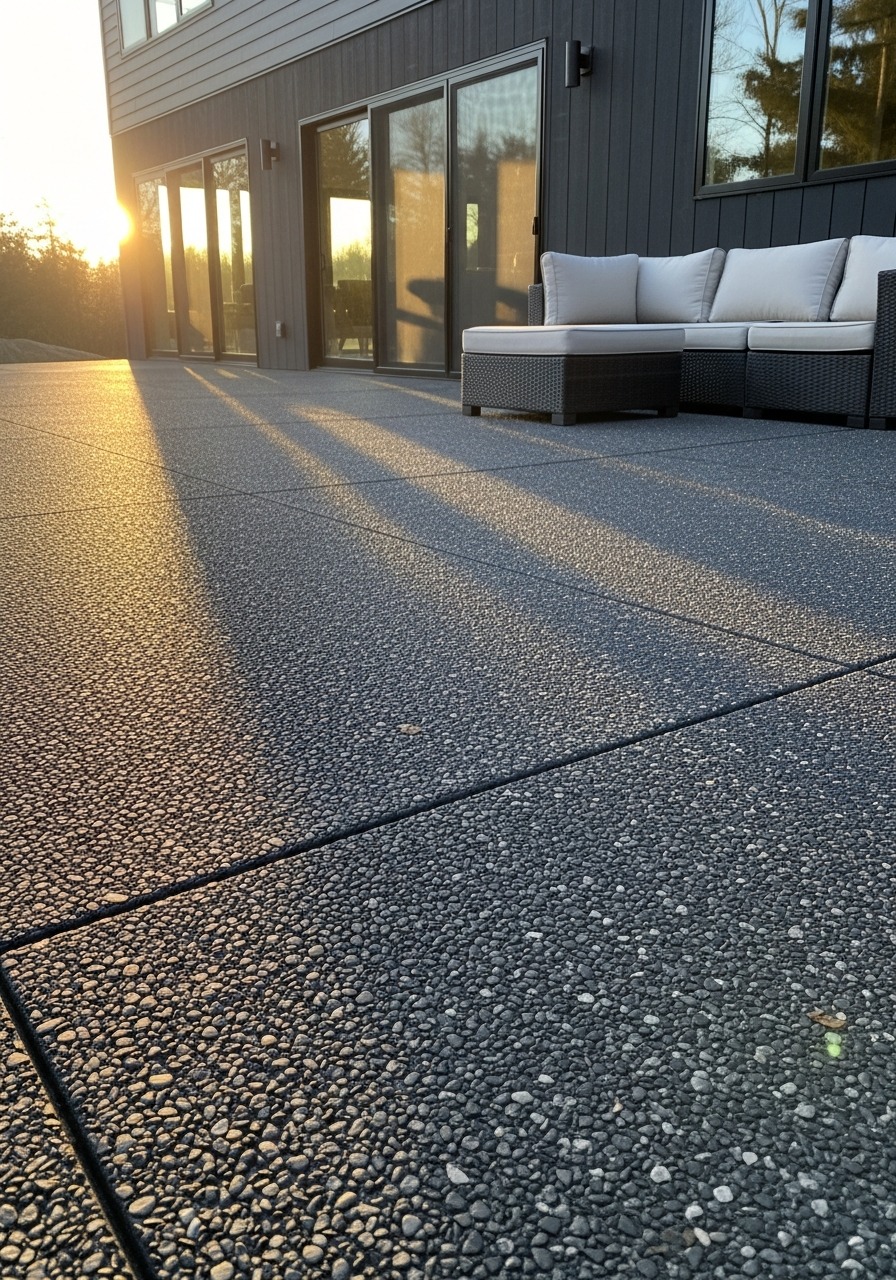
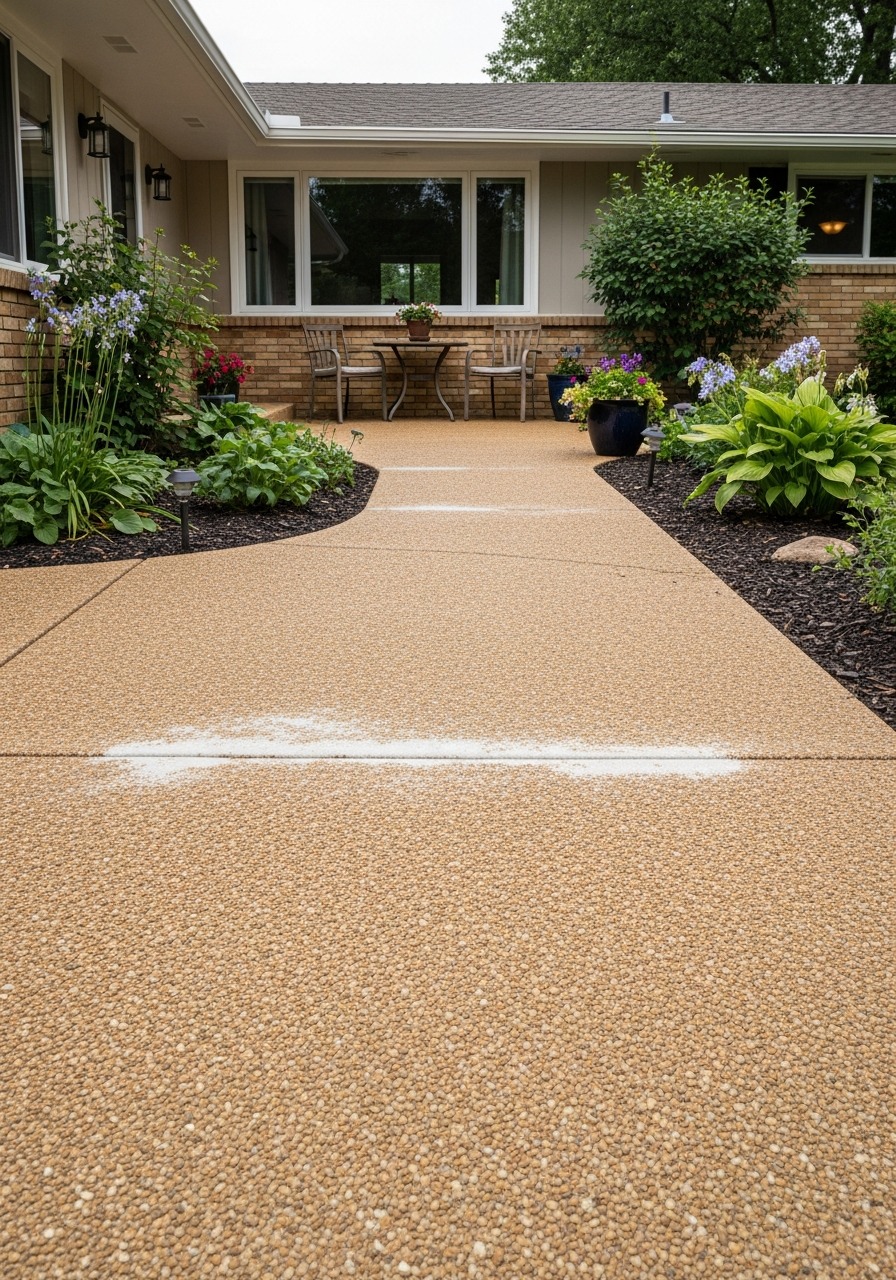
Exposed aggregate patios work best in outdoor entertaining areas, garden seating zones, and transitional spaces between lawn and structure. The natural stone texture complements plantings and hardscape borders in a way that stamped patterns often can't — it looks organic rather than manufactured. However, the rough texture that provides excellent grip also makes exposed aggregate a poor choice for barefoot dining areas or spaces where children play on the ground. Metal patio furniture legs sit well on the uneven surface without sliding, but fabric chair pads can snag on sharper aggregate. When integrating exposed aggregate with adjacent surfaces (pavers, smooth concrete, natural stone), use a clean control joint or metal divider strip at the transition — butting different surface types without a defined edge leads to cracking and an unfinished look. For covered patios, consider that the texture's grip advantage is less valuable where rain doesn't reach.
Exposed Aggregate vs Stamped Concrete
Both exposed aggregate and stamped concrete are decorative upgrades over plain gray concrete, but they serve different priorities. Exposed aggregate costs less ($8–14/sq ft vs $12–18 for stamped) because it skips the stamp tooling rental, multi-layer color hardener application, and the labor-intensive stamping process. Stamped concrete wins on pattern variety — you can replicate slate, brick, wood plank, or cobblestone patterns — while exposed aggregate is limited to whatever stone you select. For slip resistance, exposed aggregate is the clear winner: the natural stone texture provides consistent grip even when wet, whereas stamped concrete's traction depends on the depth and pattern of the stamp impression.
Both finishes require resealing every 2–3 years and both are difficult to patch invisibly. The deciding factor is usually location: driveways and pool decks favor exposed aggregate for grip; patios and entryways favor stamped for design flexibility.
| Factor | Exposed Aggregate | Stamped Concrete |
|---|---|---|
| Cost/sq ft | $8–14 | $12–18 |
| Slip resistance | High (natural texture) | Medium (depends on pattern depth) |
| Repair difficulty | Hard — new aggregate won't match | Hard — color match is difficult |
| Pattern variety | Limited to aggregate choice | Wide — dozens of stamp patterns |
| Maintenance | Reseal every 2–3 years | Reseal every 2–3 years |
| Best for | Driveways, pool decks | Patios, walkways, entries |
Exposed Aggregate Pool Deck
Exposed aggregate is the most popular decorative concrete finish for residential pool decks, and for good reason: the natural stone texture provides reliable slip resistance when wet — the single most important safety requirement for any pool surround. Unlike broom-finished concrete, the aggregate surface doesn't develop a slippery biofilm as quickly because water drains off the uneven surface faster. Light-colored aggregate choices (white quartz, light river stone, cream-toned pea gravel) stay noticeably cooler underfoot than dark concrete or dark stone options — a difference of 10–15°F on summer afternoons. Splash stains, sunscreen drips, and chlorine residue are far less visible on the varied stone surface than on smooth concrete. The cost premium over standard broom finish is typically $2–5 per sq ft, which on a 300 sq ft pool deck adds $600–1,500 to the project — a modest upcharge for the combination of safety, aesthetics, and lower visible maintenance.
DIY Exposed Aggregate: Is It Realistic?
Technically, yes — but practically, only for small projects like stepping stones, a utility pad, or a garden bench base. The critical skill is timing the surface retarder wash: too early and you wash away the cream before the slab has set (aggregate falls out), too late and the retarder has no effect (you're left with plain concrete you can't expose). Professionals gauge this timing by feel, reading the concrete's surface firmness, color change, and response to a fingertip test — variables that shift with temperature, humidity, and wind speed. On a 90°F day with low humidity, the wash window might be 3–4 hours; on a cool overcast day, it could be 8–10 hours. A first-timer can't calibrate this by reading instructions — it takes repetition. For anything larger than 50 sq ft, the risk of mis-timing the wash across the full surface area is high enough that hiring a contractor is the pragmatic choice. The material cost savings of DIY don't justify a failed slab you'll need to demolish and repour.
Exposed Aggregate Concrete in the real world
Get the full inspiration pack — free.
30+ curated patio, driveway and walkway design images delivered to your inbox.
Frequently Asked Questions
Related guides
Use this finish on