
How Much Does a Concrete Driveway Cost?
March 27, 2026
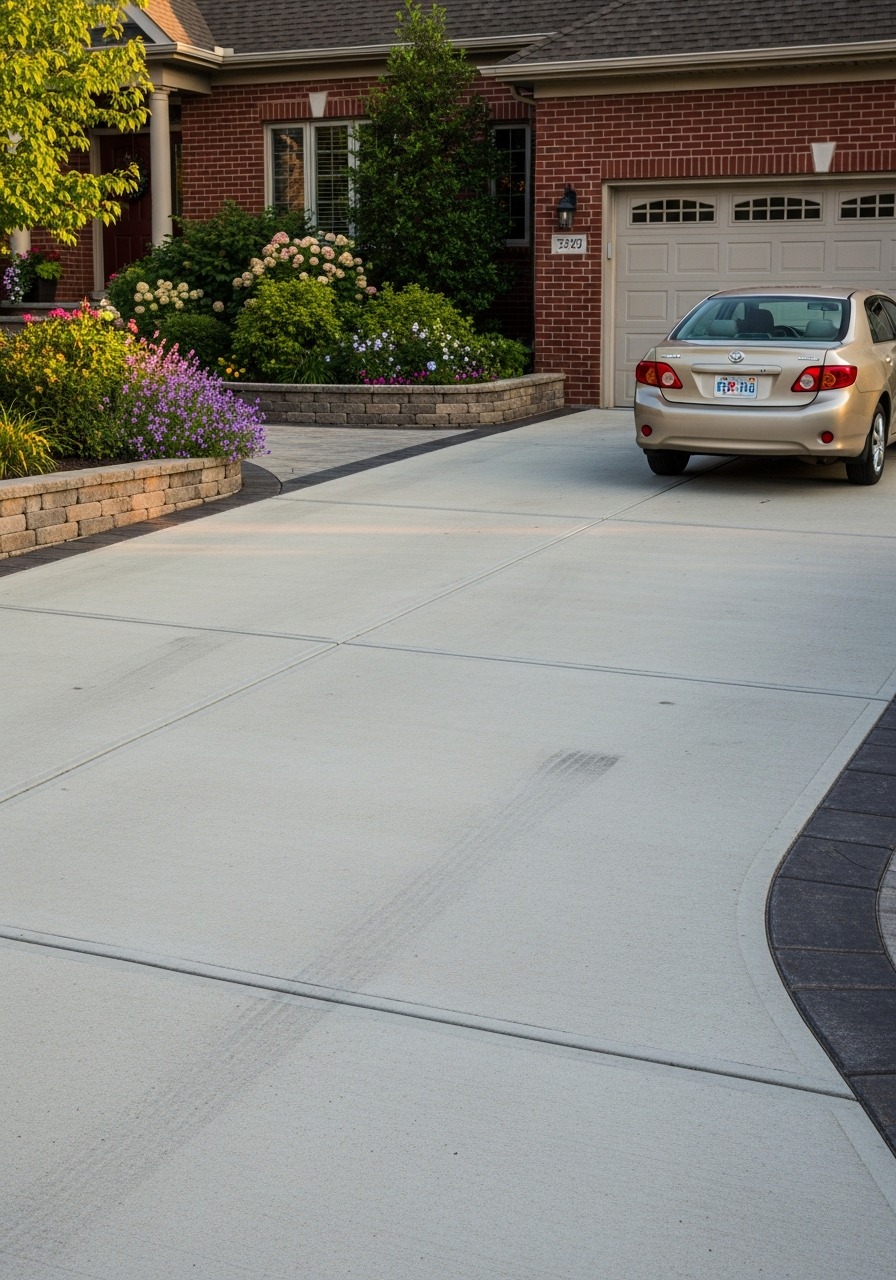
A plain concrete driveway costs $4–8 per sq ft installed. Stamped finishes run $12–20 per sq ft; exposed aggregate falls in between at $8–14. On a 400–500 sq ft two-car driveway, that's a range of $1,600 to $10,000 depending on finish and region. Finish type and local labor rates are the two biggest variables. If you're also pricing a patio or walkway, the same per-sq-ft logic applies — bundling projects with one contractor typically saves 10–15% on mobilization.
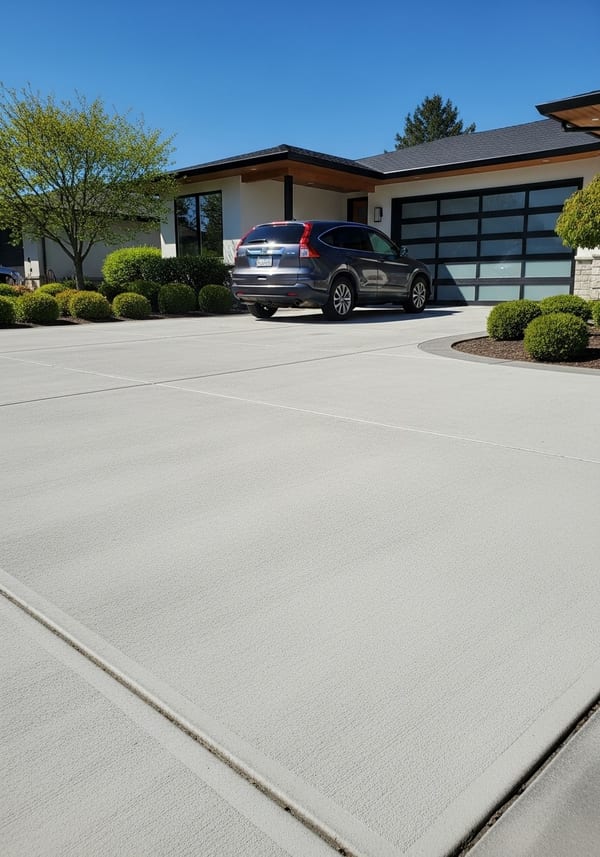
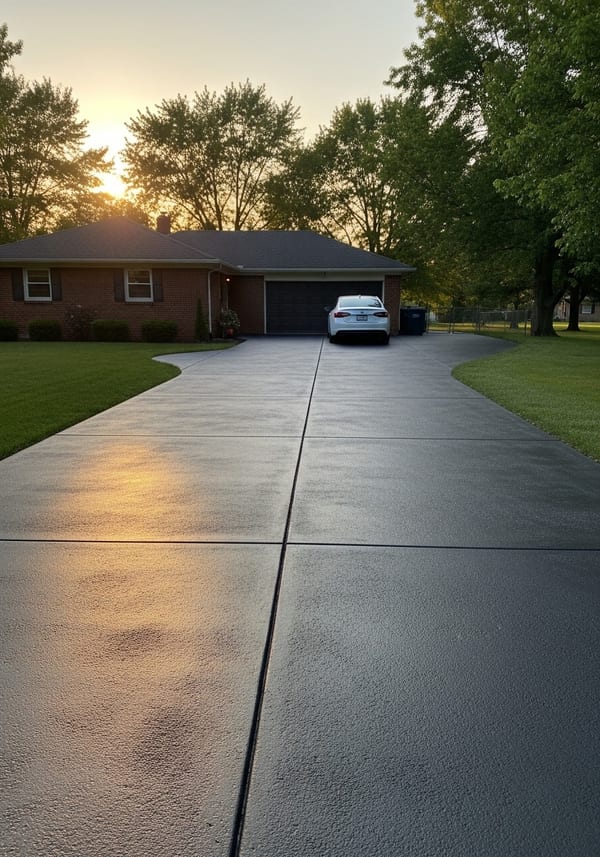
Plain Broom-Finish Driveway
A standard broom-finish concrete driveway costs $4–8 per sq ft installed. For a typical two-car driveway (400–600 sq ft), budget $1,600–4,800. This includes site prep, forming, reinforcement (rebar or wire mesh), pouring, and finishing. It does not include demo of an existing driveway.
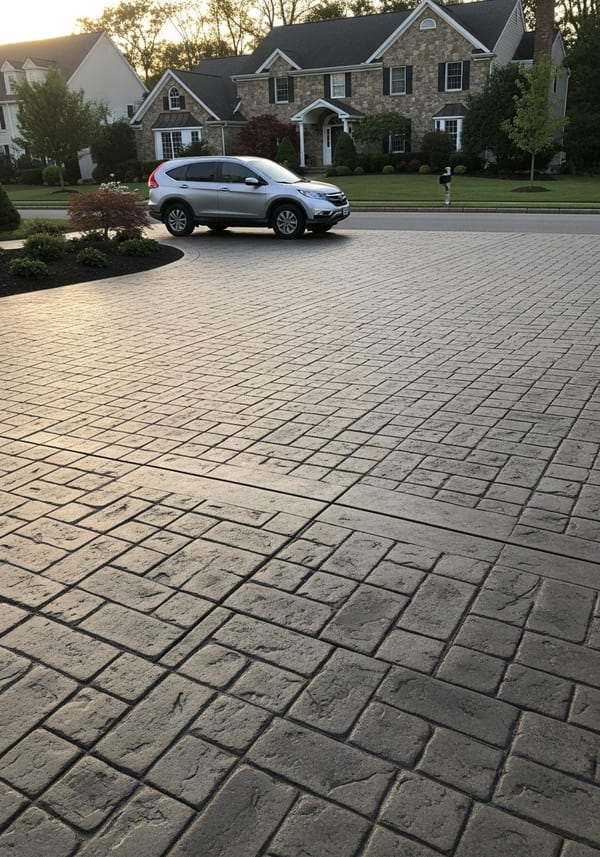
Stamped Concrete Driveway
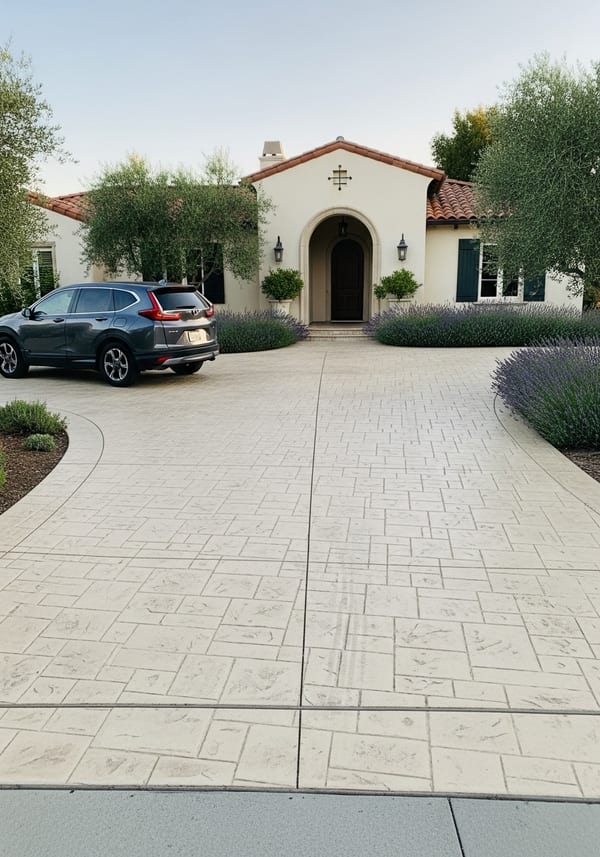
Stamped concrete driveways cost $12–20 per sq ft. The premium comes from skilled labor (stamping requires precise timing during the pour), release agents, and the stamps themselves. Expect $4,800–12,000 for a typical two-car driveway.
Exposed Aggregate Driveway
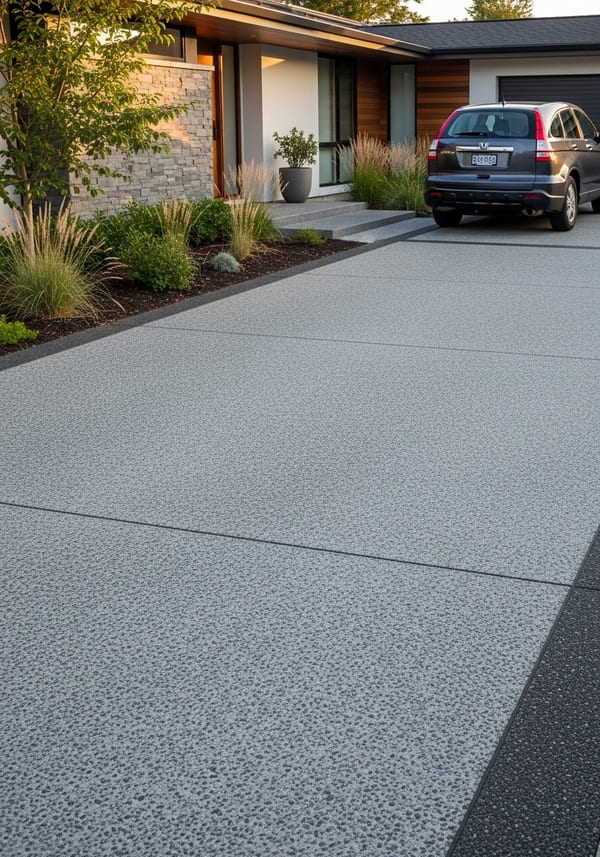
Exposed aggregate driveways cost $8–14 per sq ft — less than stamped concrete but more than plain. The aggregate type (pea gravel, river stone, recycled glass) affects the upper end of the price range.
Colored Concrete
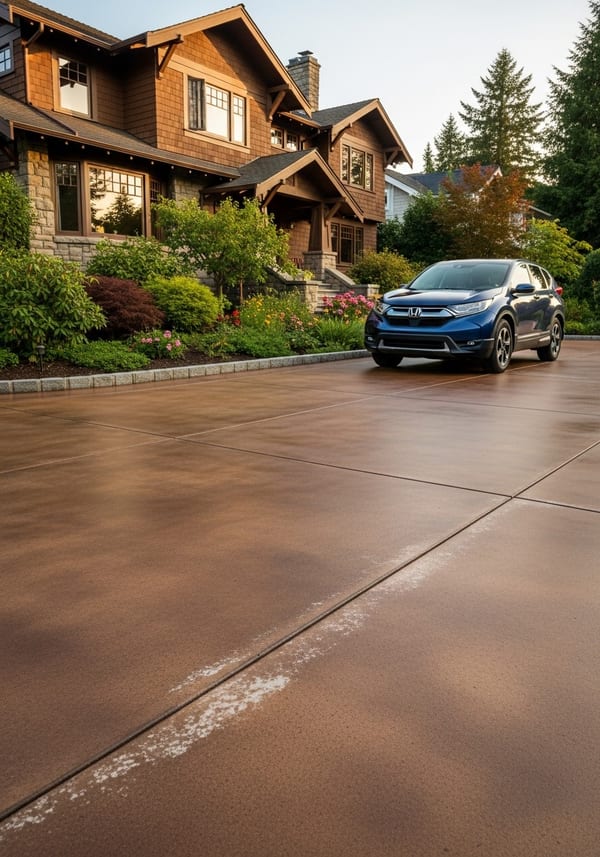
Integral coloring adds $2–4 per sq ft over plain concrete. Surface staining adds $1–3 per sq ft but is less durable. Either option applied to a stamped surface stacks on top of the stamping premium.
Demo and Site Prep
Removing an existing asphalt or concrete driveway adds $1–3 per sq ft. Poor soil conditions (expansive clay, high water table) add cost for sub-base work. Tree roots near the driveway edge may require root barriers.
Get the full inspiration pack — free.
30+ curated patio, driveway and walkway design images delivered to your inbox.
Regional Price Variation
Labor rates vary significantly by region. California, New York, and the Pacific Northwest run 30–60% above national averages. The South and Midwest tend to be at or below the national average. Always get three quotes — driveway pricing varies more than most home improvement categories. The same regional markup applies to patios and walkways, so if you're pricing multiple concrete projects at once, regional labor is the biggest shared variable.
How Driveway Size Affects Cost per Square Foot
Concrete contractor mobilization costs — crew travel, equipment delivery, concrete truck minimums — are roughly fixed regardless of project size. On a small driveway (200–300 sq ft), those fixed costs represent a larger share of the total quote, pushing the effective per-sq-ft cost up. On a standard two-car driveway (400–600 sq ft), the mobilization is spread across a larger surface and per-sq-ft costs are more competitive. If you're replacing or upgrading a smaller single-car driveway, consider extending the scope to include a front walkway, entry steps, or a small apron expansion — adding those surfaces to the same pour often costs less than the stand-alone mobilization would.
Reinforcement: Rebar vs. Wire Mesh vs. Fiber
Concrete driveways require internal reinforcement to manage cracking under vehicle loads and freeze-thaw stress. Rebar (1/2" steel at 18" on center) is the strongest option and is required for driveways that will see heavy vehicles, RVs, or delivery trucks. Wire mesh (6x6 welded wire) is the minimum standard for passenger vehicle driveways and costs less to install. Synthetic fiber reinforcement (polypropylene or steel fibers mixed into the concrete) supplements but doesn't replace rebar — it controls shrinkage cracking during the cure but doesn't add structural strength under load. For most residential two-car driveways, rebar at 18" centers is the right specification and is worth the $0.50–1.00/sq ft premium over wire mesh alone. Ask your contractor which reinforcement they use before signing — the answer matters more than the spec sheet.
Concrete Driveway vs. Asphalt: Cost Over Time
Plain concrete driveways ($4–8/sq ft) cost 30–60% more upfront than asphalt ($3–6/sq ft) on a 500 sq ft driveway. But asphalt requires seal coating every 3–5 years at $200–500 per application, plus crack filling and occasional resurfacing. Over a 25-year period, the total cost of a properly maintained concrete driveway is often lower than asphalt — the lower maintenance frequency and longer base lifespan offset the higher installation cost. The calculation tips toward asphalt only in climates with very harsh freeze-thaw cycles (where concrete cracking is frequent) or when upfront cost is the binding constraint. For driveways that connect to a patio or walkway project, the aesthetic consistency of concrete across all surfaces also adds value that pure cost comparisons don't capture.
Permits and Setbacks
Most municipalities require a building permit for a new concrete driveway, particularly if the apron connects to a public road or if significant grading is involved. Setback requirements limit how close the driveway can be to the property line — typically 2–5 feet in most residential zones. Before pouring any concrete, check local ordinances, especially if you're widening an existing driveway or adding a circular layout that changes the footprint significantly. Permit fees range from $50–300 for a typical residential driveway. The permit inspection usually covers sub-base preparation before the pour — the one stage where an independent check on the contractor's base work is genuinely valuable.
How Finish Choice Affects Long-Term Costs
The finish you choose at installation determines your maintenance cost for the next 30 years. Plain broom finish has the lowest ongoing costs: penetrating sealer every 5–7 years at $0.20–0.40/sq ft DIY. Stamped and colored concrete requires film-forming resealing every 2–3 years at $1–2/sq ft professional — $500–1,000 per cycle on a 500 sq ft driveway. Exposed aggregate falls between: penetrating sealer every 3–4 years at $0.25–0.45/sq ft. Over 30 years, the maintenance cost difference between plain and stamped concrete is $5,000–12,000 on a standard two-car driveway. Factor this into the finish decision alongside the upfront cost — it changes the total cost comparison significantly, particularly for homeowners on a fixed long-term budget.
The AI tool is almost ready.
Drop your email and we'll notify you the moment it launches — free to use.