
Broom Finish Concrete
Updated June 10, 2026
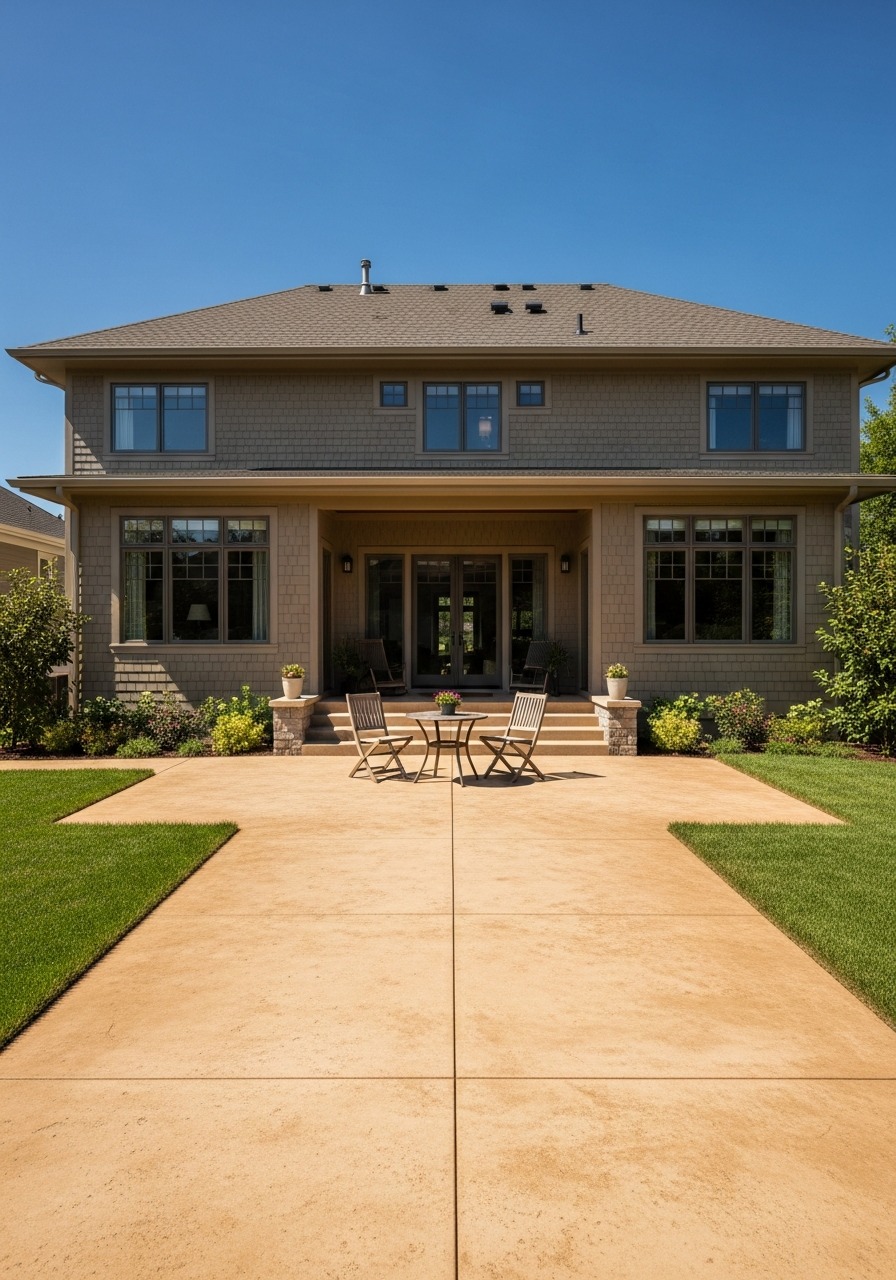
Broom finish concrete is the most affordable poured concrete surface at $6–10 per sq ft installed — a stiff brush dragged across fresh concrete leaves fine parallel lines that provide grip without decorative pattern. It's the default finish for driveways, walkways, and pool decks where durability and low cost matter, and it can be upgraded with integral color or stamped borders without starting over.
Pros
- +Most affordable poured concrete option ($6–10/sq ft)
- +Natural slip resistance from the broom texture
- +Simple to install — fewer timing constraints than stamped
- +Easier to patch than stamped or exposed aggregate
- +Can be upgraded with stain, saw cuts, or border stamps
Cons
- −Utilitarian appearance without color or additional detailing
- −No decorative pattern — reads as plain if left unpigmented
- −Cracks and repairs more visible than on textured surfaces
- −Texture can feel coarse for barefoot patio use
- −Color variation between original pour and patches is common
What It Is
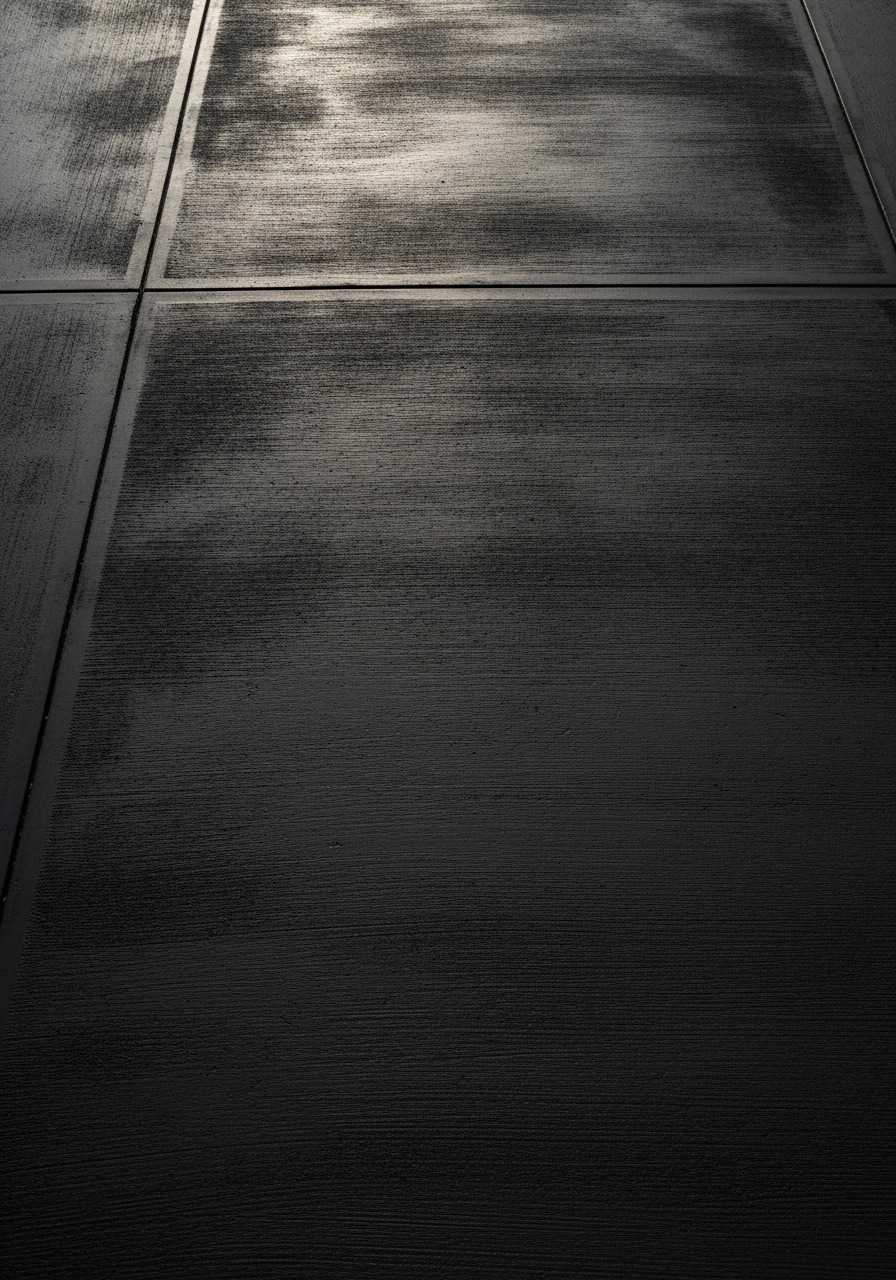
After concrete is poured and floated smooth, a stiff-bristled broom is dragged across the surface while it's still workable. The bristles leave fine parallel lines — or a swirl pattern, depending on technique — that create just enough texture to provide grip without being rough underfoot. The depth of the lines, and therefore the texture level, is controlled by the timing and pressure of the broom pass. Broom selection matters more than most homeowners realize. A horsehair broom produces the finest texture — subtle lines that are barely visible from a few feet away but still provide measurable traction. Nylon bristles create a medium texture that's the industry default for residential work. Concrete-specific stiff-bristle brooms cut deeper grooves for maximum slip resistance, typically specified for commercial ramps, loading docks, and steep driveway aprons where grip is critical even in icy conditions.
Cost
Plain broom-finish concrete is the most affordable poured concrete option at $6–10 per sq ft installed. A 300 sq ft patio runs $1,800–3,000. A standard two-car driveway (400–600 sq ft) costs $2,400–6,000. These figures include site prep, forming, reinforcement, pour, and finish. Demo of an existing surface and significant grade work are additional. The price range reflects regional labor rates and access difficulty — a straightforward backyard pour with truck access to the forms sits at the low end, while a project requiring pumping concrete over the house or working around mature landscaping pushes toward $10/sq ft. Material costs (concrete, rebar, gravel base) are roughly $2–3/sq ft everywhere; the rest is labor and equipment. Adding integral color bumps the total by $2–4/sq ft, and a quality acrylic sealer adds $0.50–1.50/sq ft.
Appearance
Unpigmented broom finish cures to a medium gray. The exact shade depends on the cement and aggregate used — it's not uniform across contractors or regions, and even panels poured on the same day can show slight variation as they cure. For a more intentional look, integral color can be added to the mix ($2–4 per sq ft extra) to produce warm buff, sandstone, charcoal, or custom tones. A quality penetrating sealer deepens the color slightly and gives the surface a clean, finished appearance. Over time, unsealed broom finish lightens as the surface carbonates and accumulates mineral deposits. Sealed surfaces hold their color better but need reapplication every 2–3 years. The parallel broom lines themselves become less distinct with wear, especially in high-traffic areas — which is cosmetic, not structural.
Where It Works Best
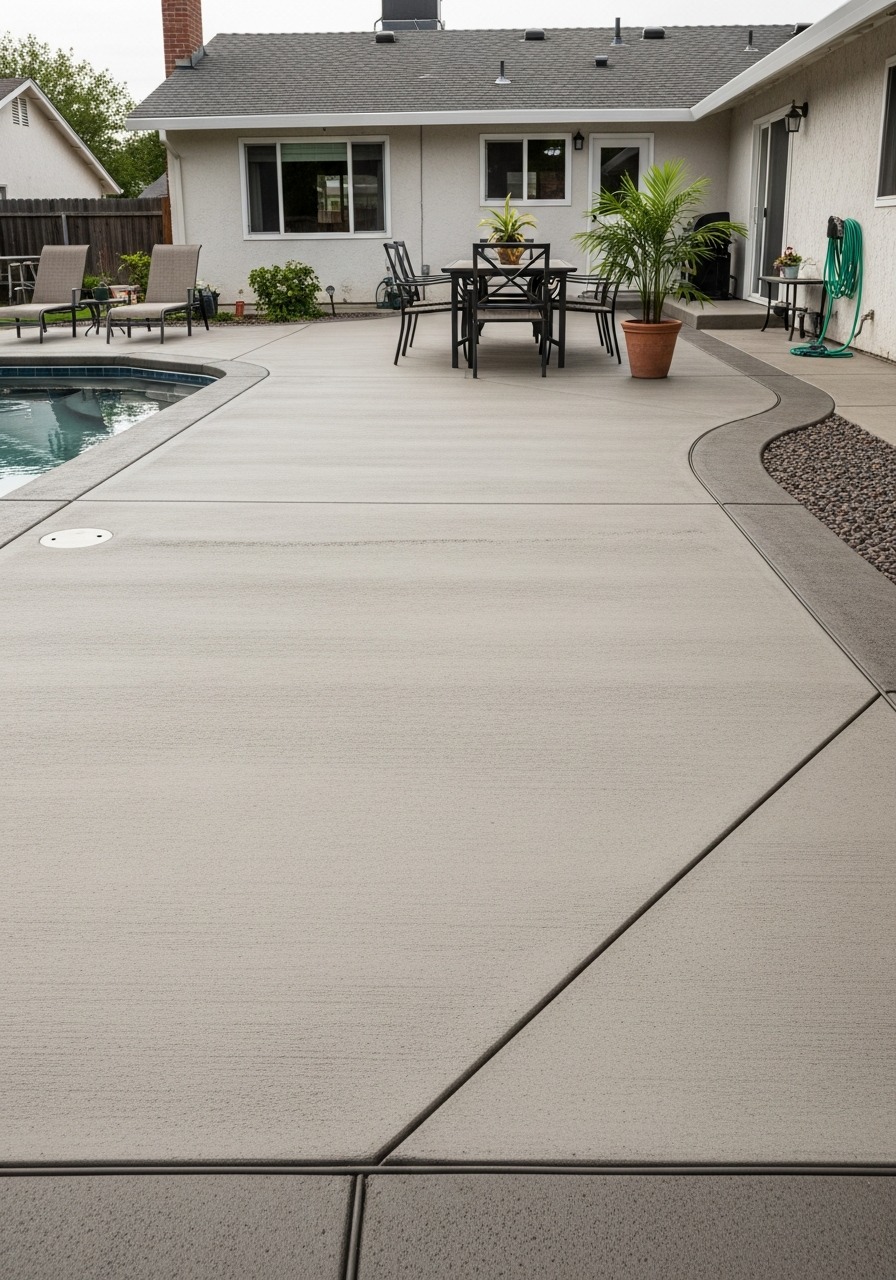
Driveways: the grip is appropriate for vehicle and foot traffic in all weather, and at $6–10/sq ft a 500 sq ft driveway comes in at $3,000–5,000 — roughly half the cost of stamped. Pool decks: the light texture is safe when wet without being uncomfortable on bare feet; broom finish is the default for functional pool decks, and a 400 sq ft deck runs $2,400–4,000. Walkways and paths: lower cost relative to stamped makes it a strong choice for long paths where decorative pattern isn't a priority — a 60 ft walkway (3 ft wide, 180 sq ft) costs $1,080–1,800 in broom finish versus $2,160–3,240 in stamped. Utility pads: garage aprons, shed pads, basketball courts, and RV pads are all natural fits where the goal is a flat, durable, slip-resistant surface and appearance is secondary. For any project over 500 sq ft, the cost savings over decorative finishes become substantial enough to fund upgrades elsewhere in the project.
Limitations
Plain broom finish reads as utilitarian. Without color, it's hard to distinguish from a parking lot. The texture is coarser than stamped concrete, which can be noticeable on patios used for outdoor dining or barefoot use. Cracks and patches are more visible than on textured or patterned surfaces because there's nothing to break up the visual field. Color matching on repairs is difficult — fresh concrete is always a different shade than cured concrete, and the difference is obvious on a uniform broom-finish surface. Efflorescence (white mineral deposits) shows clearly on broom finish, especially darker integral-color slabs. And while the texture provides excellent grip, heavy broom finish can trap dirt in the grooves, making the surface harder to keep clean than a smooth troweled or lightly textured alternative.
The AI tool is almost ready.
Drop your email and we'll notify you the moment it launches — free to use.
Upgrading Broom Finish
A broom-finish slab doesn't have to stay plain. Concrete stain applied after curing can add color without altering the texture — acid stains produce mottled, earthy tones while water-based stains offer more uniform coverage in a wider color range. A saw-cut grid pattern creates visual structure with minimal added cost ($1–2/linear ft for decorative cuts). A stamped or exposed aggregate border around a broom-finish interior gives the look of a custom finish at roughly half the price of stamping the full area. These upgrades can be done at the time of pour or to an existing slab. Micro-topping overlays ($4–8/sq ft) can also resurface an aging broom-finish slab with a fresh texture and color without full replacement — a practical option when the underlying slab is structurally sound but cosmetically worn.
Broom Finish Concrete Driveway
Broom finish is the most common driveway surface in residential construction — the majority of concrete driveways in the U.S. are broom-finished because it delivers the grip, durability, and low cost that driveways demand without the premium of decorative finishes. The textured surface handles the practical stresses of daily use: tire loads from vehicles up to 6,000 lbs, oil and fluid drips that would stain a smoother surface less noticeably, and the turning stress at the apron where tires pivot. Standard residential driveway slabs are 4–5 inches thick with wire mesh or rebar reinforcement; if the driveway will support heavier vehicles — work trucks, RVs, boats on trailers — 5–6 inches with closer rebar spacing is the standard upgrade. Integral color transforms a utilitarian broom-finish driveway into a designed surface for $2–4/sq ft extra, bringing a 500 sq ft driveway from $3,000–5,000 up to $4,000–7,000 — still well below stamped pricing.
Broom Finish Concrete Patio
Broom finish works well for patios in casual outdoor spaces, pool surrounds, and utility areas where durability and budget matter more than decorative detail. It's a practical choice when the patio is primarily functional — a landing outside a back door, a pad for a grill and table, or a surface around a pool where slip resistance is the priority. Where broom finish falls short is on patios designed for entertaining and barefoot comfort — outdoor dining areas, lounge spaces, and surfaces where people walk without shoes regularly. In those cases, a smoother decorative finish is worth the upgrade. Texture options within broom finish itself offer some flexibility: a light broom pass creates a smoother, more comfortable feel suitable for patios, while a heavy broom pass maximizes grip for pool decks and sloped surfaces. The cost difference is meaningful at patio scale — a 300 sq ft broom-finish patio at $6–10/sq ft runs $1,800–3,000, compared to stamped at $12–18/sq ft ($3,600–5,400).
Broom Finish vs Stamped Concrete
Broom finish and stamped concrete are the two most common residential concrete surfaces, and the choice between them comes down to budget, appearance goals, and long-term maintenance tolerance. Broom finish costs 40–50% less and is simpler to install, repair, and maintain. Stamped concrete offers decorative patterns that mimic stone, brick, or tile — but at a higher price point with more demanding installation timing and harder repairs. For driveways and utility areas, broom finish is almost always the practical choice. For front walkways, outdoor living spaces, and areas where curb appeal matters, stamped concrete may justify the premium.
| Factor | Broom Finish | Stamped Concrete |
|---|---|---|
| Cost/sq ft | $6–10 | $12–18 |
| Appearance | Clean, utilitarian | Decorative patterns and colors |
| Slip resistance | High | Medium — varies by pattern |
| Installation complexity | Low — fewer timing constraints | High — stamps must be placed during cure window |
| Repair visibility | Low — patches blend reasonably | High — color and pattern match is difficult |
| Barefoot comfort | Medium — texture can be coarse | Medium-High — smoother between pattern lines |
| Resale impact | Neutral | Positive — decorative detail adds perceived value |
How Broom Finish Concrete Is Done
The process starts with pouring concrete into prepared forms and screeding it to grade — dragging a straightedge across the top of the forms to level the surface. Next, a bull float (a large flat tool on a long handle) is passed over the surface to push aggregate down and bring cream (cement paste) to the top, creating a smooth working surface. Then you wait. Bleed water — moisture pushed to the surface by the weight of the aggregate settling — must evaporate before brooming. Timing depends on temperature and humidity: 30 minutes in hot, dry weather; 2+ hours in cool, overcast conditions. Brooming too early drags the surface and creates an uneven mess. When the surface is ready, the broom is dragged across in consistent, overlapping strokes. Direction matters: pulling parallel to the longest dimension of the slab looks most intentional and professional. Broom pressure controls texture depth — heavier pressure cuts deeper lines for more grip but a coarser feel underfoot.
Broom Finish Concrete in the real world
Get the full inspiration pack — free.
30+ curated patio, driveway and walkway design images delivered to your inbox.
Frequently Asked Questions
Related guides
Use this finish on