
Colored Concrete
Updated June 10, 2026
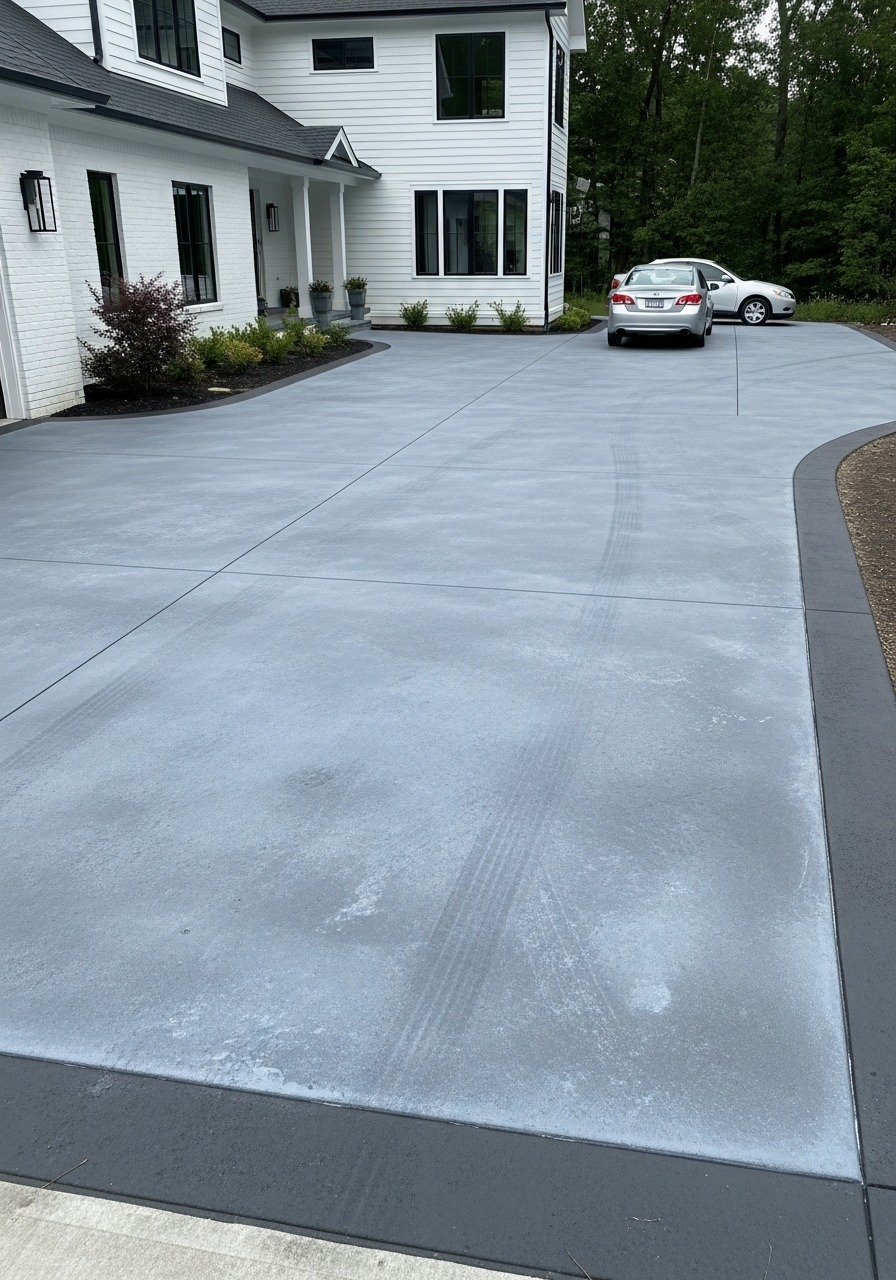
Colored concrete adds $1–4 per sq ft to a plain pour, using one of three methods: integral color mixed into the slab, surface stain applied after curing, or dye for vivid interior-grade color. Each method produces a different result at a different price point, with a different durability profile — the right choice depends on your use case and budget.
Pros
- +Integral color is the most durable — color throughout the slab
- +Wide range of colors from natural tones to vivid options
- +Stain can be applied to existing concrete for renovation projects
- +Color + stamping combinations produce the most realistic stone look
- +Relatively low added cost ($1–4/sq ft over plain concrete)
Cons
- −Surface stains wear in high-traffic areas over time
- −Color varies between batches — matching repairs is difficult
- −Acid stains produce unpredictable patterns (feature or problem, depending on preference)
- −All exterior color requires UV protection and regular resealing
- −Very saturated or non-natural colors are hard to maintain consistently outdoors
Integral Color
Pigment is mixed directly into the concrete before pouring. The color is throughout the entire slab — scratch or chip the surface and the color continues below. This is the most durable coloring method: there's nothing on the surface to wear off. Cost adds $2–4 per sq ft over plain concrete. The color range is wide but tends toward earthy, natural tones (buff, sandstone, charcoal, terra cotta, slate gray). Very bright or saturated colors are harder to achieve consistently.
Surface Stain
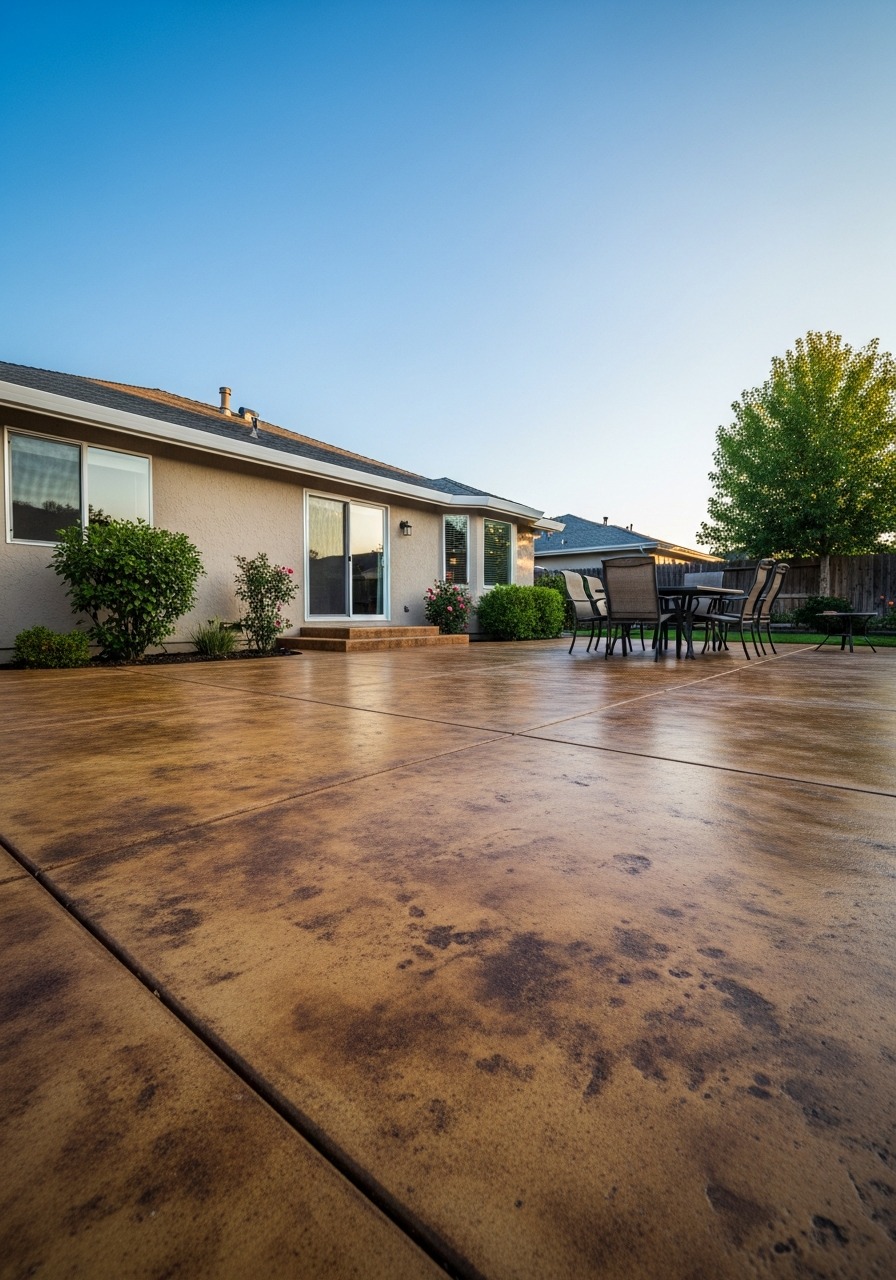
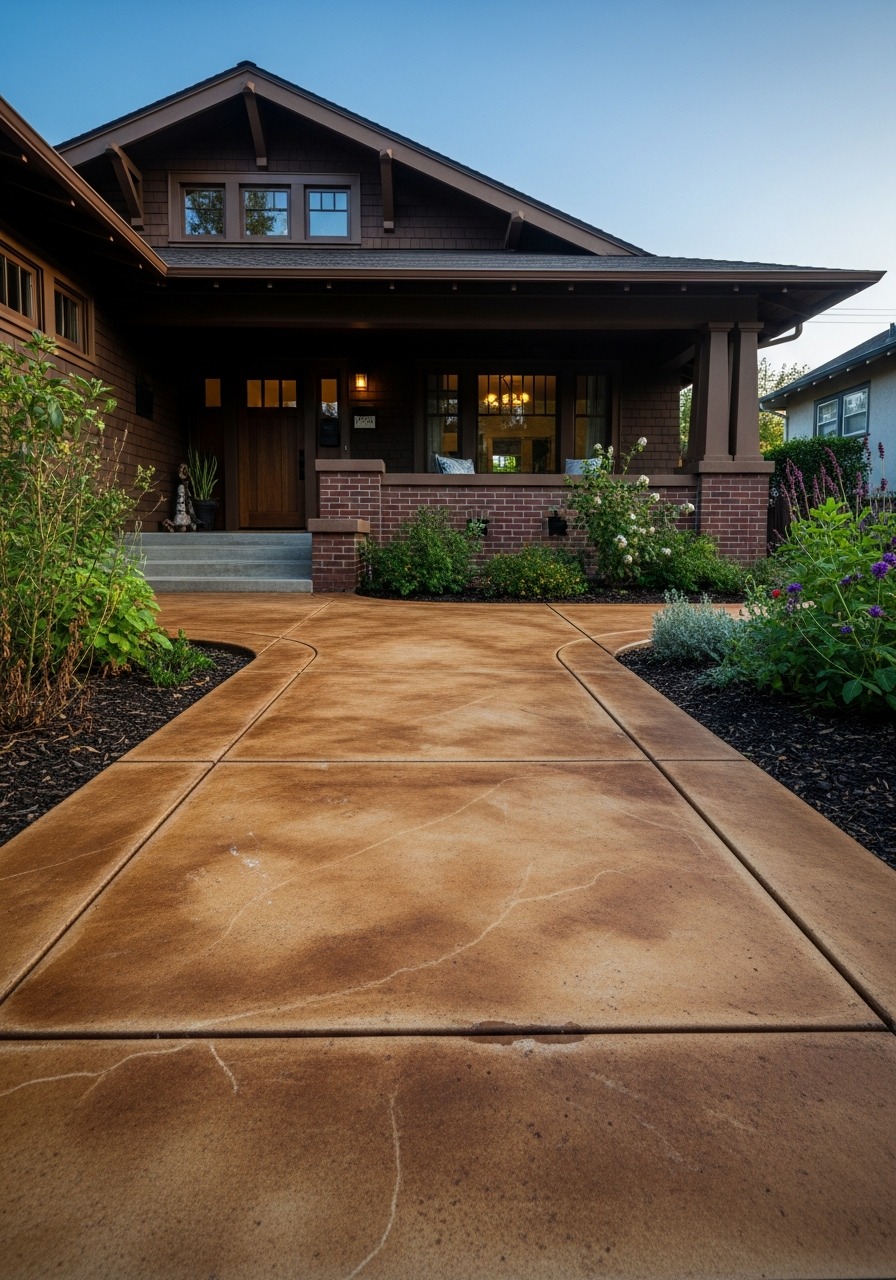
Acid-based or water-based stains are applied to cured concrete and penetrate the surface to react chemically (acid stain) or deposit pigment (water-based stain). Acid stains produce variegated, marble-like patterns that are unique to each pour — the randomness is considered a feature, not a flaw. Water-based stains are more predictable in color and easier to apply. Both methods cost $1–3 per sq ft but are less durable than integral color — the surface layer can wear in high-traffic areas over years.
Concrete Dye
Dyes are solvent-based colorants that penetrate the surface and produce vivid, even color that acid stains can't match. Common for interior polished concrete floors but increasingly used outdoors for contemporary designs. UV stability varies by product — outdoor use requires a UV-stable formula and regular resealing to prevent fading. Cost is similar to staining, with the sealer being the ongoing expense.
Color Selection
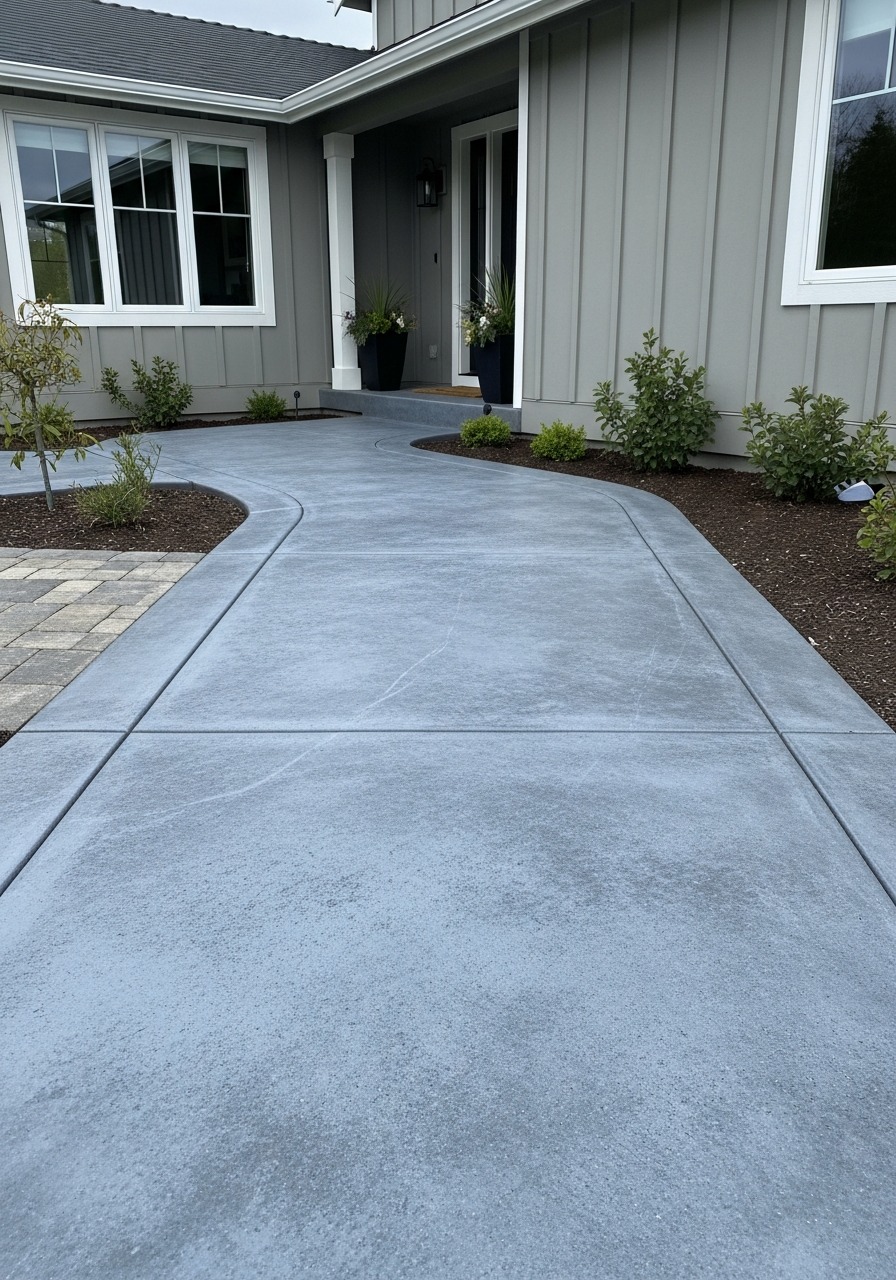
Charcoal and dark gray are the most searched patio colors in 2026 — they pair with any home exterior and don't show staining. Warm buff and sandstone tones suit traditional homes and feel warmer underfoot than dark surfaces. Slate blue and sage green are emerging contemporary choices. When selecting a color, ask your contractor for a sample pour — concrete color always dries lighter than the wet mix looks, and colors can shift during curing.
Fading and Maintenance
All exterior concrete color fades over time. Integral color holds up best because there's no surface layer to degrade, but it still benefits from a UV-stabilizing sealer. Stained and dyed surfaces require more frequent resealing to maintain color intensity. In high-sun climates (Southwest, Florida), plan to reseal annually rather than every 2–3 years. UV-stable pigments and sealers are worth specifying — ask your contractor explicitly.
The AI tool is almost ready.
Drop your email and we'll notify you the moment it launches — free to use.
Combining Color with Pattern
Color and stamped pattern are separate decisions that stack. A stamped surface can be integrally colored before stamping, then have a release agent (secondary color) applied during stamping to add depth. The release agent is what gives stamped concrete its authentic stone-like variation — without it, a stamped slab reads as flat. The most realistic stamped finishes use two or three color layers.
Colored Concrete Cost by Method
Color is one of the cheapest upgrades you can make to concrete — the method you choose moves the price more than the color itself does. Integral color is priced per cubic yard at the ready-mix plant, so it scales with slab thickness; stains and dyes are priced per square foot of surface, so a thicker slab doesn't cost more to color. Here's how the three methods compare on cost and what each one suits:
For a 400 sq ft patio, integral color adds roughly $800–1,600 to the pour, while staining an existing slab of the same size runs about $400–1,200 plus sealing. The ongoing cost in every case is resealing — budget $0.50–1.50/sq ft every 2–3 years to keep the color from fading.
| Method | Added cost/sq ft | Applies to | Durability | Best for |
|---|---|---|---|---|
| Integral color | $2–4 | New pours only | Highest — color runs through the slab | Driveways, large slabs, anything load-bearing |
| Acid stain | $2–4 | New or existing | Good — penetrates and reacts | Variegated, natural patios and floors |
| Water-based stain | $1–3 | New or existing | Moderate — surface layer | Predictable color, wider palette |
| Dye | $1–3 (plus sealer) | New or existing | Lowest outdoors — needs UV-stable formula | Vivid, even color; contemporary looks |
Concrete Dye vs Stain: Which to Use
This is the most common point of confusion, and the distinction is real. A stain changes the concrete chemically or sits in its pores: acid stain reacts with the lime in the slab to create permanent, variegated, marble-like color, while water-based stain deposits pigment that bonds to the surface. Stains are translucent — they let the concrete's natural variation show through, which reads as organic. A dye, by contrast, is a fine colorant carried in water or solvent that penetrates fast and delivers intense, uniform color a stain can't match. The trade-off is UV stability: most dyes were developed for interior polished floors and will fade outdoors unless you specify a UV-stable exterior formula and reseal on schedule. Rule of thumb: outdoors, default to acid or water-based stain for durability; reach for dye only when you need a bold, even color and are willing to maintain the sealer. For a weathered slab you want to look natural, stain wins; for a modern, saturated statement surface, dye can be worth the upkeep.
Coloring Existing Concrete
Integral color is off the table once a slab is poured — it has to go in the wet mix. But an existing driveway, patio, or walkway can still be colored without replacement. Acid and water-based stains are the standard route: the surface is cleaned, any old sealer is stripped, the stain is applied and neutralized, then the slab is resealed. The slab has to be sound (no active spalling or deep cracks) and free of curing compounds that block penetration — a simple water-drop test tells you whether the surface will accept stain. For a slab that's too worn or stained to take color evenly, a tinted micro-topping or overlay ($4–8/sq ft) lays a fresh, colorable layer over the old concrete. This is the practical way to transform a tired gray slab into a designed surface for a fraction of tear-out-and-repour cost — and it's exactly the kind of before-and-after you can preview from a photo before committing.
Best Concrete Colors for Driveways vs Patios
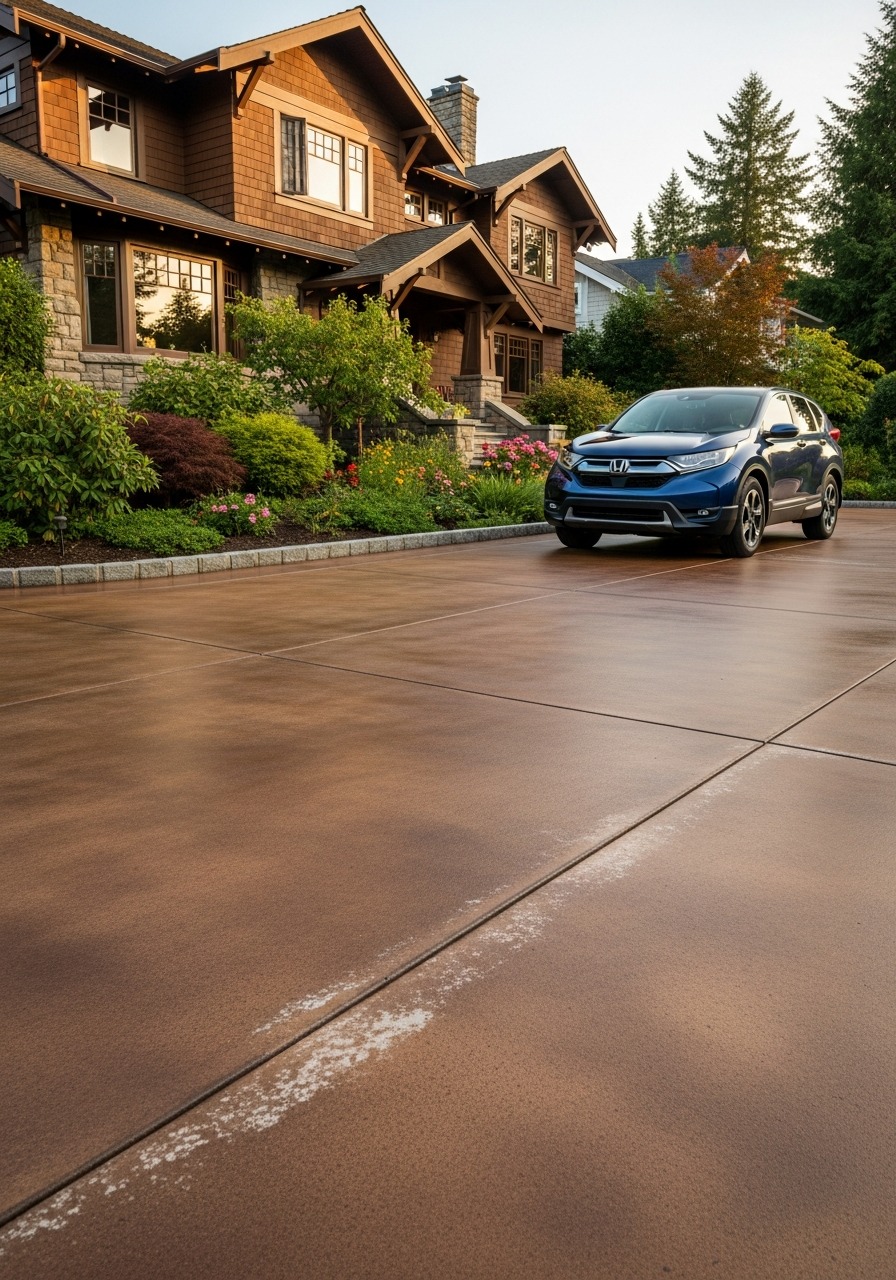
The right color depends as much on use as on taste. Driveways favor mid-to-dark tones — charcoal, slate gray, walnut brown — because they hide tire marks, oil drips, and road grime that would stand out on a light slab. Very dark driveways do absorb more heat and show efflorescence (white mineral haze) more clearly, so a medium charcoal is usually the sweet spot. Patios pull in the opposite direction: lighter buff, sandstone, and warm tan tones stay cooler underfoot for barefoot use and feel more inviting in a living space, while charcoal remains popular where the patio reads as modern and is mostly used with shoes on. Whatever the surface, look at a sample in your own light before committing — color shifts with sun angle, dries lighter than the wet mix, and reads differently against your home's siding and roof than it does on a showroom chip.
Colored Concrete in the real world
Get the full inspiration pack — free.
30+ curated patio, driveway and walkway design images delivered to your inbox.
Frequently Asked Questions
Use this finish on