
Concrete Patio Cost: What Homeowners Actually Pay
March 31, 2026
A plain concrete patio costs $6–10 per sq ft installed. Stamped finishes run $12–18, and colored or exposed aggregate options fall in between. On a 300 sq ft patio, that's a range of $1,800 to $5,400 depending on finish. Region, site conditions, and demo of an existing surface can shift these numbers significantly. Here's what drives each cost tier — and how to budget accurately for driveways and walkways using the same logic.
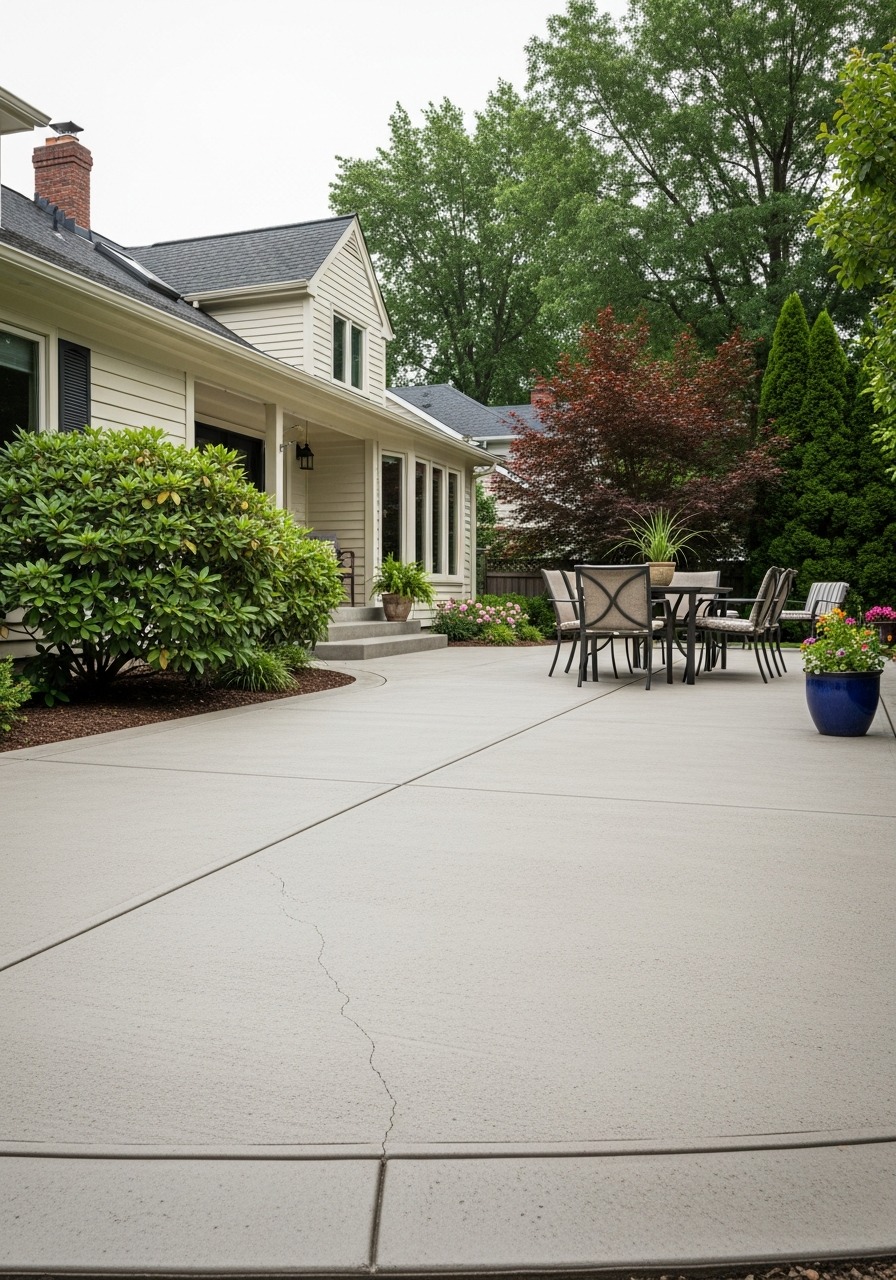
Plain Broom-Finish Concrete
A standard broom-finish concrete patio costs $6–10 per square foot installed. For a 300 sq ft patio, budget $1,800–3,000. This includes site prep, forming, pouring, and finishing — but not demo of an existing surface.
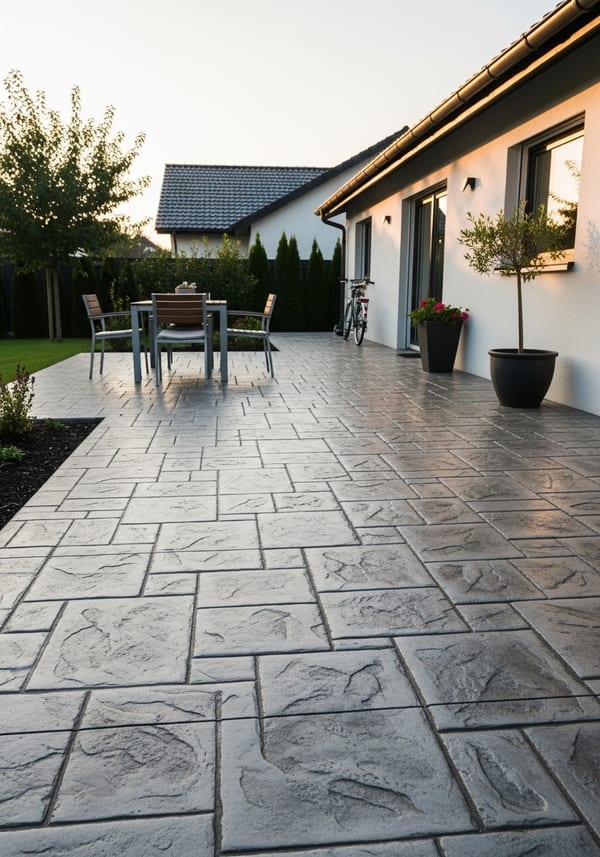
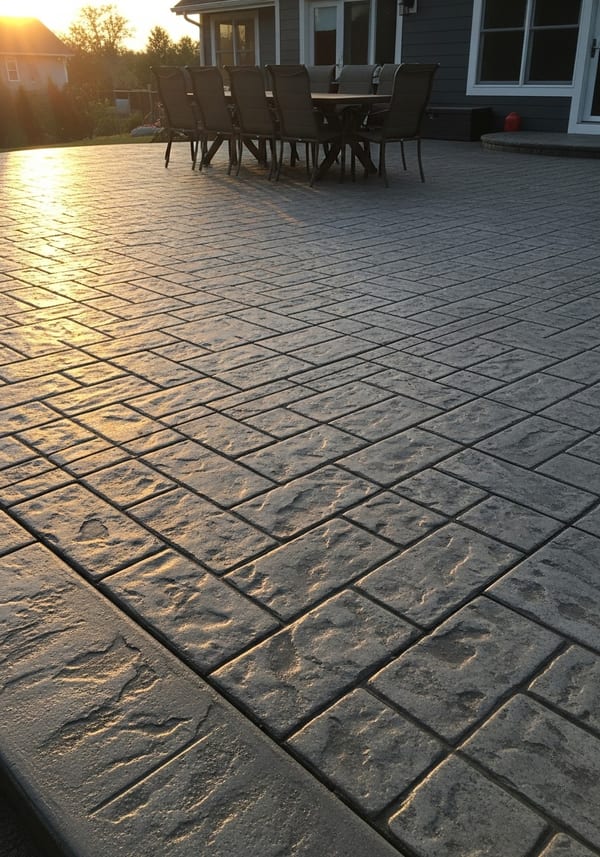
Stamped Concrete
Stamped concrete adds texture and pattern at $12–18 per square foot. The cost spike comes from labor (more skill required), stamps, and release agents. Complex patterns or borders push the high end. A 300 sq ft stamped patio runs $3,600–5,400.
Colored Concrete
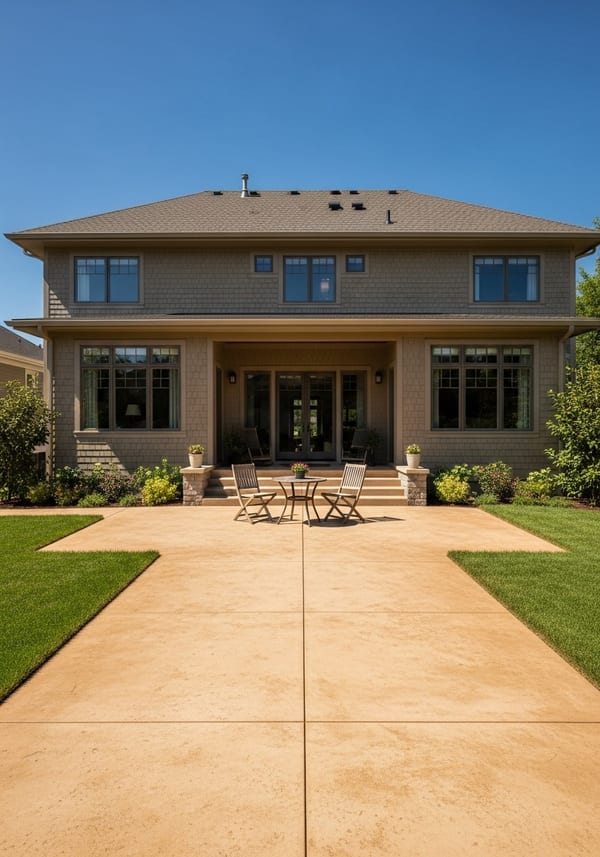
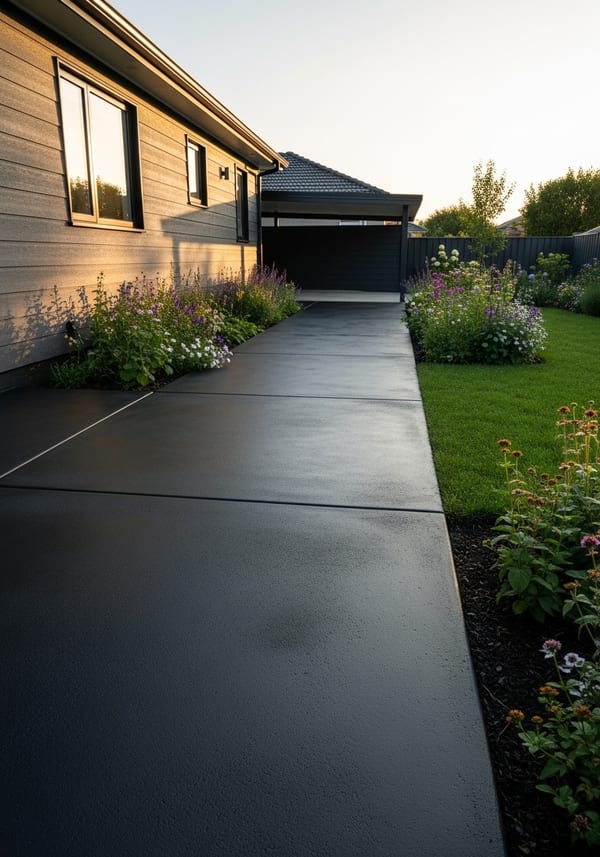
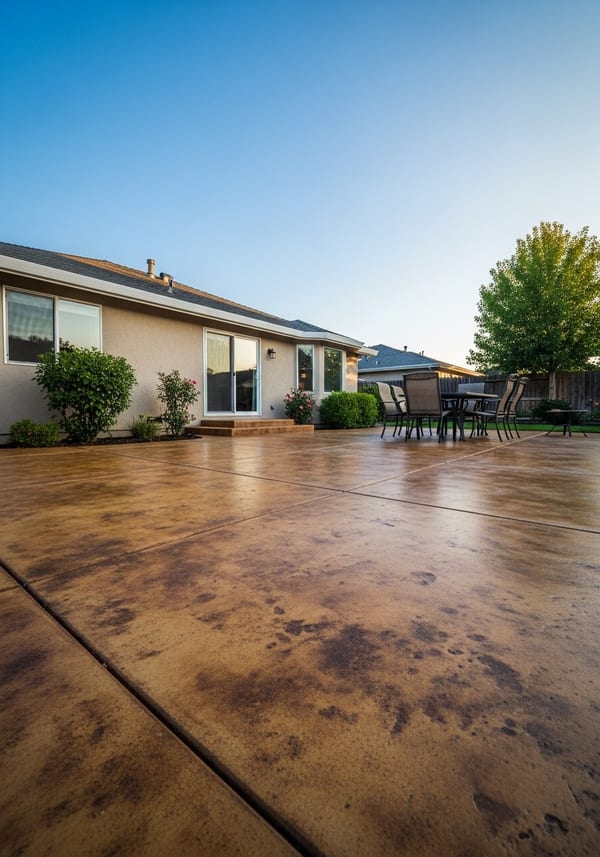
Integral coloring (pigment mixed into the pour) adds $2–4 per sq ft over plain concrete. Surface staining after the fact is cheaper at $1–3 per sq ft but is less durable over time.
Exposed Aggregate
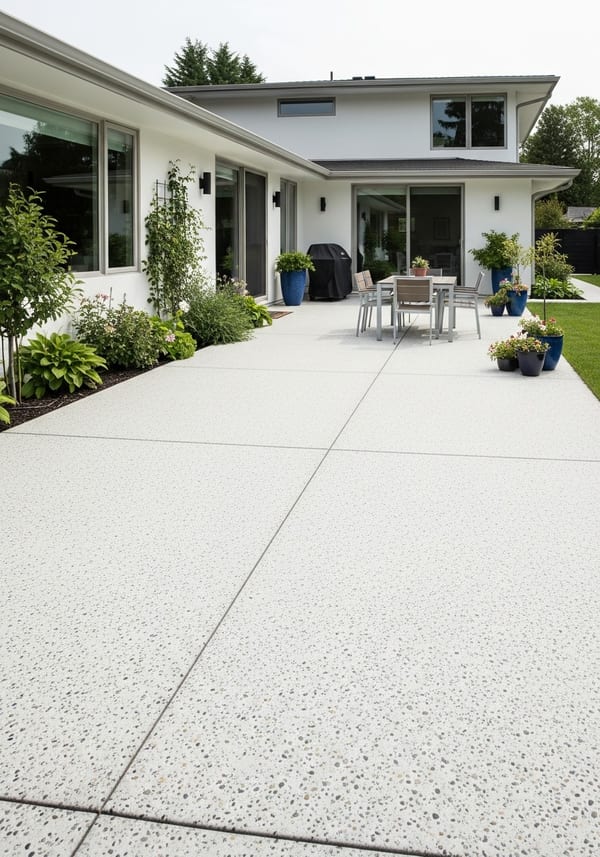
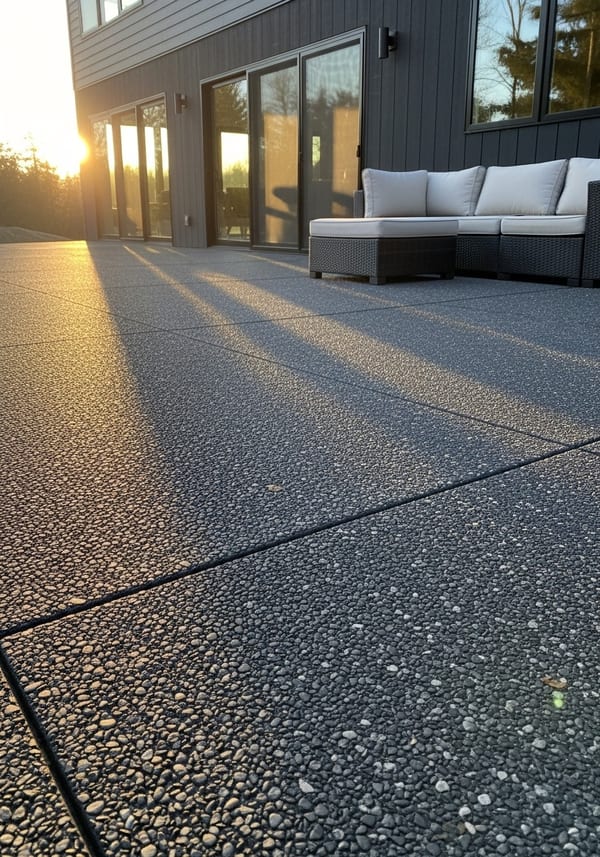
Exposed aggregate finishes — where the top layer is washed away to reveal the stone below — run $8–14 per sq ft. They're more slip-resistant than smooth concrete and hide surface imperfections well.
What Drives the Price Up
Site access, soil conditions, existing demo, drainage work, and permit fees are the biggest cost variables. In California and the Northeast, labor is 30–50% higher than the national average. If you're budgeting a driveway at the same time, bundling both projects with one contractor typically saves 10–15% on mobilization.
Get the full inspiration pack — free.
30+ curated patio, driveway and walkway design images delivered to your inbox.
Demo of an Existing Patio
Removing an existing concrete patio adds $1–3 per sq ft — $300–900 for a 300 sq ft slab. Asphalt or paver removal costs roughly the same. Disposal fees vary by market but are usually included in demo quotes. If the existing slab is in structurally sound condition, a concrete overlay ($3–7/sq ft) may be an alternative to full demo — it saves disposal cost and demolition labor while giving you a fresh surface.
Concrete Patio Cost vs. Pavers vs. Natural Stone
Poured concrete patios ($6–18/sq ft) consistently undercut paver patios ($15–30/sq ft) and natural stone ($25–50/sq ft). On a 400 sq ft patio, concrete saves $3,600–12,800 versus stone — with much of the same visual result at normal viewing distance. The trade-off is repairability: a cracked concrete slab is difficult to patch invisibly, while a cracked paver can be lifted and replaced. In freeze-thaw climates where cracking is more likely, pavers' repairability can justify the premium. In mild climates, concrete's cost advantage is harder to argue against. For front walkways, the same cost comparison holds — stamped concrete walkways run half the per-linear-foot cost of comparable stone options.
Seasonal Cost Variation
Concrete contractor pricing isn't flat across the year. In most U.S. markets, spring and early summer are peak season — quotes run 10–20% higher than fall and winter. If your project allows for scheduling in September through November, you can often negotiate a better rate with the same contractor. Concrete can be poured in temperatures as low as 40°F with proper cold-weather admixtures; winter pours in moderate climates are routine. Waiting for peak season demand to ease is one of the easiest ways to reduce a concrete patio cost without changing the scope.
Getting Three Quotes: What to Look for Beyond Price
Three quotes for any concrete patio project is the minimum baseline. But the lowest quote isn't always the right one. Look for: a contractor who specifies the concrete mix design (PSI, air-entrainment if in a freeze-thaw climate, fiber reinforcement), who itemizes site prep and base preparation separately from the pour cost, and who includes the first sealing application in the contract. Contractors who can't explain their mix design or skip base preparation steps to lower the quote are the most common source of cracking problems 3–5 years after installation. A $500 premium for the right contractor is typically recovered many times over in reduced repair costs. The same vetting applies for driveway and walkway quotes.
Permits and Inspections
Most municipalities require a building permit for a new concrete patio over a certain size — typically 200 sq ft in many jurisdictions, though limits vary widely. The permit covers inspection of the sub-base preparation before the pour, which is actually in the homeowner's interest: an independent inspection confirms the contractor has properly prepared the base. Permit fees range from $50–200 for a typical patio in most markets. Ask your contractor whether the permit is included in the quote or billed separately — and be cautious of contractors who suggest skipping the permit process. An unpermitted patio can create issues at resale and voids some contractor warranty clauses.
Bundling Patio, Driveway, and Walkway Projects
If you're planning two or three concrete surfaces in the same project season, getting them quoted together produces meaningful savings. Mobilization costs (equipment rental, crew travel, concrete truck minimums) are split across a larger scope. Shared base prep work can be done in one pass rather than multiple visits. And a contractor who's already on site for a driveway can typically add a patio or walkway at a lower per-sq-ft rate than if each surface were a standalone job. On a combined driveway ($5,000) and patio ($4,000) project, bundling with one contractor often saves $800–1,500 versus two separate contracts. Use PourCanvas to plan how all three surfaces look together before you call contractors — it gives you a clearer brief and reduces scope changes mid-project. The concrete truck minimum delivery is usually 5 cubic yards ($600–900); a small patio that only needs 2–3 yards becomes significantly more cost-efficient when combined with another surface that brings the order above the truck minimum.
The AI tool is almost ready.
Drop your email and we'll notify you the moment it launches — free to use.