
The Best Concrete Patio Colors (With Real Examples)
March 31, 2026
Charcoal gray is the most searched concrete patio color right now — and it costs the same as any other integral color, typically $2–4 per sq ft over plain concrete. But color choice isn't just aesthetic: lighter shades reflect heat (better for hot climates), darker shades hide staining, and some pigments fade faster than others. Here's what's working in 2026 and what to watch out for with each option. Similar decisions apply if you're also coloring a driveway or front walkway.
Charcoal Gray: Why It Dominates
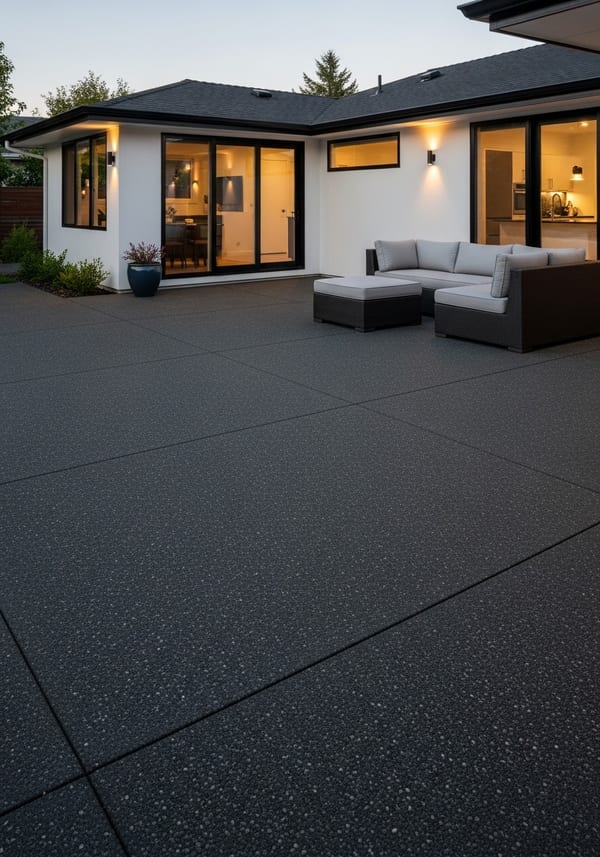
Charcoal gray is the most searched concrete patio color right now, and for good reason — it pairs with virtually any house color, reads as modern without being trendy, and doesn't show staining as much as lighter shades. It also photographs well, which matters if you ever resell. Integral charcoal pigment adds roughly $2–4 per sq ft to plain concrete pricing.
Warm Sandstone vs. Charcoal: Which Is Right for Your Climate
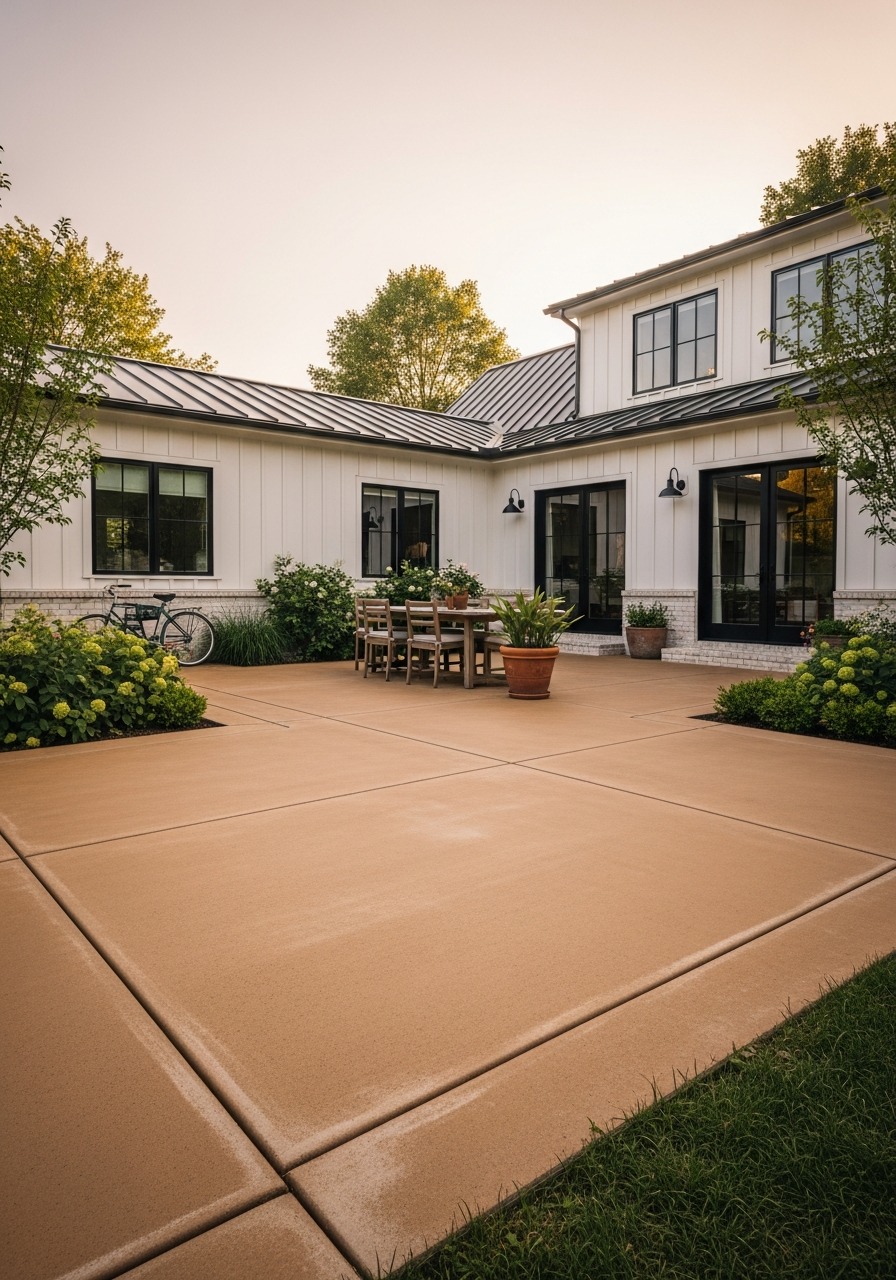
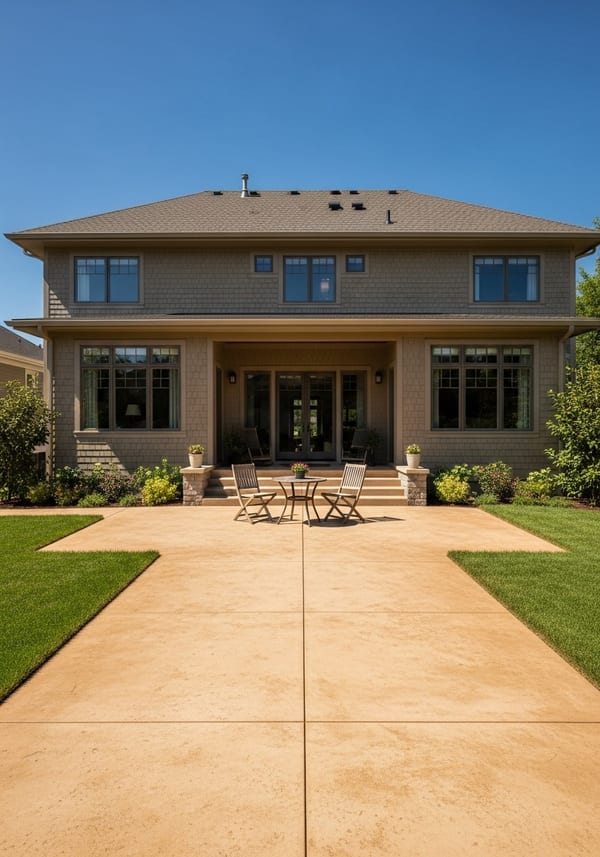
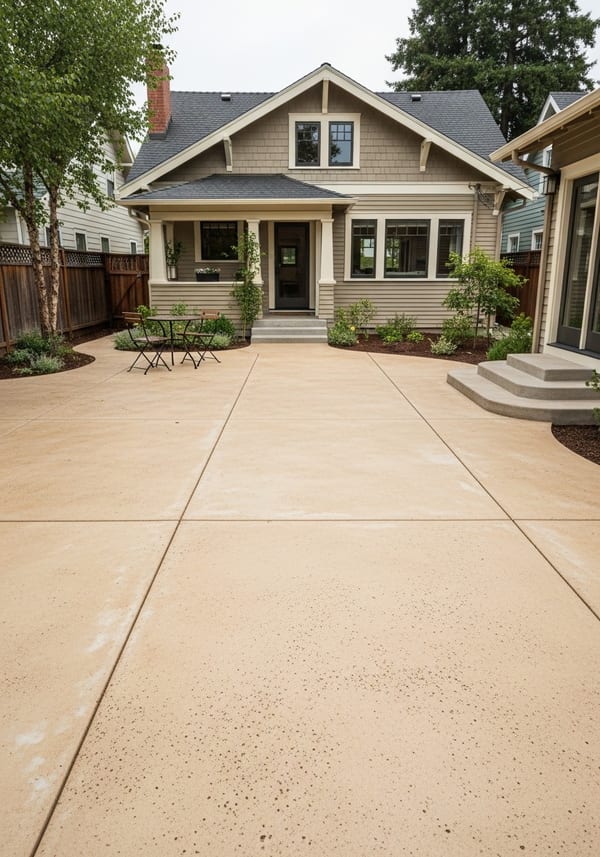
Charcoal gray absorbs heat — in full sun in a hot climate, the surface can get uncomfortably hot underfoot. A warm sandstone or buff tone reflects more heat, reads as more traditional, works well with red brick houses, and feels warmer and less harsh on bare feet. Choose sandstone for hot climates and traditional homes; charcoal for cooler climates and contemporary exteriors.
Slate Blue
Slate blue is an emerging choice for contemporary homes. It photographs well, holds color evenly after sealing, and stands out from the sea of gray and beige patios without being risky. The key is using UV-stable pigment — blue fades faster than earth tones if the sealer isn't maintained.
Terracotta
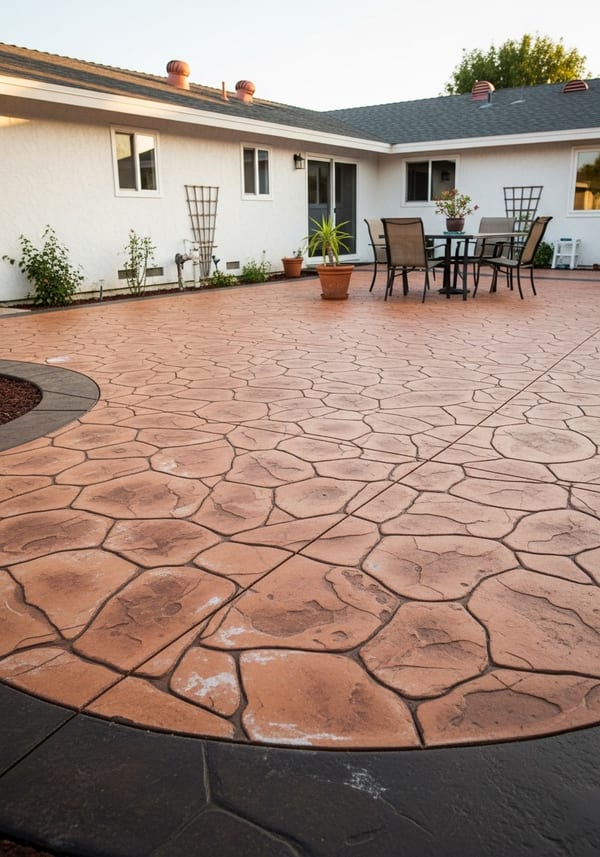
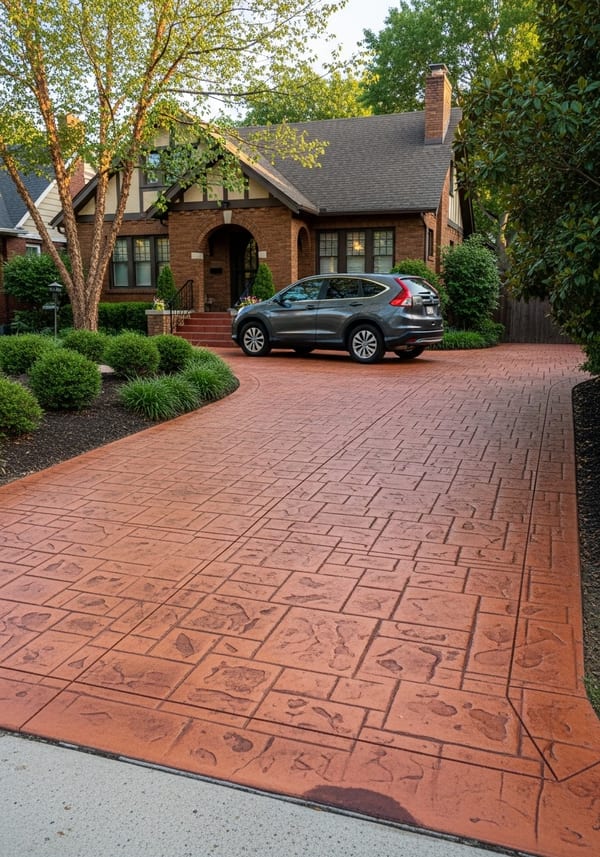
Terracotta tones suit Mediterranean and Spanish-style homes. They're warm, complementary to greenery, and age attractively. The risk is fading — make sure your contractor uses UV-stable pigments. A terracotta patio that fades unevenly looks worse than plain gray.
Natural Gray (No Colorant)
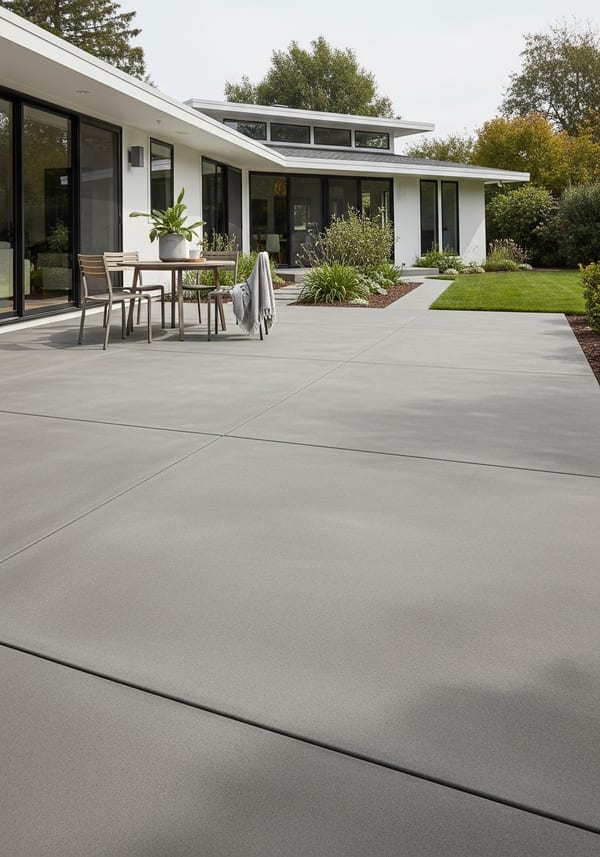
Don't overlook plain concrete's natural gray. With a good stamped pattern and quality sealer, it looks clean and intentional. It's also the easiest finish to patch or extend years later without color-matching headaches. And it costs nothing extra — the cheapest choice is sometimes also the most practical one.
Get the full inspiration pack — free.
30+ curated patio, driveway and walkway design images delivered to your inbox.
How Concrete Patio Color Affects Resale
Color choices affect resale value in a subtle but real way. Neutral charcoal and medium grey appeal to the broadest pool of buyers — they read as contemporary without polarizing. Bold choices (deep terracotta, saturated slate blue) appeal strongly to specific buyers and deter others. If resale is a factor within 5–7 years, charcoal or medium grey integral pigment is the lowest-risk choice. If you're staying long-term, choosing the color that suits your own aesthetic is the better decision — the patio is yours to use for years before it becomes a selling feature. Driveway and walkway colors follow the same rule: neutral tones preserve the most buyer appeal.
Color Consistency Over Time
Not all concrete pigments age equally. UV-stable iron oxide pigments (most earth tones — charcoal, buff, tan, terracotta) hold color best over time. Synthetic organic pigments used for blues, purples, and some greens are more UV-vulnerable and fade faster without aggressive sealing. If you're choosing a less common color direction — slate blue, sage, or deep red — specify UV-stable pigment explicitly and plan for resealing every 2 years rather than 3. The same applies to colored driveways and walkways: the maintenance schedule for non-neutral colors should be more frequent. PourCanvas can show you how different color directions would look on your specific patio before you finalize the color order with your contractor.
Integral Color vs. Surface Stain vs. Color Wash
Three ways to add color to concrete, three different price points and durability profiles. Integral pigment ($2–4/sq ft extra) is mixed into the pour and runs through the full slab depth — the most durable method, since chips and wear don't expose a different-colored base. Surface stain applied after curing adds $1–3/sq ft and is visible only at the surface — less durable under heavy traffic or freeze-thaw stress. Color wash (antiquing release) applied during stamping gives the characteristic multi-tone weathered look of stamped concrete — it's typically included in stamped concrete quotes and produces the richest-looking result of the three. For plain concrete without a stamp, integral pigment is the right choice; for stamped concrete, a combination of integral base color plus color wash gives the best result.
Matching Patio Color to Driveway and Walkway
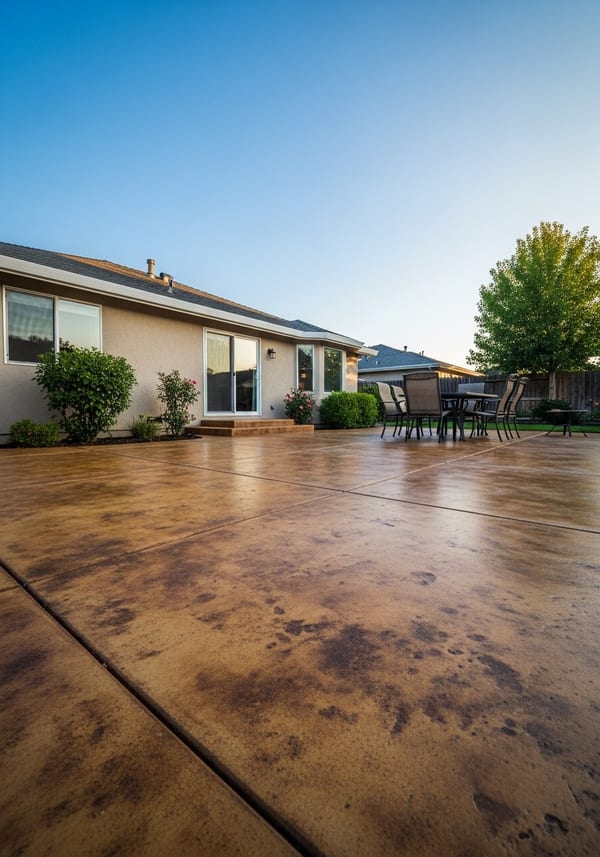
When all three hardscape surfaces — patio, driveway, and front walkway — are the same material and planned together, color coordination matters more than when they're done separately. The most common approach is to use the same integral pigment family (same tone direction) across all three surfaces, with the patio allowing for slightly more decorative finish and the driveway staying cleaner and more restrained. Exact color matching between surfaces is rarely achievable since each is poured separately with different concrete batches. Instead, aim for tonal harmony: a charcoal patio, charcoal driveway, and dark-grey walkway read as coordinated even without being identical. PourCanvas lets you preview how different color directions would look on each surface in your specific space.
What Happens If You Choose the Wrong Color
A concrete patio color cannot be changed without significant effort after the pour. Surface staining over an integral-pigmented slab can shift tone slightly — going darker is more achievable than going lighter — but the change is limited and adds $1–3/sq ft. A full color correction requires a concrete overlay at $3–8/sq ft, which adds cost and reduces the durability margin. The practical implication: decide on color before the concrete is ordered, not while the crew is on site. Getting a concrete color chip from your contractor, viewing it in outdoor light at your home, and comparing it to exterior paint colors and trim before committing to the pour is the best way to avoid a costly color regret. If you're uncertain, PourCanvas can help you visualize how different colors will interact with your specific home exterior.
The AI tool is almost ready.
Drop your email and we'll notify you the moment it launches — free to use.