Acid Stained Concrete Walkway
Acid Stained Concrete Walkway
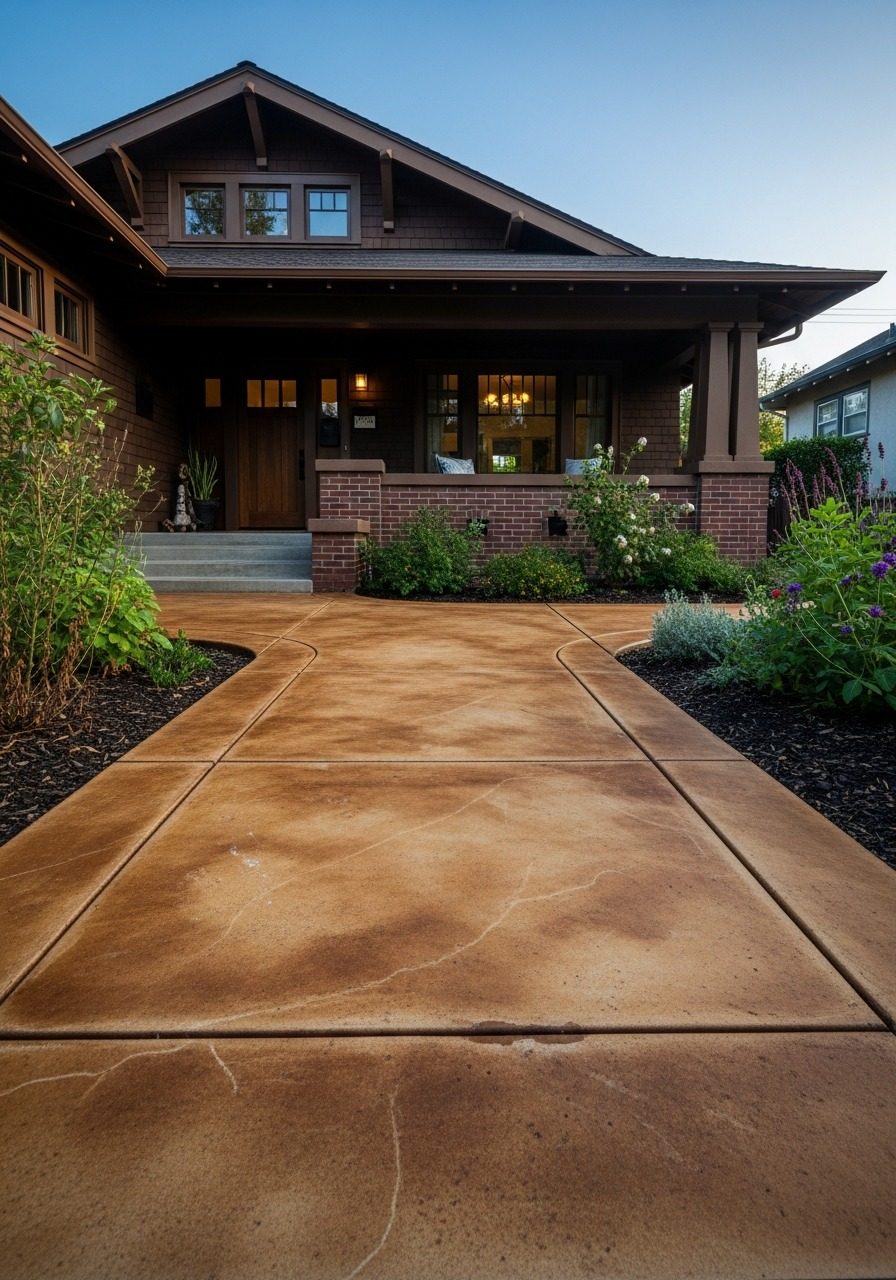
Acid stained concrete walkways produce a finish you genuinely cannot fake with any other coloring method - and that's exactly why homeowners who discover them tend to go all-in.
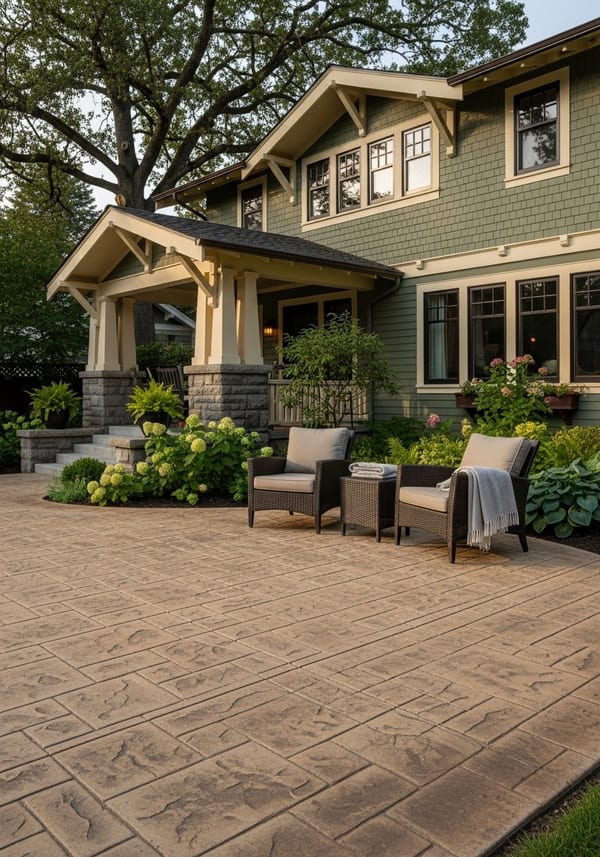
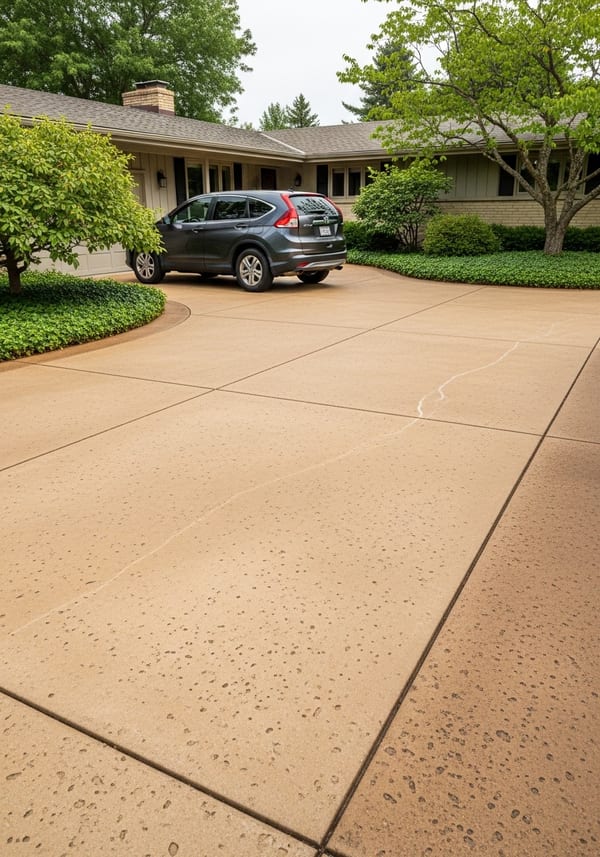
The acid staining process works by reacting with the calcium hydroxide in cured concrete. Diluted hydrochloric acid and metalite salts penetrate the concrete surface and create a chemical bond with the mineral content - the result is a mottled, variegated tone that changes across the surface based on the concrete's mineral density, pour date, and curing conditions. No two acid-stained slabs look identical. The most popular tones are amber, walnut, coffee brown, and terra cotta - earth tones that appear naturally in weathered stone and wood. Each one has a depth and variation that solid-color stains and integral pigments simply cannot replicate.
For a front walkway, this translates to a path that looks genuinely organic and considered. Amber and walnut tones suit craftsman, ranch, and traditional homes particularly well - the warm brown palette references natural wood and aged brick in a way that reads as intentional from the street. The mottled variation also means it doesn't show wear marks, footprints, or minor surface marks the way a solid-color finish would.
Cost on an existing slab runs $4–8 per sq ft for the acid stain application and sealing - one of the most affordable transformation options for an existing concrete walkway. On new concrete, add $6–10/sq ft for the slab itself. The key maintenance requirement is annual or biennial resealing: acid-stained concrete needs a penetrating sealer to prevent color fade and surface wear. A UV-stable sealer is essential for south-facing paths in direct sun.
More Walkway Ideas
Explore other projects