

Concrete Pathways and Walkway Ideas
Updated May 25, 2026
Concrete walkways cost $6–18 per sq ft installed depending on the finish — plain broom at the low end, stamped flagstone or cobblestone at the high end. A standard 4-foot-wide, 40-foot front walkway (160 sq ft) runs $960–2,880. This guide covers 20+ real installations across stamped, modern, flagstone-look, exposed aggregate, stained, entry steps, and stepping stone paths. Each section includes cost ranges and the finish details that separate a well-executed walkway from a generic pour.
Stamped Concrete Walkway Ideas
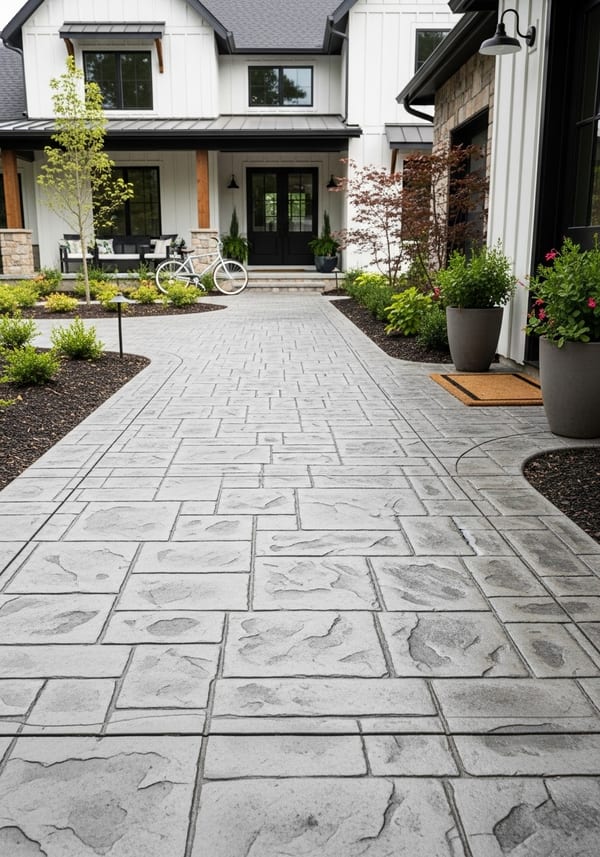
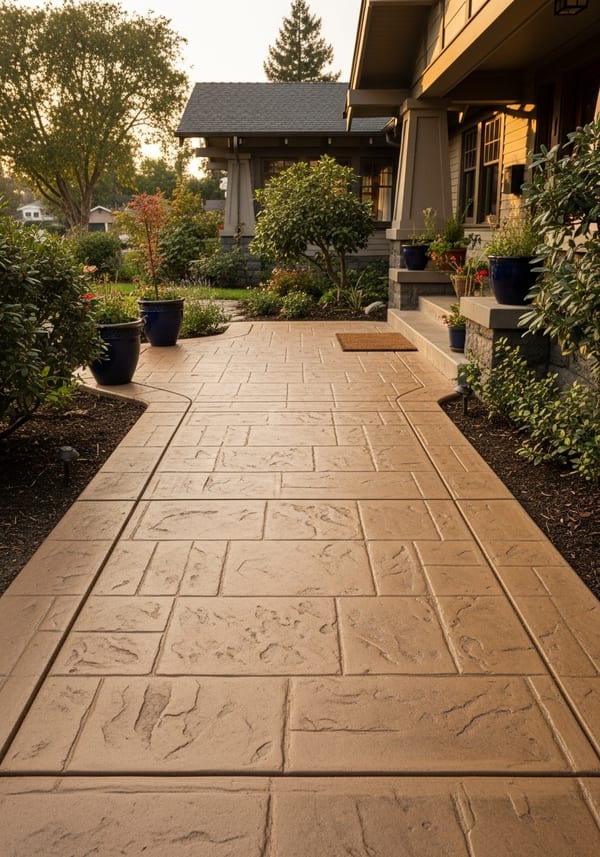
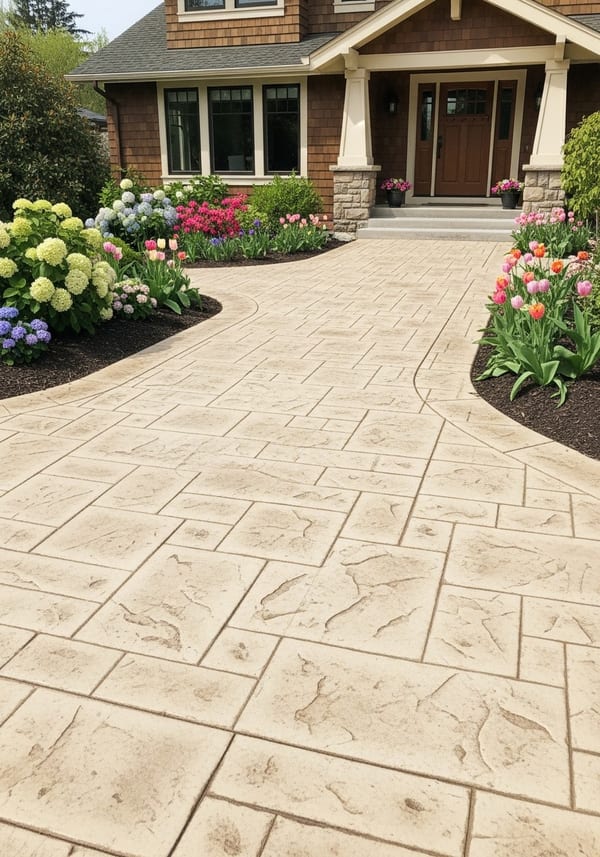
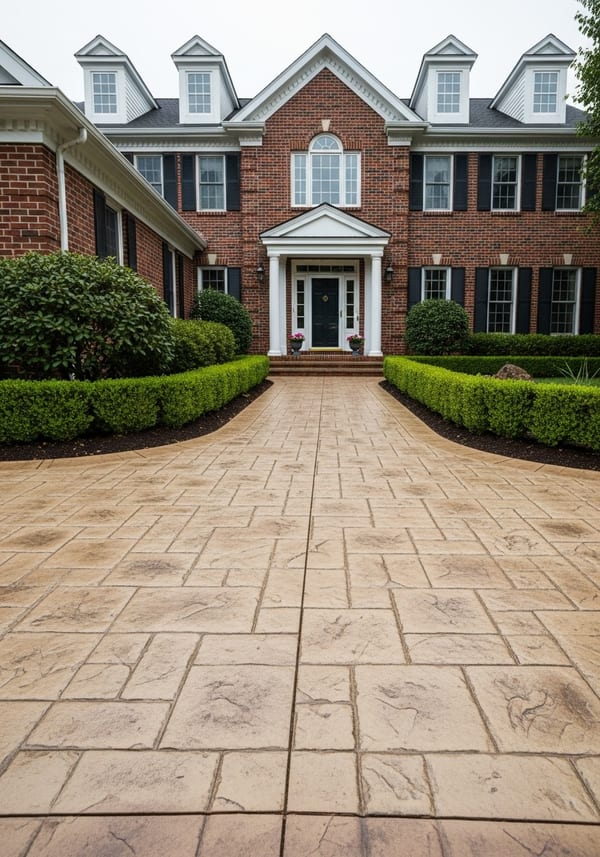
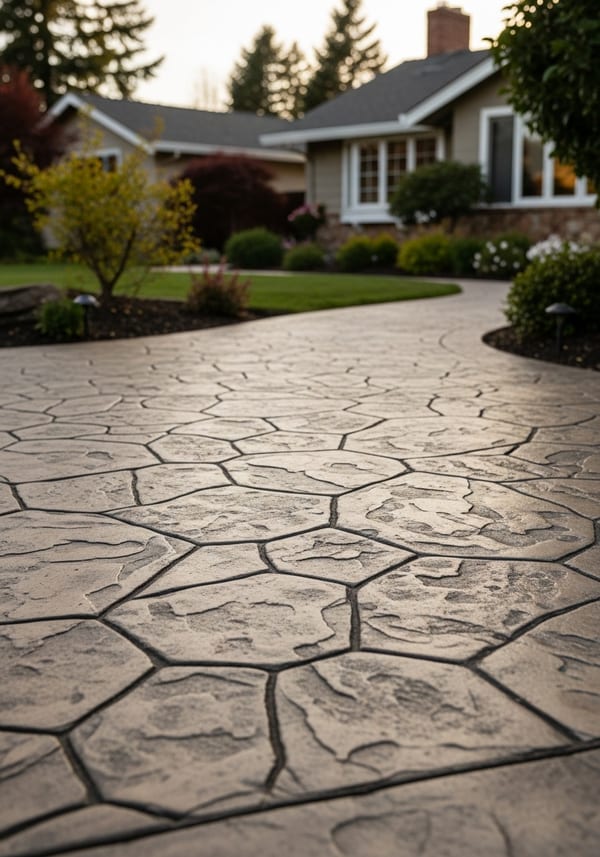
Stamped concrete walkways run $12–18/sq ft and deliver the highest visual impact per dollar for a front path. The most effective stamp patterns for walkways are cobblestone, random flagstone, and running-bond brick — all three photograph well from the street and hold their texture over time. Avoid deep-relief stamps (like rough-cut stone) on walkways: deep grooves catch heels, collect debris, and are harder to shovel in winter. A medium-depth stamp with a secondary color release in the recesses gives the surface dimension without creating functional problems. For front paths specifically, a buff or sandstone base with a charcoal release color is the most versatile combination — it suits traditional, craftsman, and transitional home styles. Apply a film-forming sealer at installation and reseal every 2–3 years to maintain color depth and prevent UV fading on the surface pigment.
Modern Concrete Walkway Designs
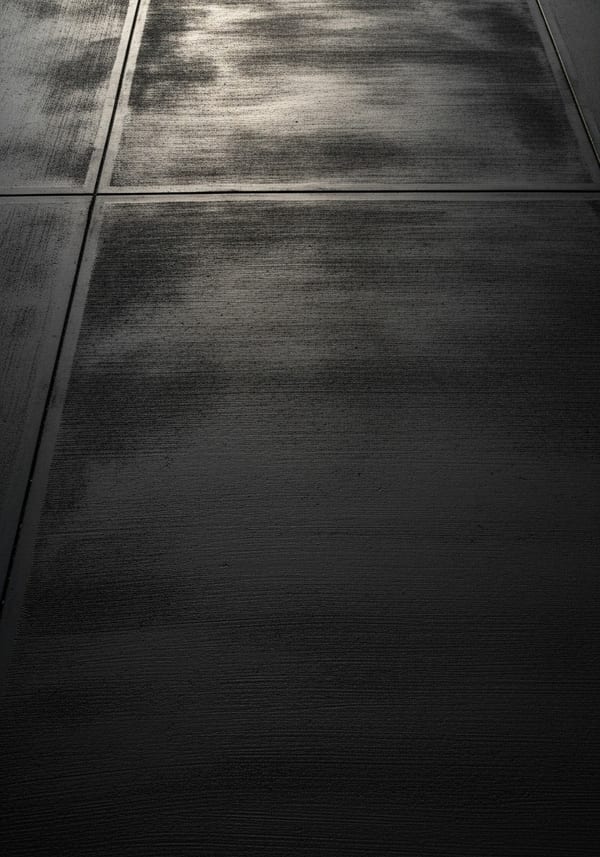
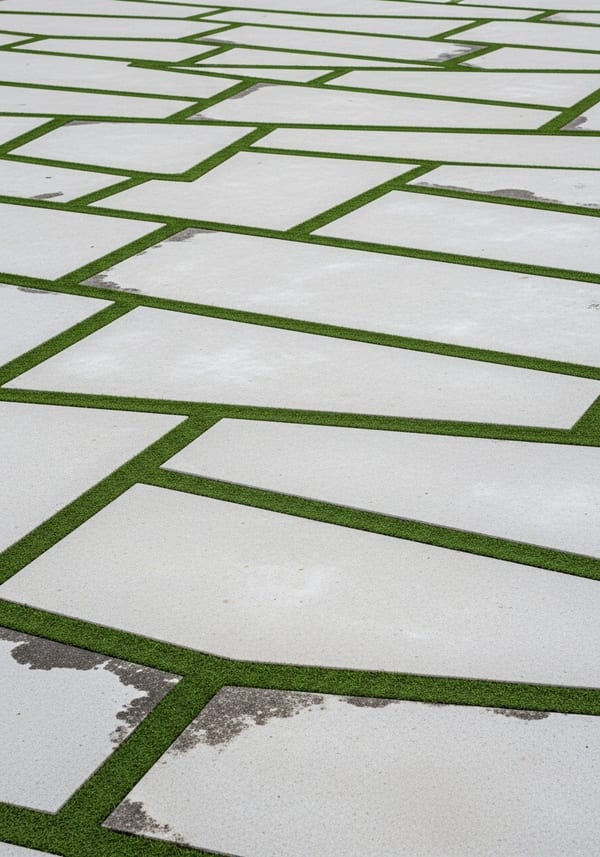
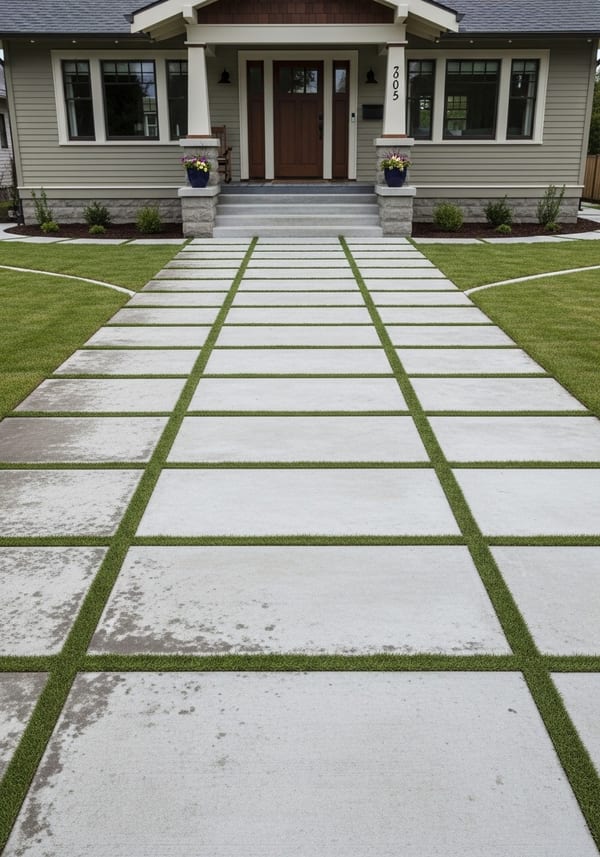
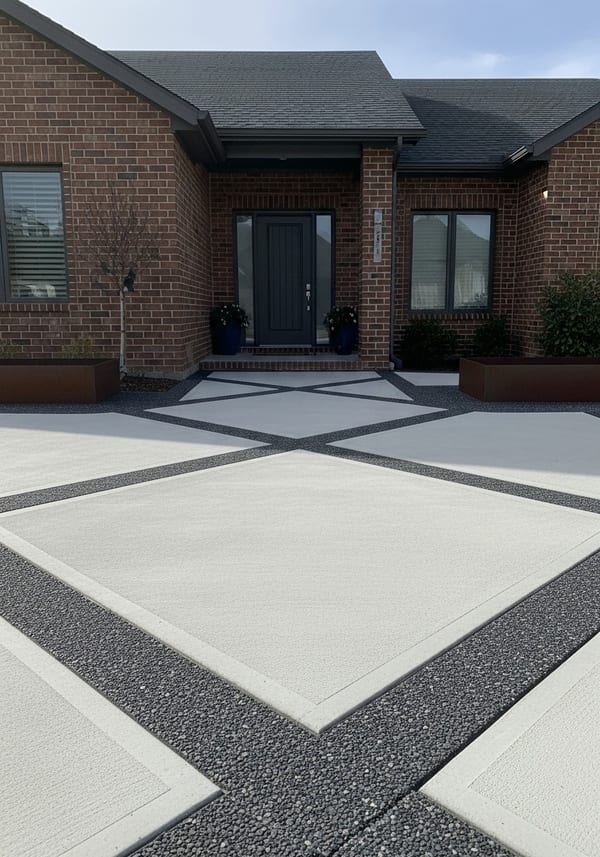
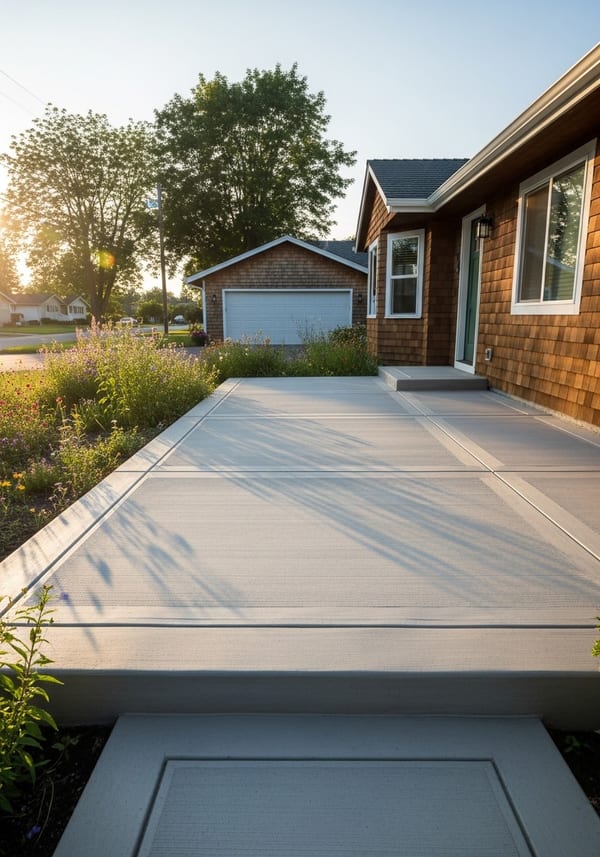
Modern concrete walkways use clean geometry and restrained finishes to create impact — no stamps, no faux stone. A broom-finish walkway in dark charcoal pigment ($8–16/sq ft) with crisp beveled edges and consistent 4–5 foot width reads as deliberately designed at a fraction of stamped pricing. Floating slab designs — individual rectangular pads separated by 2–4 inch strips of turf or gravel — are the signature modern walkway treatment. They cost $10–16/sq ft installed because each pad is formed and poured individually, but the visual result is distinctive. Diagonal scoring (X-pattern saw cuts at 45 degrees to the walk direction) on a single continuous pour is another high-impact modern detail at minimal added cost — $0.50–1/sq ft for the saw work. Dark tones dominate modern walkway design: charcoal, slate grey, and near-black pigments suit contemporary architecture and create strong contrast against green landscaping.
Flagstone Look Walkway Ideas
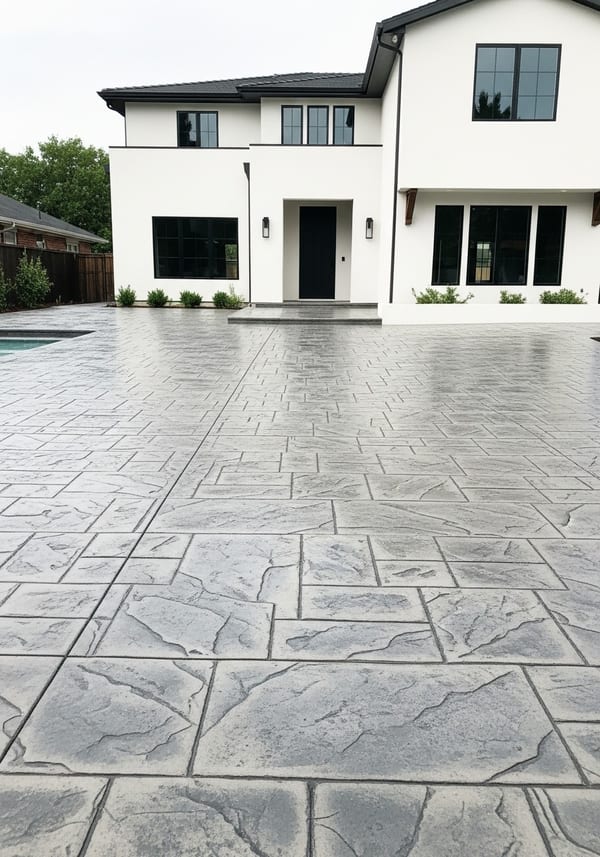
Natural flagstone walkways cost $15–32/sq ft dry-laid and $20–45 mortared — quarried stone, individually cut and set on a compacted base with mortar or polymeric sand joints. Stamped concrete mimicking the same flagstone look runs $12–18/sq ft, typically cutting the cost by about a third on a 150 sq ft front path. The visual difference: natural flagstone has irregular thickness variation, unique coloring per stone, and a surface texture that stamping can approximate but not fully replicate. From street-view distance, high-quality stamped flagstone is nearly indistinguishable. Up close, the authenticity gap is visible. The practical difference: natural flagstone joints require annual sand replenishment and weed management; stamped concrete has no joints to maintain. In freeze-thaw climates, natural stone joints are the first failure point — water infiltrates, expands, and loosens stones over repeated winter cycles. Stamped concrete with proper air entrainment handles freeze-thaw significantly better.
Exposed Aggregate Walkway Ideas
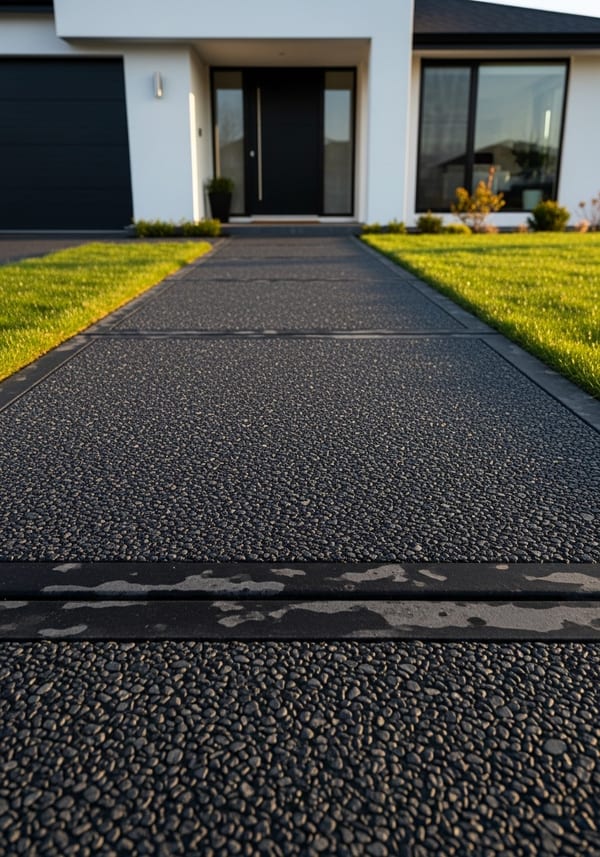
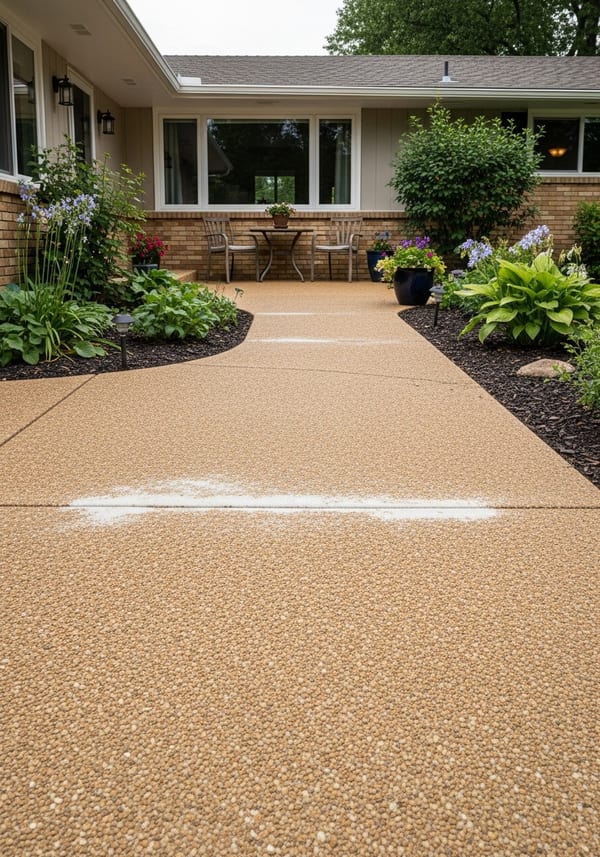
Exposed aggregate walkways cost $8–14/sq ft — between plain broom finish and stamped in both price and visual impact. The finish reveals natural stone embedded in the concrete surface, creating a textured, slip-resistant path that performs well in wet conditions and hides surface wear better than any smooth finish. Aggregate color selection drives the entire look: warm tan or buff pea gravel suits traditional and craftsman homes; cool grey-white river stone suits contemporary and modern styles; charcoal basalt aggregate creates a dramatic dark surface that reads as high-end. For garden paths specifically, exposed aggregate is the strongest all-around choice — it handles moisture, leaf litter, and biological staining better than stamped or colored concrete because the textured surface masks what smooth surfaces show. Fine pea gravel aggregate is the most comfortable underfoot; larger stone gives more grip but feels rougher on bare feet.
Stained Concrete Walkway Ideas
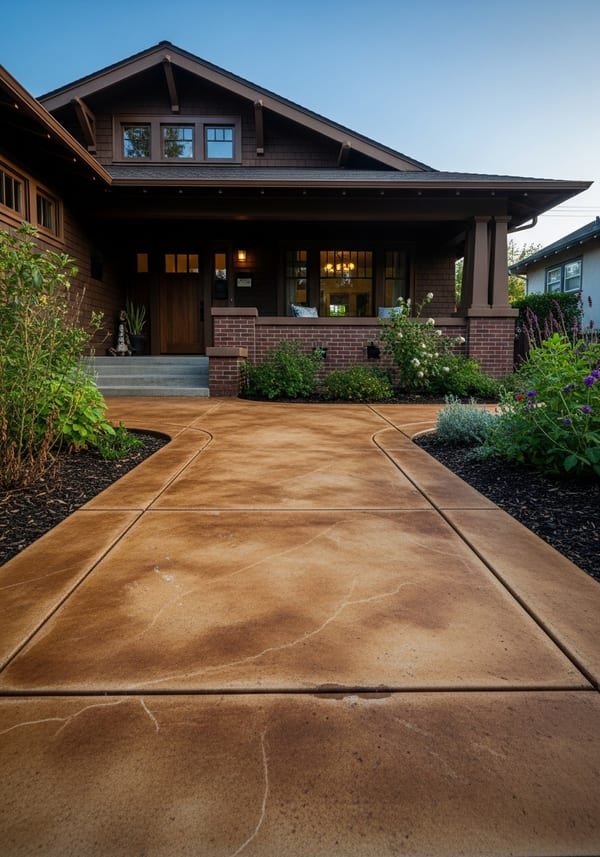
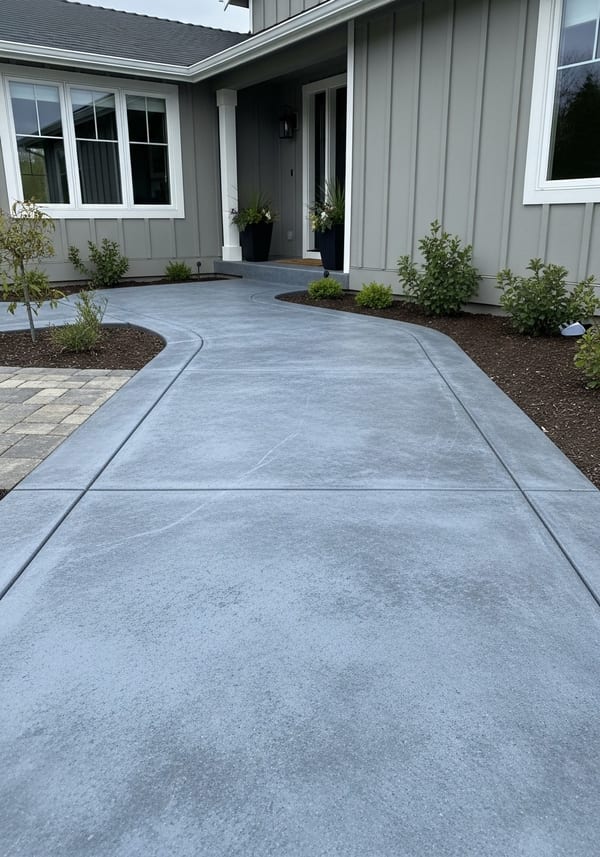
Staining is the most cost-effective way to transform an existing concrete walkway — $1–4/sq ft for the stain application alone, compared to $6–18/sq ft for full demolition and replacement. Acid stains react chemically with the concrete to produce mottled, translucent color with natural variation — no two applications look identical. The most popular walkway acid stain colors are cola brown, desert amber, and blue-grey. Water-based stains offer more predictable, opaque coverage and a wider color palette including true greys and whites that acid stains cannot achieve. For new walkways, integral color pigment ($1–3/sq ft added to the pour cost) colors the entire slab through its full depth, so chips and wear never expose uncolored concrete beneath. For existing walkways in good structural condition, staining plus resealing is the highest-ROI refresh — it changes the entire character of the path for $150–600 on a standard front walk without any demolition.
Concrete Front Entry and Steps
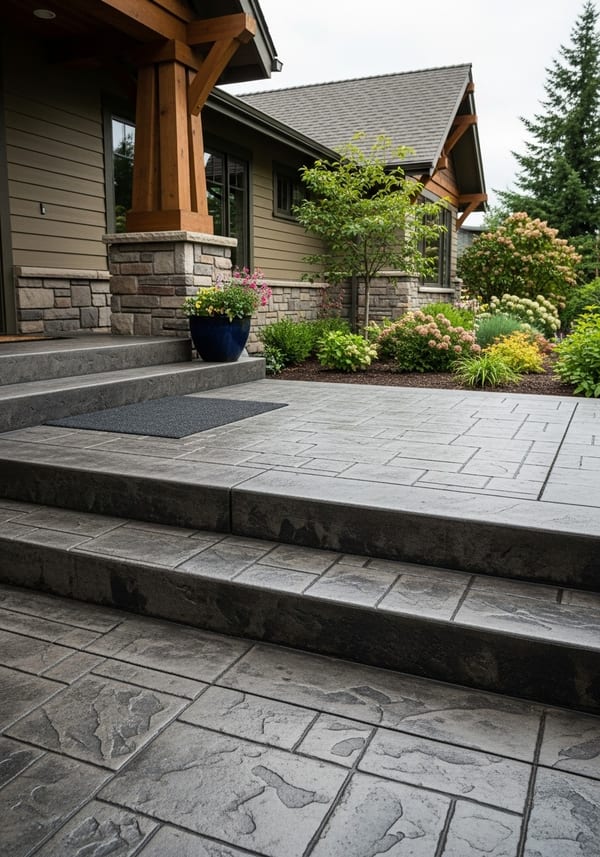
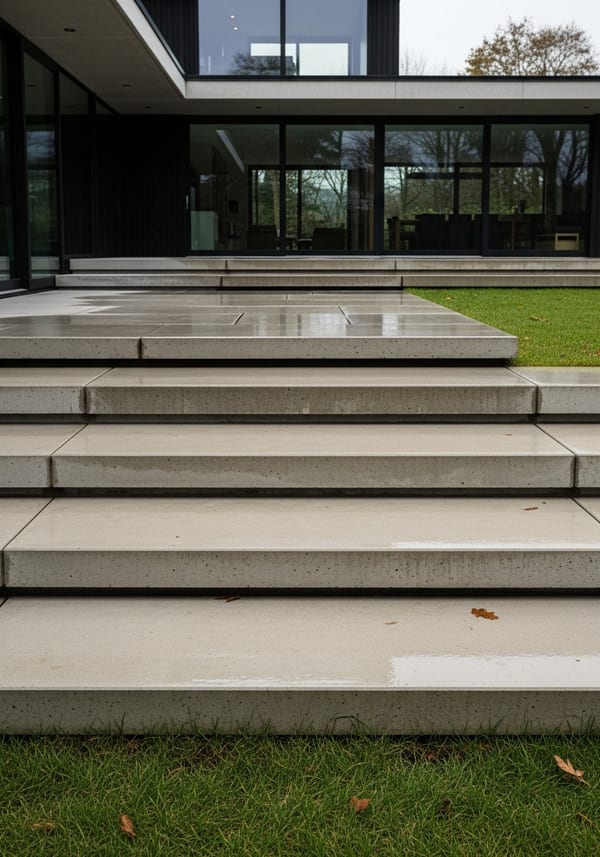
Entry walkways that include steps cost $10–16/sq ft for the walkway portion plus $150–400 per step for the stair construction. A 3-step entry with a landing and 20-foot connecting walkway typically runs $2,500–5,000 for a stamped finish. Tiered slab entries — where the walkway ascends through two or three broad, shallow platforms rather than traditional steps — are a popular design for modern homes with moderate grade change. Each tier acts as both a step and a landing, creating a more gradual and visually generous approach. Safety on entry steps matters more than aesthetics: broom-finish treads provide the best slip resistance regardless of the riser pattern. Code requires handrails for stair runs of 4+ risers in most jurisdictions. For 3-step entries, handrails aren't required but are worth considering for accessibility — surface-mounted iron railings run $300–800 installed.
Stepping Stone and Garden Paths
Individual concrete stepping pads cost $50–150 each installed, or $10–20 per pad in materials for a DIY pour. A 15-pad garden path runs $750–2,250 for contractor work or $150–300 in materials if you cast them yourself — making this the most budget-friendly and DIY-accessible concrete walkway option. Set pads 18–24 inches apart center-to-center for a comfortable stride. Decomposed granite between pads ($30–60/cu yd) is the lowest-maintenance surround; creeping thyme or Irish moss fills in over a season and handles light foot traffic. Square pads (18"×18" or 24"×24") suit modern landscapes; irregular shapes suit cottage and woodland gardens. For a cohesive property look, match the pad finish and pigment to your primary front walkway — even a simple broom-finish pad in the same charcoal tone as the driveway creates visual continuity at minimal cost.
Plan it with a free calculator
- Paver Walkway Cost CalculatorInstalled cost, materials and edging for any paver walkway or garden path.
- Paver Sand CalculatorBedding sand in tons, cubic yards and bags for any paver patio, walkway or driveway.
- Concrete Finish SelectorRank 7 outdoor concrete finishes for your surface, climate, priority and style.
Frequently Asked Questions
How much does a concrete walkway cost?
A concrete walkway costs $6–18 per sq ft installed depending on finish type. Plain broom finish runs $6–10/sq ft, exposed aggregate $8–14/sq ft, and stamped concrete $12–18/sq ft. A typical 50-foot front walkway (4 feet wide, 200 sq ft) costs $1,200–3,600. Adding steps costs $150–400 per step. Staining an existing walkway runs $1–4/sq ft — the lowest-cost upgrade option.
What is the best concrete finish for a walkway?
Broom finish is the best value — $6–10/sq ft, excellent slip resistance, and minimal maintenance. Stamped concrete ($12–18/sq ft) is the best choice for curb appeal when the rest of the property is polished. Exposed aggregate ($8–14/sq ft) is the strongest performer in wet climates and garden settings because the texture hides wear and provides natural grip. Flagstone-look stamped concrete is the best option for homeowners who want natural stone aesthetics without the $25–45/sq ft price of real flagstone.
How wide should a concrete walkway be?
A concrete walkway should be at least 3 feet wide for single-file passage and 4–5 feet wide for two people to walk side by side. ADA accessibility requires a minimum 36-inch clear width. For a primary front entrance, 4 feet is the functional minimum and 5 feet feels generous — the wider format is worth the 25% cost increase because it reads as intentional rather than cramped.
Can you pour concrete over an existing walkway?
Yes, if the existing slab is structurally sound, level, and free of major cracking. A concrete overlay runs $4–8/sq ft and adds 1–2 inches of new surface over the old walkway — enough to apply a fresh broom finish, stamp pattern, or stain. If the existing slab is heaved, cracked through, or settling unevenly, overlay will fail and full demolition plus replacement ($7–20/sq ft including demo) is the only reliable option.
How thick should a concrete walkway be?
A residential concrete walkway should be 4 inches thick poured over 4 inches of compacted gravel sub-base. This is the industry standard for pedestrian traffic and handles freeze-thaw cycling in most climates. Pour thicker (5–6 inches) at expansion joints, where the walkway meets the driveway, and at any point where vehicles might cross the path. Reinforcement with wire mesh or fiber mesh is recommended for walkways longer than 20 feet to control cracking.