
Sealing Your Concrete Patio: What You Need to Know
March 27, 2026
Sealing a concrete patio costs $0.15–0.25 per sq ft in materials for a DIY job, or $1–3 per sq ft if you hire a contractor. On a 300 sq ft patio, that's $45–75 in product or $300–900 for professional application. The right sealer type depends on your finish — stamped and colored concrete need a different product than plain broom finish. Done correctly, sealing extends finish life by years and dramatically improves how the surface looks. Done wrong, it traps moisture and causes peeling.
Why Sealing Matters More for Some Finishes
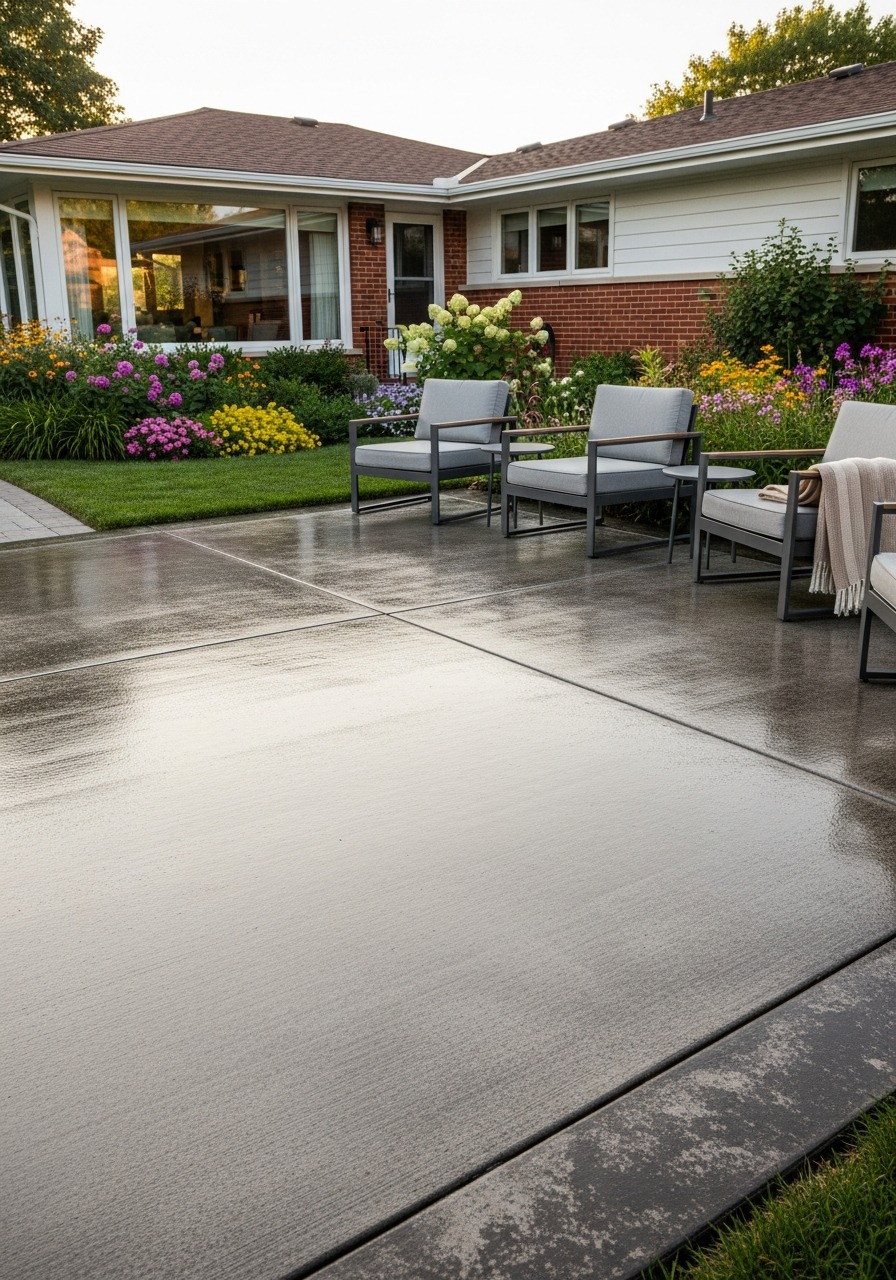
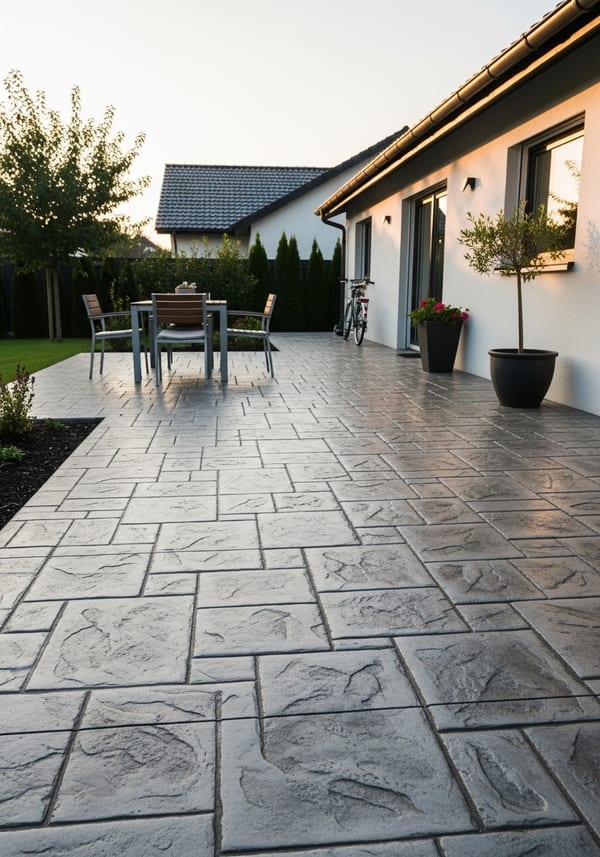
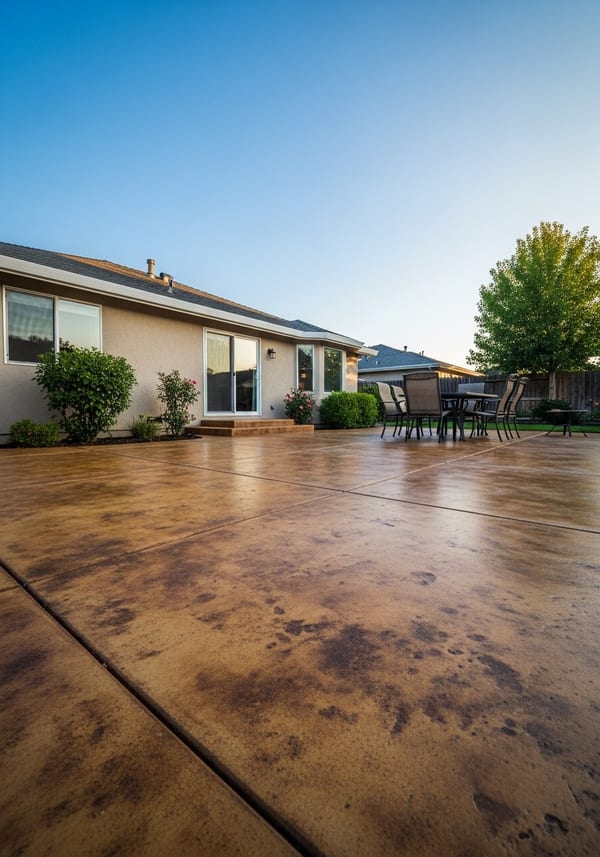
Plain broom-finish concrete benefits from sealing — it reduces water infiltration and staining — but it won't look dramatically different before vs. after. Stamped and colored concrete is different: a quality sealer enhances color depth and gives the surface a wet-look or satin sheen that makes the finish look significantly better. If you have stamped or integrally colored concrete, sealing isn't optional maintenance — it's part of how the finish is supposed to look. Tools like PourCanvas can show you how different sealer sheen levels (matte, satin, wet-look gloss) would change the appearance of your specific patio finish.
Penetrating Sealer vs. Film-Forming Sealer: Which to Choose
Penetrating sealers (silane-siloxane or siliconate) soak into the concrete and repel water and staining without changing the surface appearance. They're the right choice for plain concrete or any surface where you want protection without sheen. Film-forming sealers (acrylic, polyurethane, epoxy) sit on top of the surface and add visible sheen from matte to high gloss. They enhance color depth on stamped and colored concrete but require reapplication every 2–3 years as the film breaks down. Never apply a film-forming sealer over an existing film — strip the old coat first or you'll trap moisture.
What Concrete Patio Sealing Costs in 2026
DIY sealing costs $0.15–0.25 per sq ft in product — a 5-gallon pail of quality acrylic sealer ($60–90) covers 250–400 sq ft depending on the surface texture. Sprayer rental adds $30–50. Contractor sealing runs $1–3 per sq ft, including surface cleaning, crack prep, and application. On a 300 sq ft stamped patio, that's $300–900 for professional work. The labor premium is worth it for first-time sealing on a stamped or decorative surface — application technique matters more than most homeowners expect.
When to First Seal and How Often to Reseal
New concrete should cure for at least 28 days before sealing — ideally 60 days. Sealing too early traps residual moisture and causes the sealer to cloud or peel. Reseal every 2–3 years for film-forming products on decorative surfaces. Penetrating sealers typically last 4–7 years. Test whether your patio needs resealing: drop a tablespoon of water on the surface. If it beads up, the sealer is still working. If it soaks in within 30 seconds, it's time to reseal.
Get the full inspiration pack — free.
30+ curated patio, driveway and walkway design images delivered to your inbox.
DIY Sealing vs. Hiring a Contractor
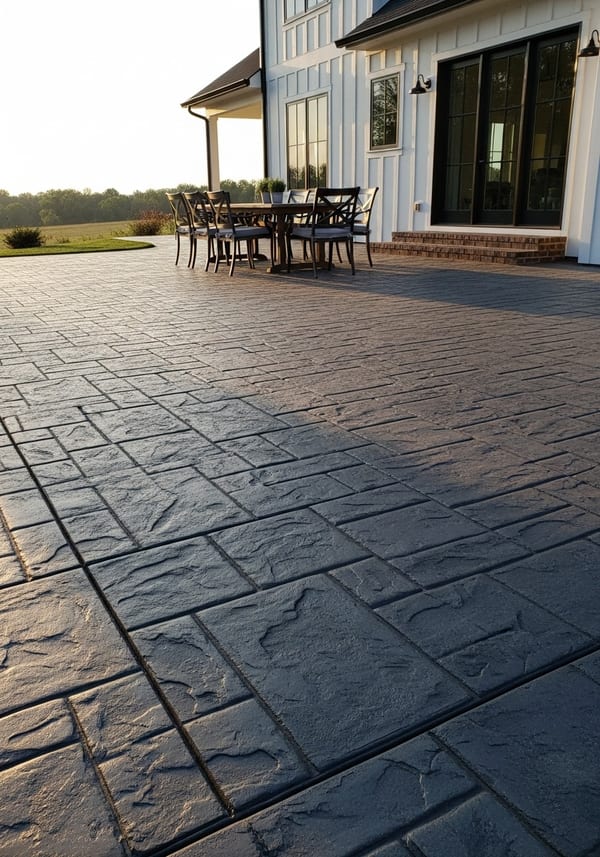
DIY sealing is a reasonable project for plain or lightly colored concrete: clean the surface, let it dry fully, and apply the sealer with a roller or sprayer in thin, even coats. Stamped concrete with heavy texture and multiple color layers is harder to DIY — the sealer pools in the low points of the stamp and can look uneven without proper back-rolling technique. For stamped or decorative concrete, a professional first application is worth the cost. Subsequent resealings are easier to DIY once you know the product and surface behavior.
Stamped vs. Plain Concrete: Different Sealer Needs
Plain broom-finish concrete does fine with a penetrating sealer applied every 5–7 years — it gives water resistance without changing the look. Stamped concrete should use a film-forming acrylic or polyurethane sealer that enhances color depth, reapplied every 2–3 years. Exposed aggregate concrete benefits from a penetrating sealer that doesn't fill the surface texture; film-forming sealers can make aggregate surfaces slippery when wet. If you're also sealing a driveway, the same product selection logic applies — match the sealer type to the finish, not to the square footage.
Sealing New Concrete: The Most Common Mistake
The most frequent sealing error is applying sealer too early. New concrete must cure for a minimum of 28 days — and ideally 60 days — before sealing. Sealing before the hydration process is complete traps moisture inside the slab and causes the sealer to cloud, peel, or blister. On a 300 sq ft patio, a poor early sealing job can cost $300–900 to strip and redo professionally. If your contractor tries to seal the same day as the pour, push back — the pour date and the seal date are never the same. For patios poured in late fall, this means waiting until spring to seal rather than rushing before winter.
Sealing a Concrete Driveway vs. a Patio: Key Differences
Driveways take more stress than patios — vehicle weight, oil drips, and road salt all act on the surface more aggressively than foot traffic. A concrete driveway benefits from a penetrating silane-siloxane sealer that resists chemical penetration; the same product works on a patio but isn't as critical. On stamped driveways, a film-forming sealer is still the right choice for color enhancement, but it should have a higher solids content (25%+) than a typical patio sealer to handle vehicle loads. Resealing frequency is the same: every 2–3 years for stamped surfaces, every 4–7 years for plain concrete. Bundling a driveway and patio resealing in the same contractor visit typically reduces the per-sq-ft labor cost by 20–30%.
Sealing Walkways and Steps
Concrete walkways and entry steps need sealing on the same schedule as a patio, but the application requires more attention to detail. Steps have horizontal tread surfaces and vertical risers — the sealer must be applied evenly to both, which is harder to do with a roller and often requires a brush on the risers. Pooling in the tread/riser joint is the most common sealing mistake on steps; it creates a white haze as the sealer cures unevenly. In cold climates, steps are more vulnerable to freeze-thaw damage because water collects in the tread joints and the surface sees more deicing chemical exposure than a flat patio. Annual inspection and prompt crack filling on walkway and step surfaces is more important than on the patio — the concentration of foot traffic and the freeze-thaw exposure are both higher.
The AI tool is almost ready.
Drop your email and we'll notify you the moment it launches — free to use.