

Stamped Concrete Patterns
Updated May 25, 2026
Stamped concrete patterns replicate the look of natural stone, brick, and wood on a poured slab at $12–20 per sq ft installed — roughly half the cost of the real materials they mimic. This guide covers 30+ patterns across six major categories, each shown with real installations on patios, driveways, and walkways. Every section includes cost ranges, best-fit applications, and maintenance expectations so you can compare patterns side by side before committing to a contractor.
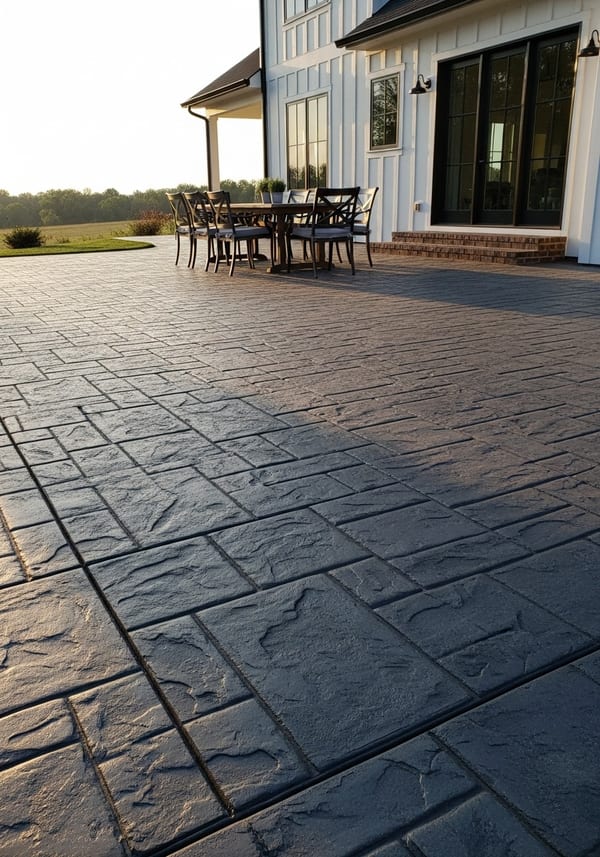
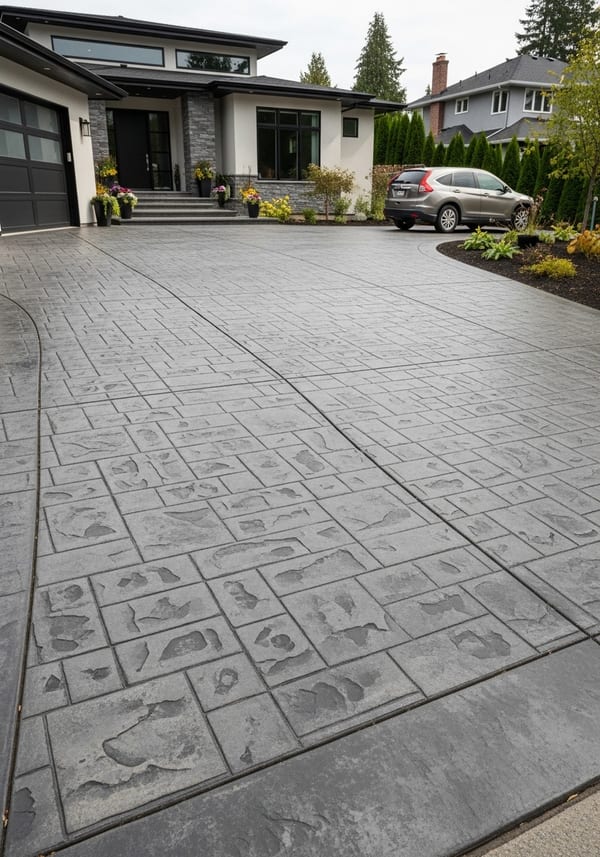
Ashlar Slate Stamped Concrete
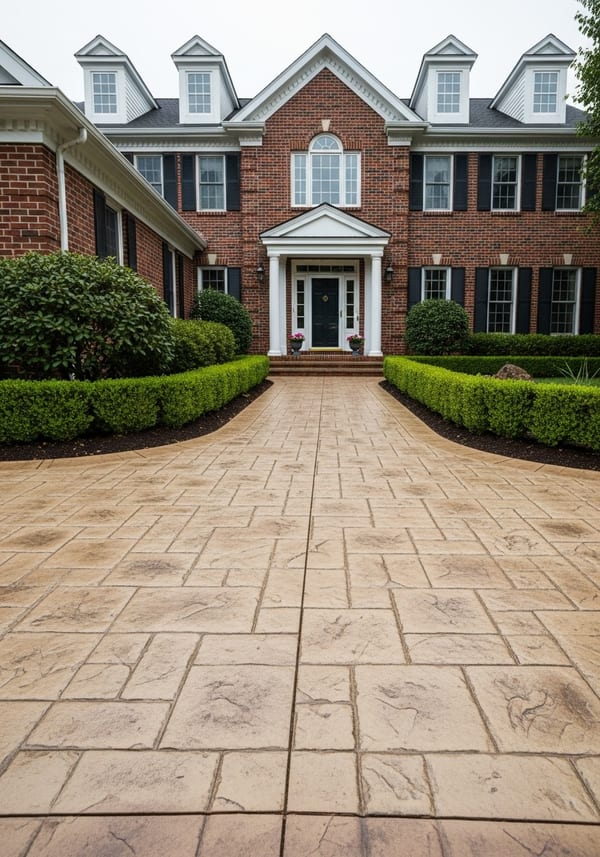
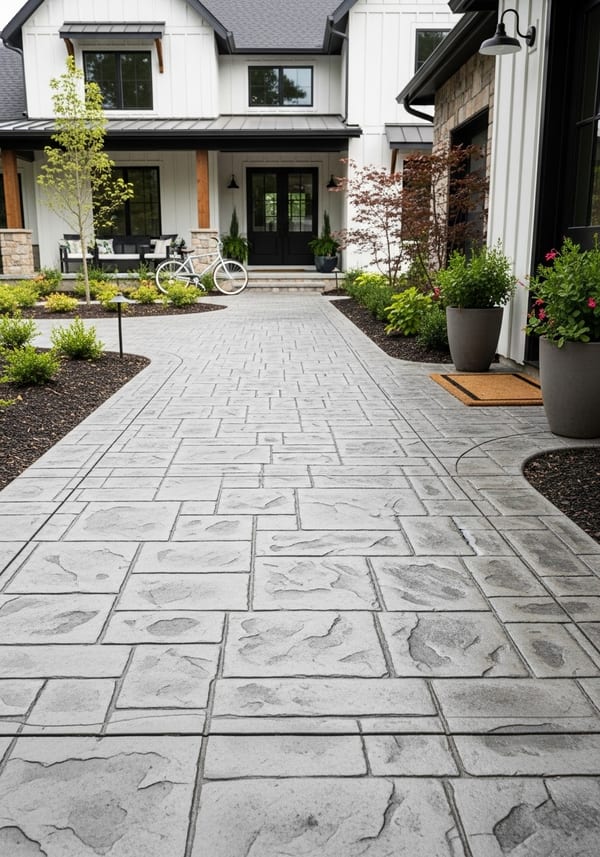
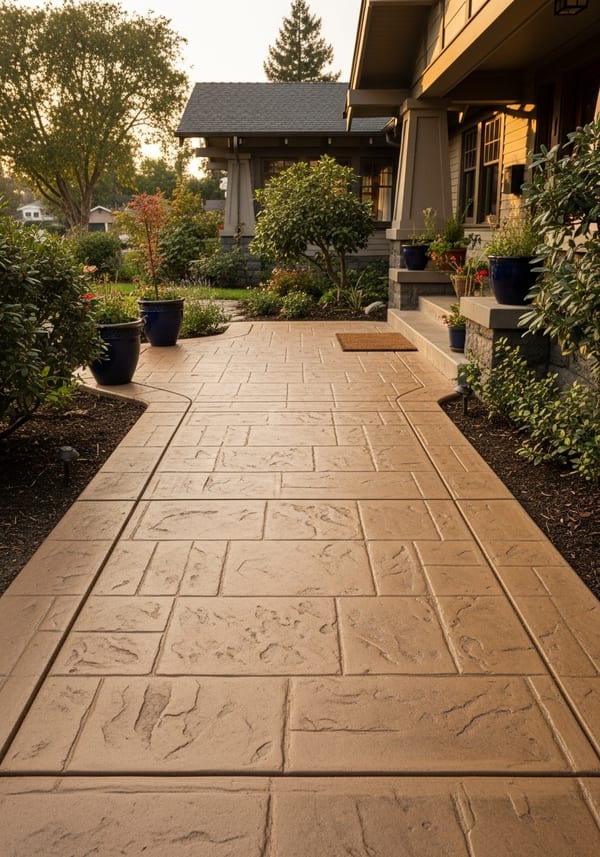
Ashlar slate is the most popular stamped concrete pattern in North America and the one most contractors recommend as a starting point. It replicates cut natural slate with rectangular blocks of varying sizes arranged in a staggered grid — clean, geometric, and convincingly stone-like from any normal viewing distance. The pattern works best on patios and entryways where its structured look complements architectural lines. Expect to pay $14–18 per sq ft installed. Ashlar slate is also one of the most forgiving patterns for contractors to stamp consistently, which keeps labor quotes competitive compared to more intricate designs. In charcoal or medium grey with a contrasting release agent, it reads as genuine cut stone. Reseal every 2–3 years to maintain color depth and surface protection.
Cobblestone Stamped Concrete
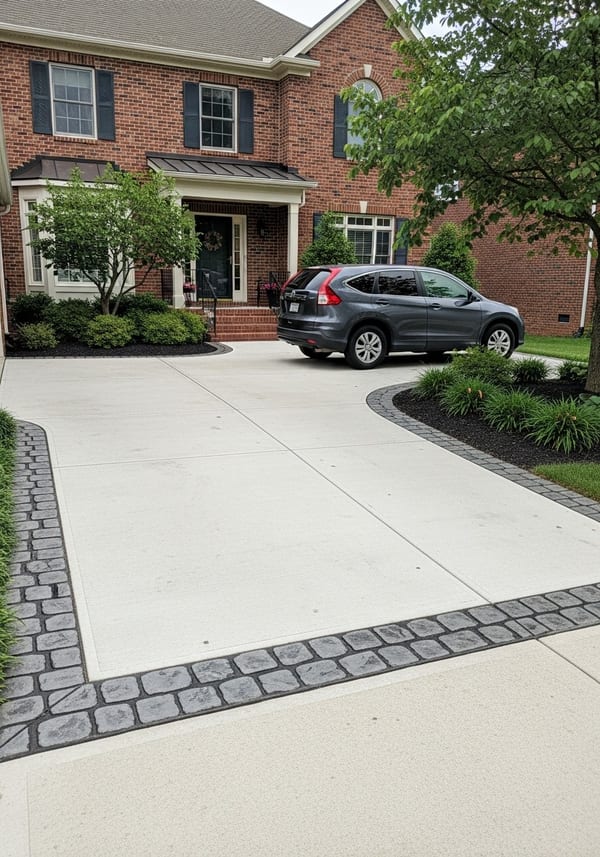
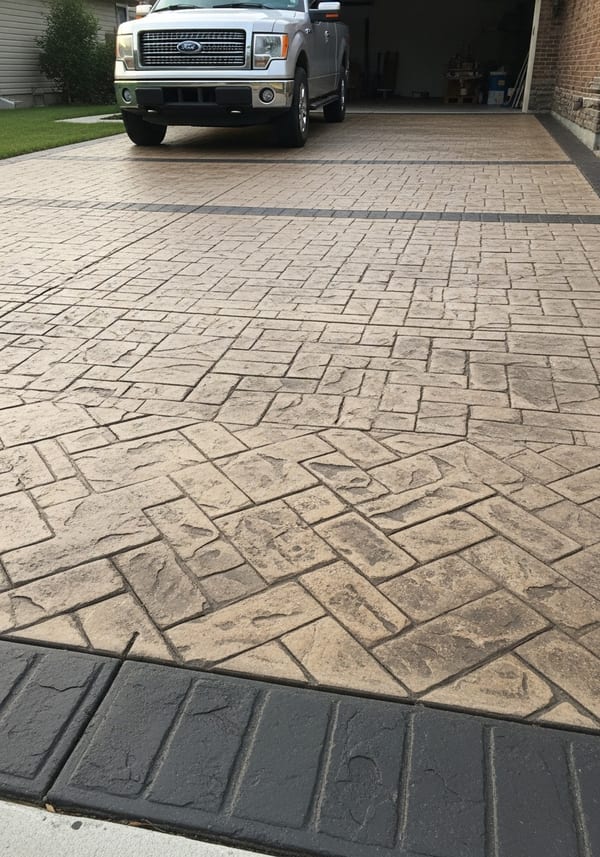
Cobblestone stamping delivers a traditional European look — small, rounded stone units set in a tight mosaic pattern. It is one of the more expensive stamp options at $14–20 per sq ft because the pattern requires more stamps, tighter timing, and careful color layering to avoid a flat, repetitive appearance. Cobblestone works best on driveways and walkways where the small-scale pattern creates visual interest along a linear path. On large open patios, the busy texture can make the space feel smaller, so it is better suited as a border band or accent than a full-field application. The pattern holds up well to vehicle traffic on driveways when properly reinforced. Maintenance is standard: reseal every 2–3 years with a film-forming acrylic sealer to protect the color wash and surface detail.
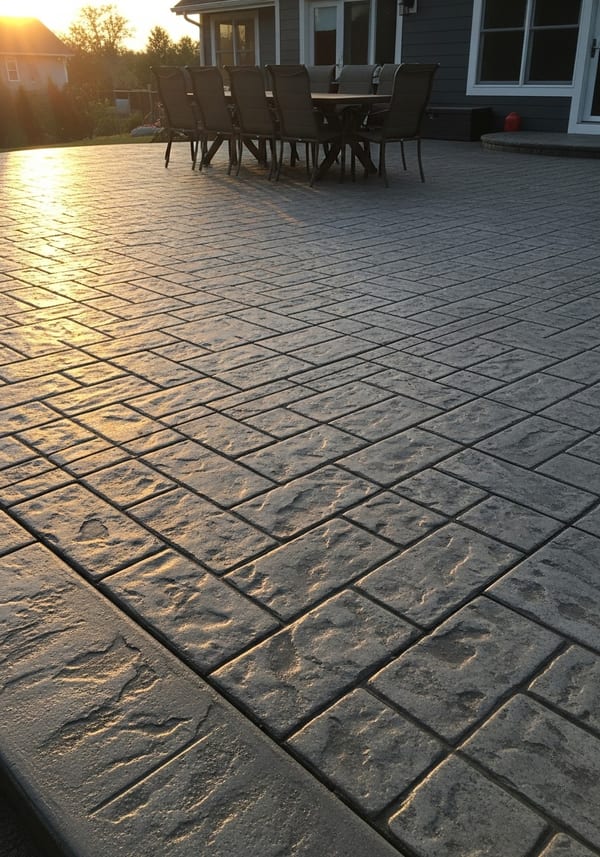
Herringbone Brick Stamp Patterns
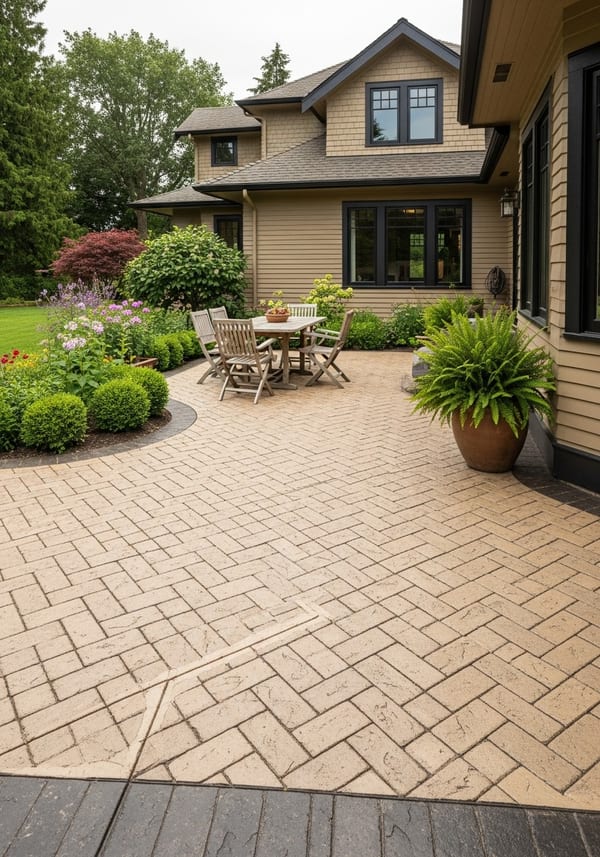
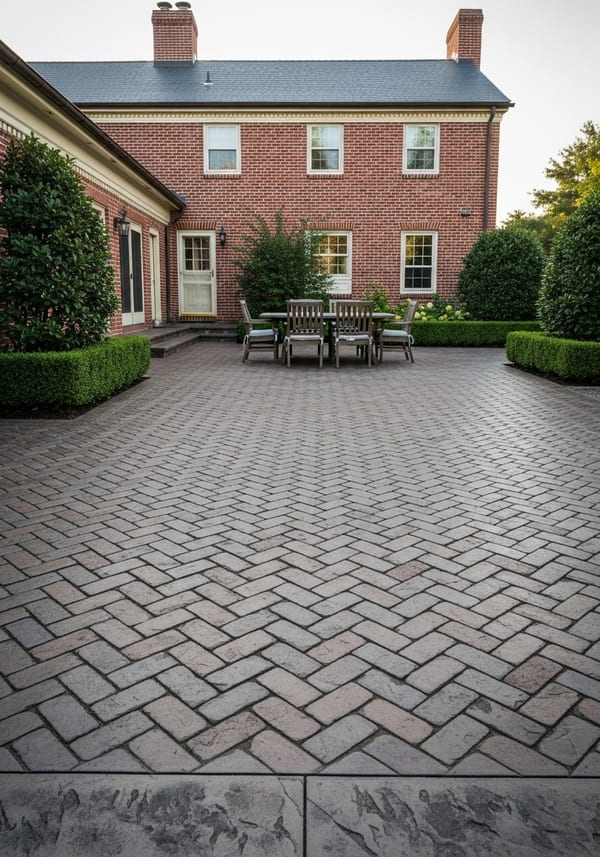
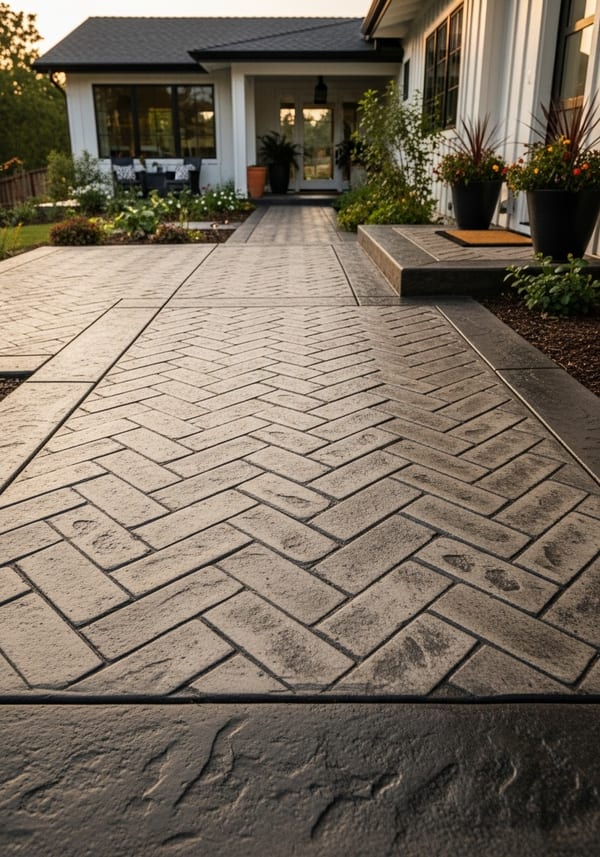
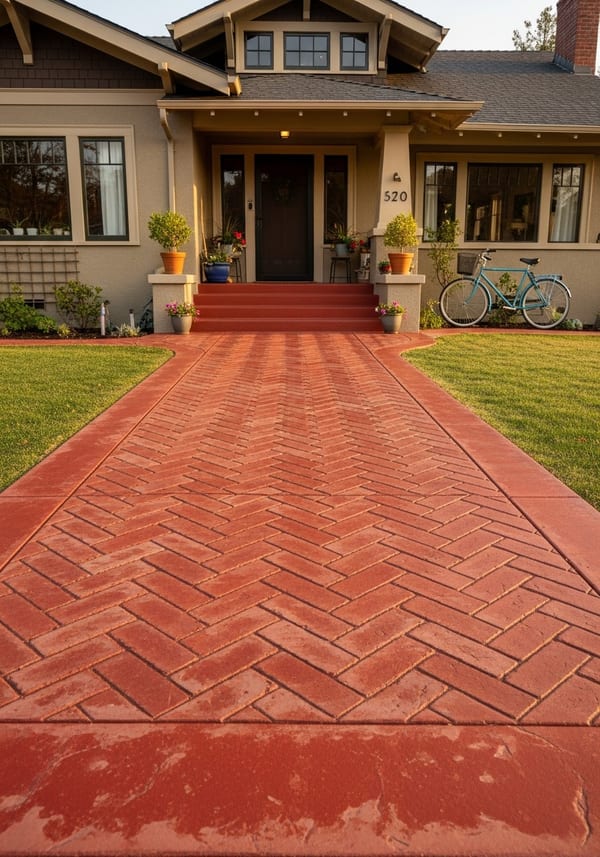
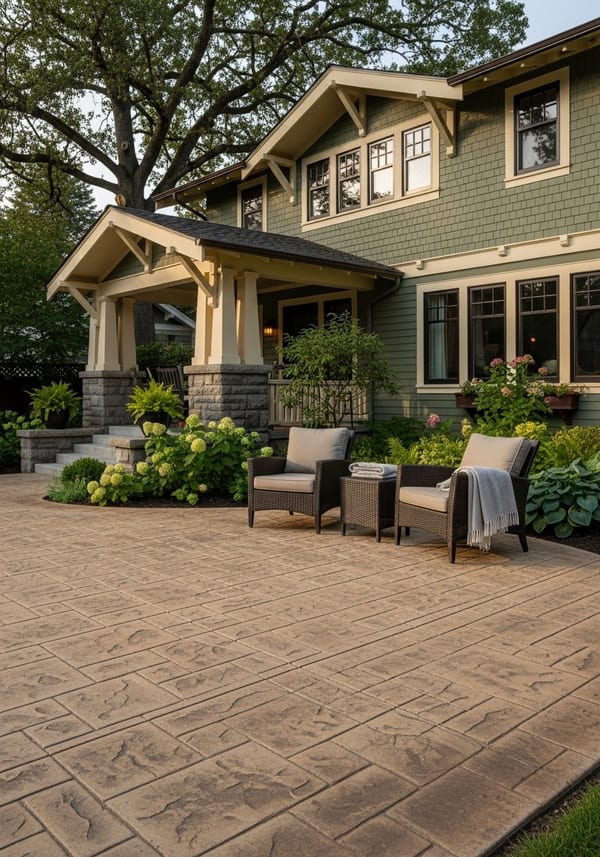
The herringbone brick pattern arranges rectangular units in a zigzag layout that interlocks diagonally across the surface. It is one of the most versatile stamp patterns available — equally at home on patios, driveways, and walkways — and it pairs well with both traditional and transitional architecture. Cost runs $12–18 per sq ft installed, sitting at the lower end of the stamped concrete range because the pattern is relatively straightforward for experienced crews to stamp efficiently. A warm buff or sandstone color wash suits colonial and craftsman homes; charcoal or slate grey works for modern exteriors. The interlocking layout also provides good visual continuity across large surfaces without looking monotonous. Herringbone brick is a strong choice for homeowners who want the look of a paver patio without the joint maintenance. Reseal every 2–3 years.
Wood Plank Stamped Concrete
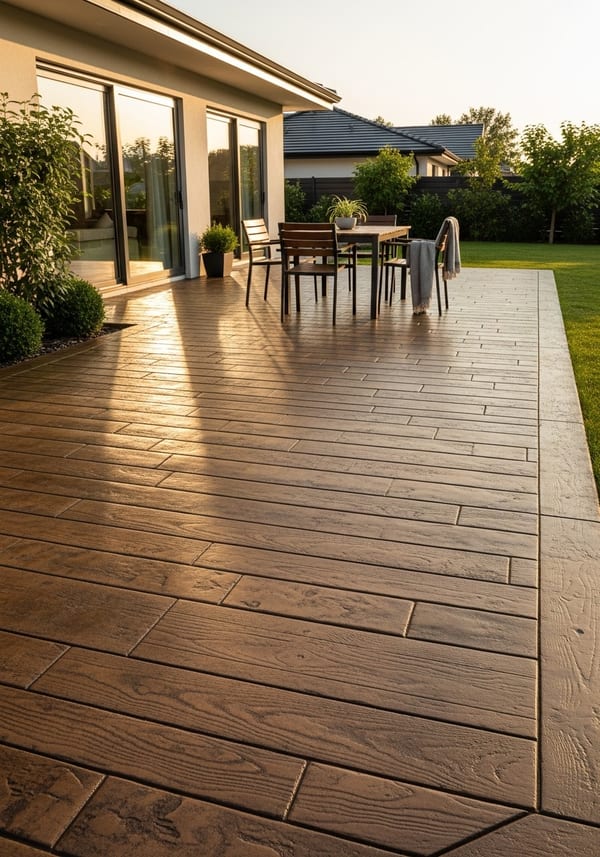
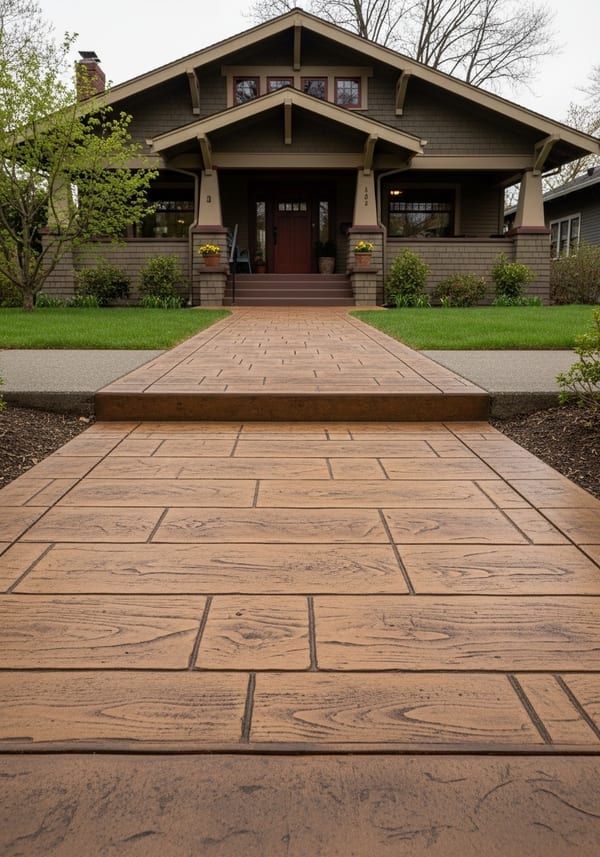
Wood plank stamping mimics natural wood boards with grain texture, knot details, and plank-width grooves pressed into the concrete surface. When executed with multiple color layers — a base pour color plus hand-applied accent tones in varying shades — the result is remarkably realistic. It works especially well on patios and pool decks where real wood would warp, splinter, or require annual refinishing. Cost runs $14–20 per sq ft installed, reflecting the additional color-layering labor that separates a convincing wood plank from a flat imitation. The difference between realistic and cheap-looking wood plank stamping comes down entirely to color complexity: a single pour color with plank lines reads as concrete with grooves, not wood. Specify at least three color tones for grain variation. Reseal every 2 years — wood plank patterns show sealer wear more visibly than stone patterns because the flat surface lacks texture to mask fading.
Flagstone Stamp Patterns
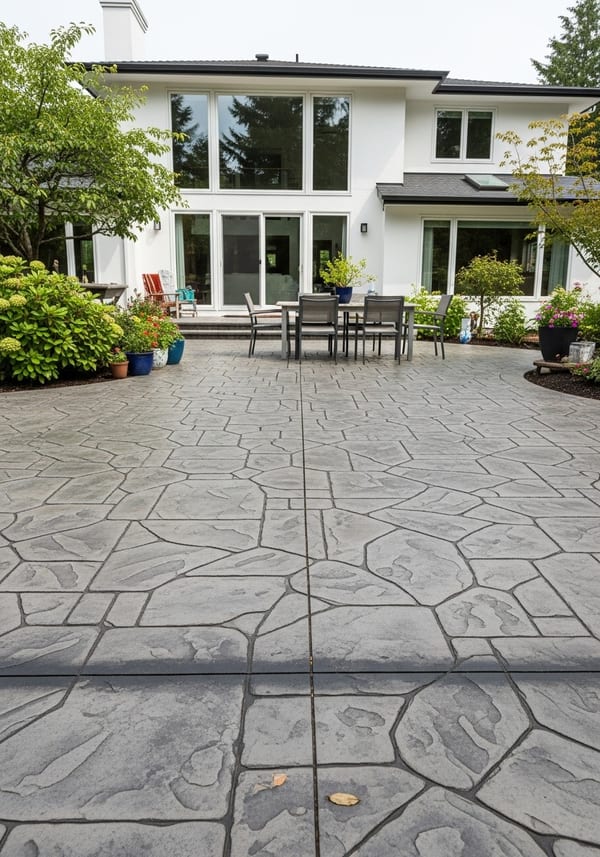
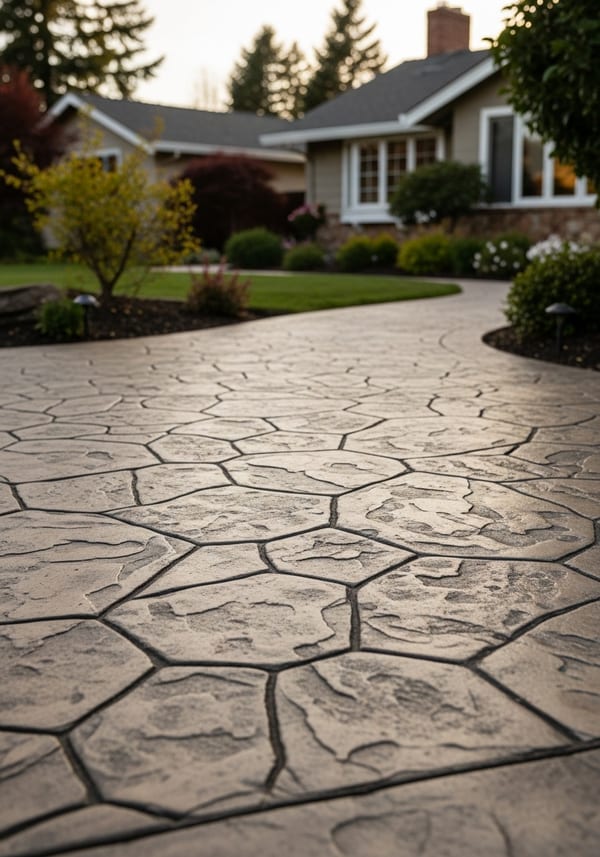
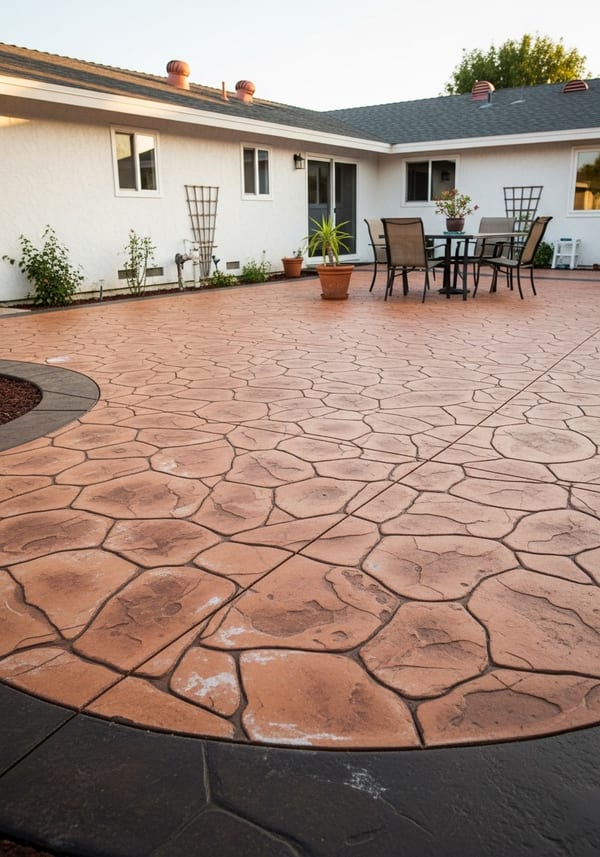
Flagstone stamping produces irregular, organic stone shapes that mimic natural quarried flagstone. The random layout is forgiving of slight color variations between stamps, which makes it easier to patch or extend years later without visible seams. It is one of the most popular patterns in residential landscaping because it fits virtually any setting — cottage gardens, traditional ranches, contemporary yards. Cost runs $12–18 per sq ft installed. Flagstone works particularly well in garden and landscape settings where the organic shapes complement natural plantings and curved bed edges. On walkways, the irregular pattern creates a relaxed, garden-path feel that reads as more natural than geometric alternatives. A grey or buff color wash with a dark release agent creates convincing stone depth. Reseal every 2–3 years to maintain the color contrast between base and release tones.
Random Stone and Roman Slate
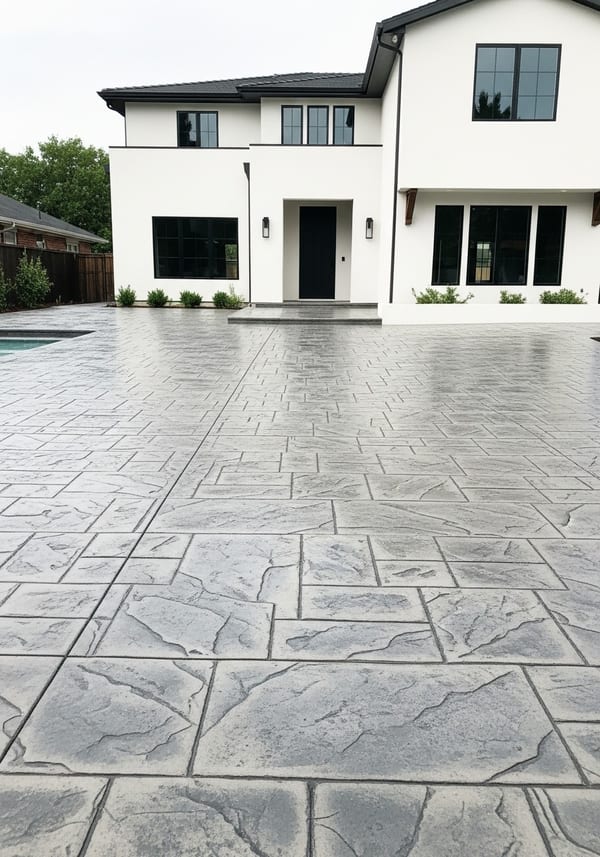
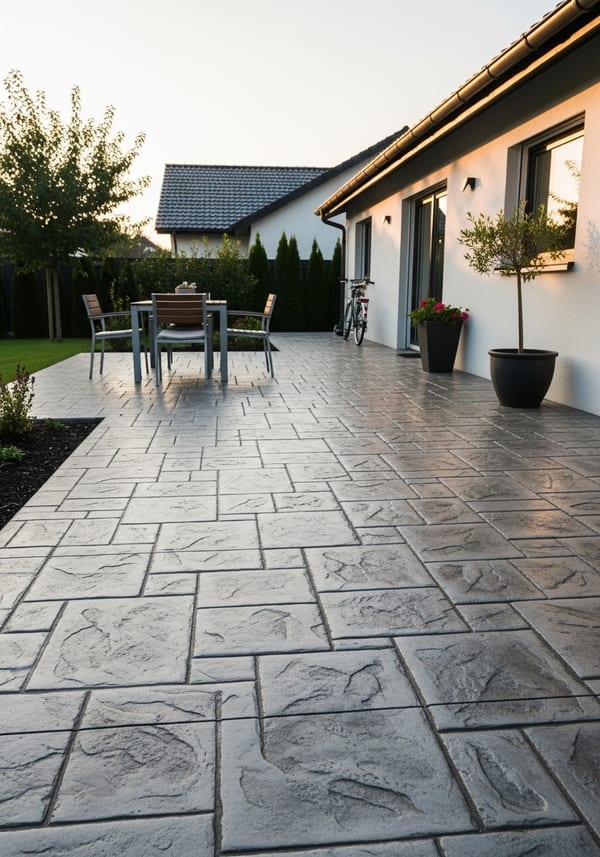
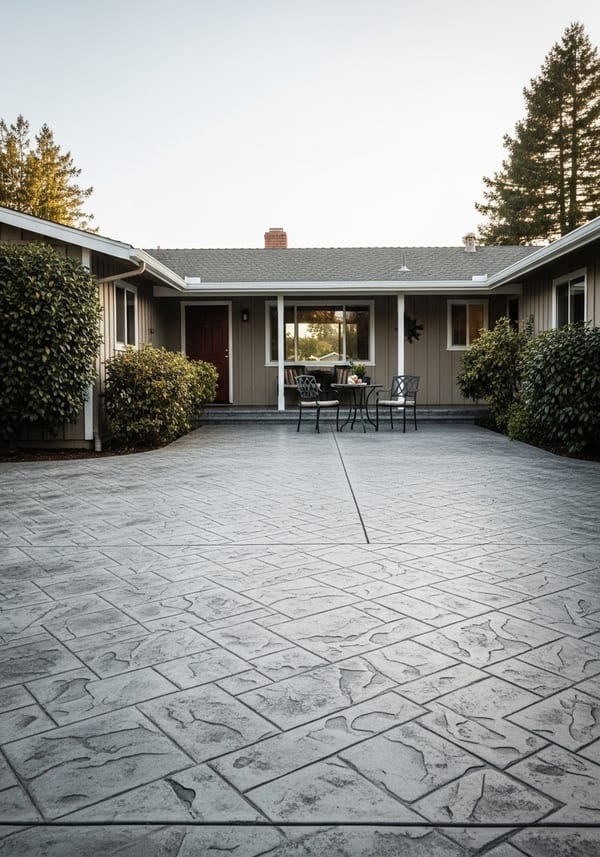
Random stone and Roman slate patterns use large-format irregular shapes — bigger and bolder than traditional flagstone — to create a clean, transitional look. The larger units mean fewer joint lines per square foot, which gives the surface a less busy, more contemporary feel. These patterns work well on patios and driveways where a modern but not minimal aesthetic is the goal. Cost runs $14–18 per sq ft installed, in line with most mid-complexity stamp patterns. In a medium grey or warm sandstone color wash, random stone reads as upscale without being ornate. Roman slate adds a subtle linear texture within each stone unit that catches light and enhances surface depth. Both patterns are contractor-friendly to stamp on large surfaces because the oversized units cover area quickly. Reseal every 2–3 years. These patterns are a strong choice for homeowners who find ashlar too rigid and flagstone too rustic.
Stamped Concrete Colors and Finishes
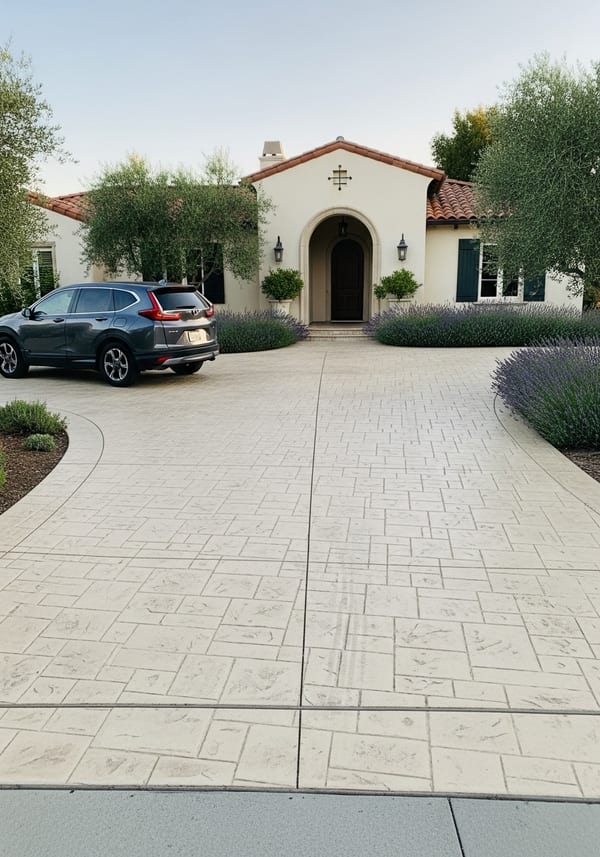
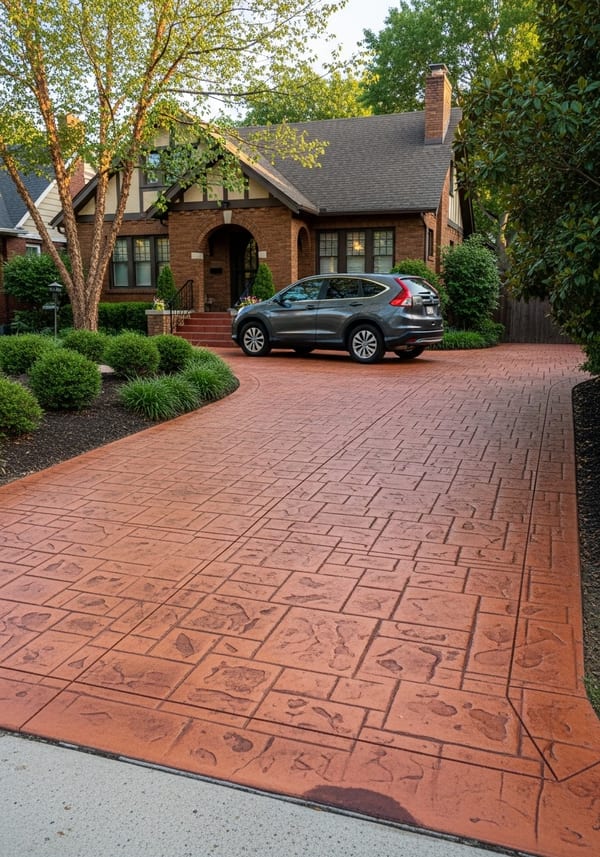
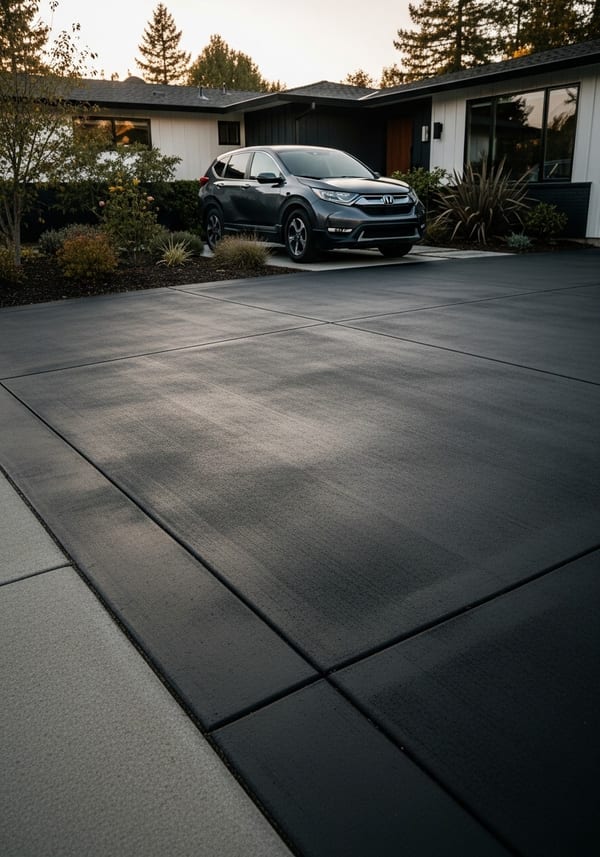
Color selection has as much impact on the final result as the stamp pattern itself. The four most popular base colors for stamped concrete are charcoal (modern, hides staining), cream (warm, reflects heat), buff (traditional, versatile), and terracotta (Mediterranean, distinctive). The color system works in two layers: integral pigment mixed into the concrete pour establishes the base tone, and a contrasting release agent applied to the stamps before pressing creates depth by settling into the low points of the pattern. This two-layer system is what gives stamped concrete its characteristic multi-tonal, weathered appearance. Adding color — whether integral pigment, release agent, or both — adds $2–4 per sq ft over plain grey concrete. Neutral tones (charcoal, medium grey, warm buff) have the longest visual shelf life and broadest buyer appeal for resale. Bolder choices like deep terracotta or slate blue appeal to specific tastes but may narrow buyer interest. UV-stable iron oxide pigments hold color best over time; resealing every 2–3 years protects against fading.
Stamped Concrete Pattern Comparison
Choosing between stamped concrete patterns is easier when you compare them side by side on the factors that matter most: cost, best application, durability, and maintenance. The table below summarizes the six major pattern families covered in this guide.
All patterns require a structurally sound 4-inch slab on a compacted gravel base. The cost ranges reflect pattern complexity and regional labor variation. Wood plank rates Medium on durability because its flat surface shows sealer wear and UV fading more visibly than textured stone patterns. Every pattern benefits from the same maintenance baseline: reseal with a film-forming acrylic or polyurethane sealer on the schedule listed above, and address any hairline cracks before the next freeze-thaw season.
| Pattern | Cost/sq ft | Best For | Durability | Maintenance |
|---|---|---|---|---|
| Ashlar Slate | $14–18 | Patios, entryways | High | Reseal every 2–3 years |
| Cobblestone | $14–20 | Driveways, walkways | High | Reseal every 2–3 years |
| Herringbone Brick | $12–18 | All surfaces | High | Reseal every 2–3 years |
| Wood Plank | $14–20 | Patios, pool decks | Medium | Reseal every 2 years |
| Flagstone | $12–18 | Gardens, walkways | High | Reseal every 2–3 years |
| Random Stone | $14–18 | Patios, driveways | High | Reseal every 2–3 years |
Plan it with a free calculator
- Paver Patio Cost CalculatorInstalled cost, materials vs labor and a full material list for any paver patio.
- Patio Cost CalculatorCompare installed patio cost across concrete, stamped, pavers, brick, stone and porcelain.
- Paver CalculatorHow many pavers you need, plus base gravel, bedding sand, joint sand and edging for any size.
- Concrete Finish SelectorRank 7 outdoor concrete finishes for your surface, climate, priority and style.
Frequently Asked Questions
What is the most popular stamped concrete pattern?
Ashlar slate is the most widely installed stamped concrete pattern in North America. Its rectangular, staggered-block layout replicates cut natural slate and works with virtually any architectural style — modern, traditional, and transitional. Contractors favor it because the geometric stamps are easier to align consistently than organic patterns like flagstone, which keeps labor costs competitive at $14–18 per sq ft installed. In a charcoal or medium grey color wash with a contrasting dark release agent, ashlar slate is nearly indistinguishable from real cut stone at normal viewing distances. It is the default recommendation for patios and entryways.
How much does stamped concrete cost per square foot?
Stamped concrete costs $12–20 per sq ft installed in 2026. The range depends on pattern complexity, number of color layers, and regional labor rates. Simple patterns like herringbone brick sit at the low end ($12–14/sq ft). Multi-stamp patterns like cobblestone and heavily color-layered wood plank finishes push the high end ($18–20/sq ft). Plain broom-finish concrete runs $6–10/sq ft for comparison, so stamping adds a 50–100% premium. The stamping cost includes stamps, release agents, and the additional labor for timing-sensitive application — not just materials.
How long does stamped concrete last?
Stamped concrete lasts 25–30 years with proper installation and maintenance. The structural slab itself can last 40+ years, but the decorative surface — the stamped pattern and color finish — requires resealing every 2–3 years with a film-forming acrylic or polyurethane sealer to maintain its appearance. Without regular sealing, the color fades, the surface becomes chalky, and UV exposure degrades the release agent detail within 3–5 years. Budget $1–3 per sq ft per resealing cycle ($300–900 for a 300 sq ft patio). Properly sealed stamped concrete retains its color depth and pattern definition for decades.
Can you stamp existing concrete?
Generally no — stamping must happen during the initial pour while the concrete is still plastic (workable). Once concrete has cured, the surface is too hard to accept stamp impressions. The alternative for existing slabs is a stampable concrete overlay: a polymer-modified layer applied at 3/8–1/2 inch thickness over the existing surface, which can then be stamped with any standard pattern during its own curing window. Overlay costs run $4–8 per sq ft for a basic application or $8–15 per sq ft for a decorative stamped overlay. The existing slab must be structurally sound, level, and properly bonded for the overlay to perform — overlays on cracked or shifting slabs will fail within 1–2 years.
What stamped concrete patterns look the most modern?
Large-format ashlar slate in charcoal or medium grey is the most popular modern stamped pattern — its clean geometric lines and neutral tone suit contemporary architecture. Clean linear wood plank stamping in a grey-wash finish also reads as modern, especially around pools and on patios with minimalist landscaping. Minimal grid scoring (saw-cut geometric lines without a traditional stamp texture) is the most contemporary option available, though it technically falls outside traditional stamping. Avoid cobblestone and small-scale brick patterns for modern homes — their busy, traditional texture conflicts with clean contemporary lines and makes the surface read as dated rather than classic.