

Concrete Patio Trends for 2026
Updated May 26, 2026
Concrete patio design in 2026 has shifted decisively toward restraint. The dominant moves — dark integral color, scored geometric patterns, mixed-finish zones, and a return to warm earth tones — all share a common thread: less pattern complexity, more material honesty. The busy multi-color stamped patios of the last decade are giving way to surfaces that let the concrete itself be the design element. Here's what's current, what's emerging, and what's fading — with real costs for each trend.
Dark Integral Color Is the Dominant Move
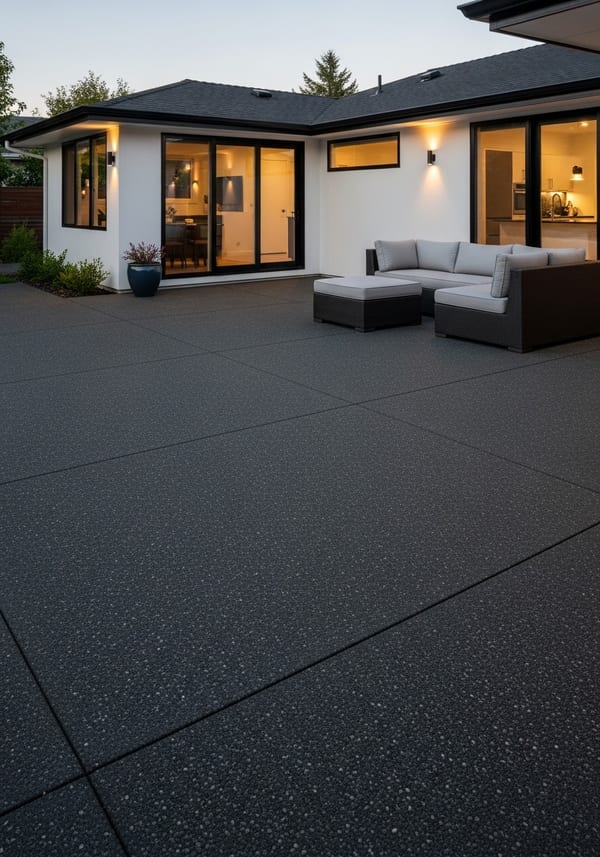
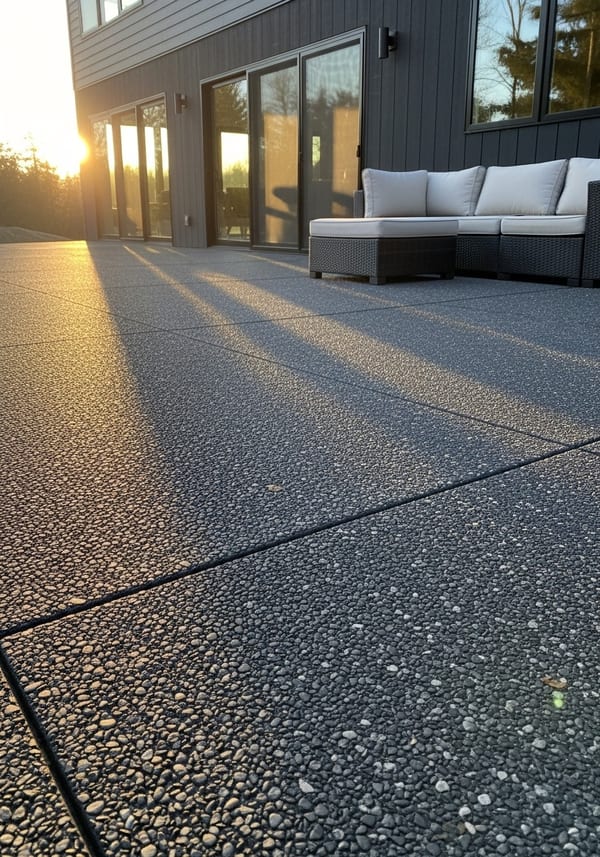
Charcoal, graphite, and near-black integral pigments are the defining patio color direction of 2026. Dark integral color adds $2–4/sq ft to a standard pour — on a 400 sq ft patio, that's $800–1,600 for a finish that fundamentally changes how the surface reads. Dark concrete photographs dramatically, hides stains and wear marks better than any other color direction, and pairs with both modern and transitional architecture. The trend is being driven partly by social media aesthetics — dark patios pop in overhead drone shots and twilight photography that dominates design platforms. The functional benefit is real: charcoal concrete shows less dirt, leaf staining, and foot traffic wear than light grey or buff finishes. The trade-off is heat absorption — dark concrete in direct afternoon sun in Phoenix or Dallas gets uncomfortably hot barefoot. In temperate climates, the heat concern is minimal.
Scored Geometric Patterns Replace Busy Stamps
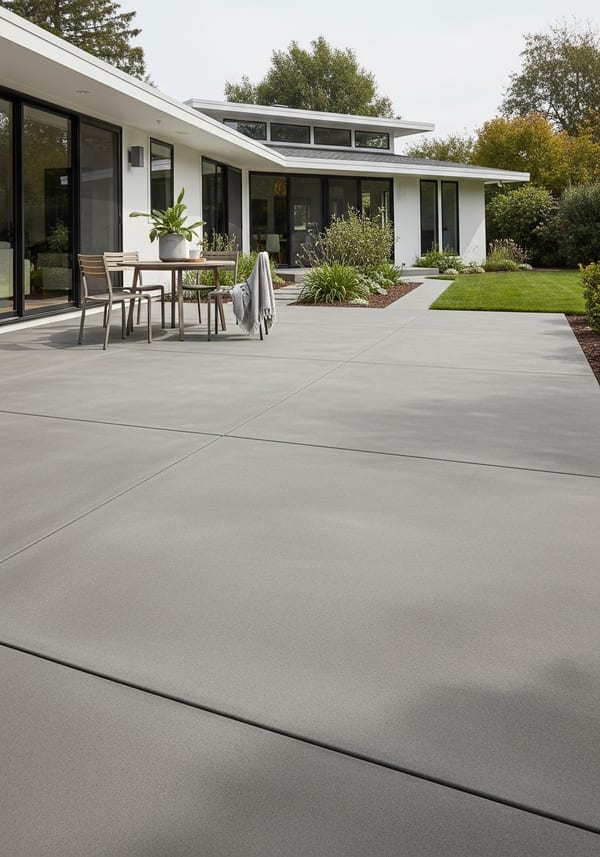
Clean saw-cut scoring is replacing elaborate stamp patterns as the preferred way to add visual interest to a concrete patio. Diagonal scoring, grid patterns, and asymmetric line work create a modern, architectural look at $0.50–1/sq ft — a fraction of the $12–18/sq ft for full stamped finishes. On a 400 sq ft patio, scoring adds $200–400 versus $4,800–7,200 for stamping. The aesthetic logic: scored lines let the concrete surface itself be the design element rather than imitating another material. A charcoal-pigmented slab with clean diagonal scoring reads as intentional and contemporary. The same slab with a stamped cobblestone pattern reads as concrete pretending to be stone. Scoring also ages better — there are no stamp edges to wear down or release agent to fade. The lines are cut into the slab and remain crisp indefinitely.
Large-Format Floating Pad Designs
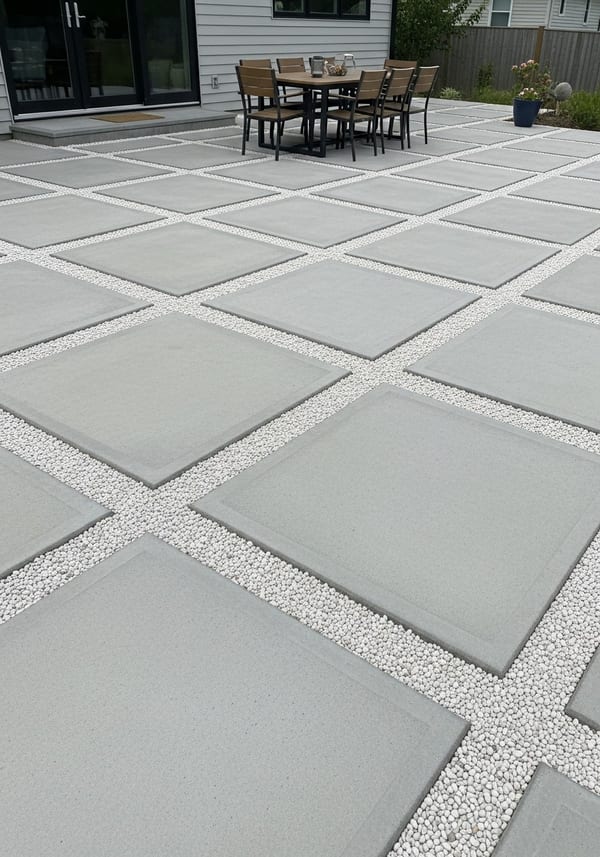
The signature 2026 patio layout: individual rectangular concrete pads (typically 3x5 or 4x6 feet) separated by 2–4 inch strips of turf, gravel, or ground cover. This floating-pad approach costs $10–16/sq ft installed because each pad requires individual forming and finishing — more labor than a single monolithic pour. On a 300 sq ft patio equivalent, budget $3,000–4,800. The visual effect is striking: the concrete reads as intentional landscape elements rather than a continuous slab, the gaps between pads provide natural drainage, and the turf or gravel strips add textural contrast. It photographs as high-end residential design and translates well from small urban courtyards to large suburban backyards. The maintenance trade-off is real — turf strips between pads require mowing and edging; gravel strips need periodic replenishment and weed management.
Mixed-Finish Zones
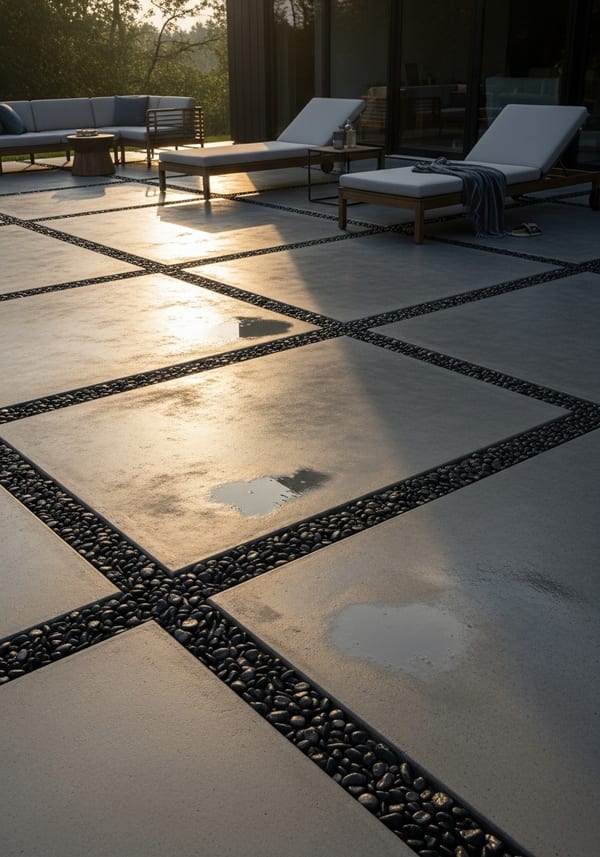
Designers and contractors are increasingly zoning patios by finish rather than using one finish across the entire surface. A broom-finish dining area with an exposed aggregate surround, or a stamped border framing a smooth troweled field — each zone optimized for its function. The dining zone gets broom finish for chair-leg stability and easy cleaning under the table. The lounge zone gets exposed aggregate for visual interest and texture. The pool-adjacent zone gets salt finish for slip resistance. Mixed-finish patios cost $10–16/sq ft on average because each zone requires separate finishing technique and timing, but the result is a surface that looks custom rather than production. The control joints between finish zones double as design elements, creating intentional visual breaks.
Warm Earth Tones Are Returning
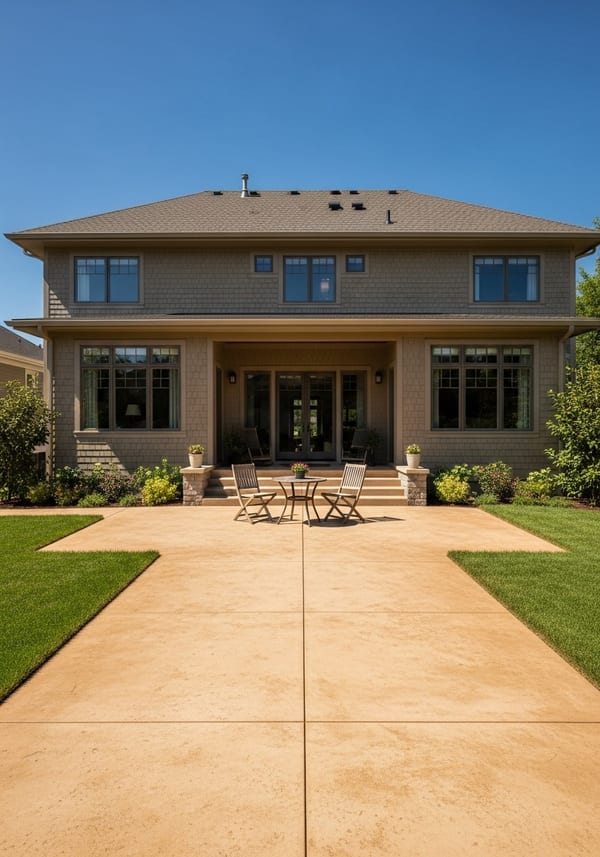
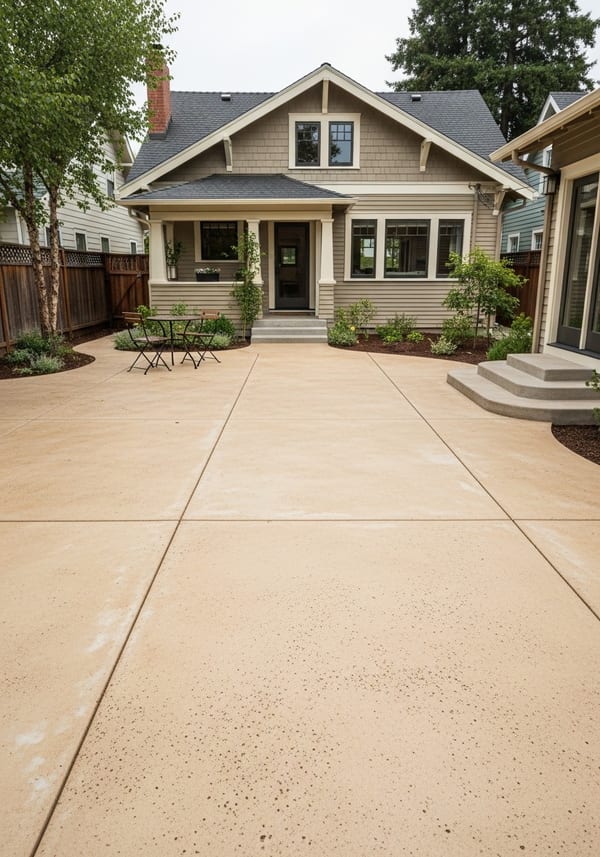
After a decade where grey dominated concrete color choices — from light silver to deep charcoal — warm tones are making a measurable comeback. Buff, sandstone, terracotta, and warm tan integral pigments are appearing in design portfolios and contractor project galleries at increasing frequency. The shift reflects broader residential design trends: warm wood tones in interior flooring, natural stone in kitchens, and earth-toned exterior paint palettes all create demand for outdoor surfaces that continue the warm palette rather than contrasting it with cool grey. Warm integral color costs the same as grey ($2–4/sq ft), and the finish pairs naturally with brick, natural wood fencing, and stone landscaping elements. For homeowners with warm-toned exteriors who defaulted to grey concrete because it was the safe choice, 2026 is the year to match the patio to the house.
What's Fading: Busy Stamps, High-Gloss, Multi-Color
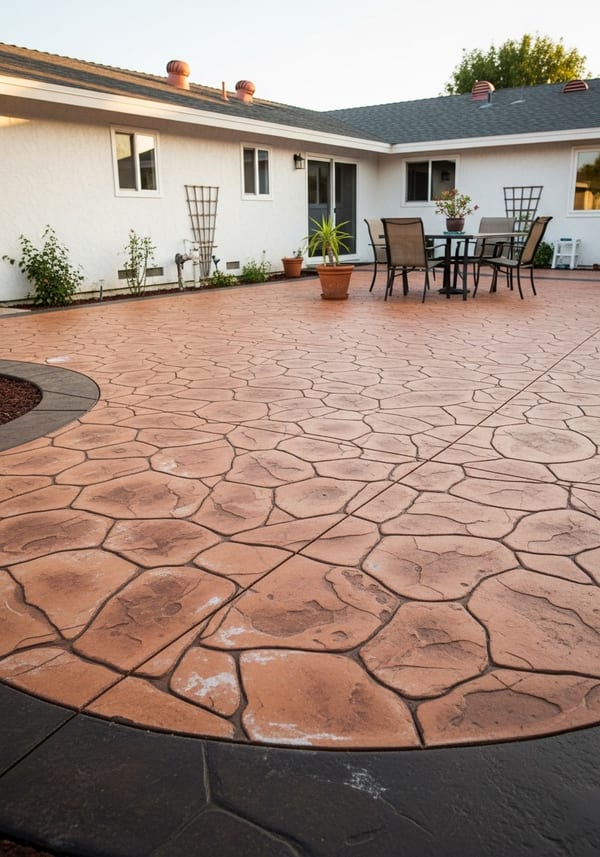
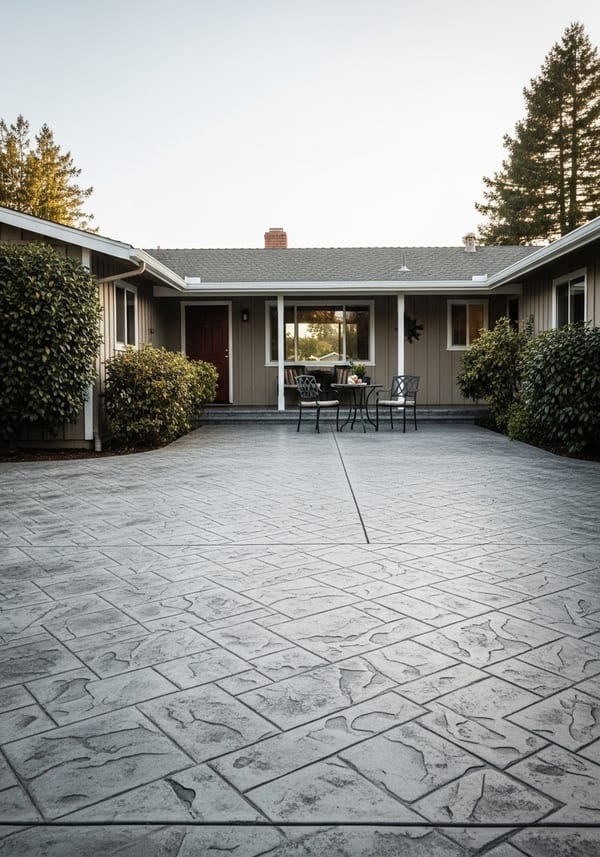
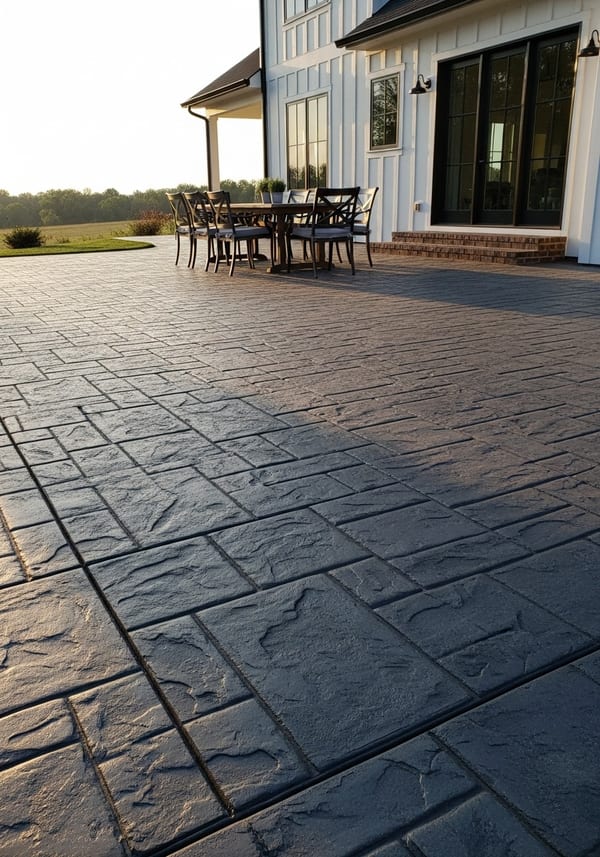
Three concrete patio trends are visibly declining in 2026. Full-field cobblestone and brick stamps that cover the entire surface in repetitive pattern are losing ground to simpler finishes — they read as dated, especially when the color release agent fades unevenly after 5–7 years. High-gloss wet-look sealers that give concrete an artificial shine are being replaced by matte and satin finishes that let the material look like concrete rather than lacquered stone. Multi-color release agent effects — the heavy brown-and-tan antiquing that was standard on stamped patios through the 2010s — are giving way to single-tone or subtle two-tone color approaches. The common thread: homeowners and designers are moving away from concrete that tries to look like something else and toward concrete that looks like well-executed concrete. The shift favors material honesty over imitation.
How to Future-Proof Your Patio Investment
Trends fade; good materials don't. The most future-proof patio choices in 2026: neutral tones (charcoal, warm grey, natural buff) that work with any exterior color scheme and don't date to a specific era. Simple finishes (broom, salt, light scoring) that age gracefully rather than degrading visually as stamp edges wear and release colors fade. Quality materials — 4,000+ PSI concrete with fiber reinforcement, proper sub-base preparation, and consistent sealing — that ensure the slab itself lasts 30+ years regardless of surface fashion. A $4,000 patio in a neutral finish with quality materials will look appropriate in 2036. A $6,000 patio in a trendy finish with marginal materials may look dated and degraded by 2032. Invest in the slab, not the trend.
Plan it with a free calculator
- Paver Patio Cost CalculatorInstalled cost, materials vs labor and a full material list for any paver patio.
- Patio Cost CalculatorCompare installed patio cost across concrete, stamped, pavers, brick, stone and porcelain.
- Paver CalculatorHow many pavers you need, plus base gravel, bedding sand, joint sand and edging for any size.
- Concrete Finish SelectorRank 7 outdoor concrete finishes for your surface, climate, priority and style.
Frequently Asked Questions
What is the most popular concrete patio finish in 2026?
Dark integral color with simple finishing (broom, salt, or scored lines) is the dominant patio trend in 2026. Charcoal and graphite pigments add $2–4/sq ft and deliver a modern look that hides wear and photographs well. Elaborate stamped patterns are declining in favor of material-honest finishes.
Are stamped concrete patios going out of style?
Full-field stamped patterns — especially cobblestone and brick — are declining in popularity. Simple scored patterns, exposed aggregate, and salt-finish textures are replacing them. Stamped borders and accent zones remain popular, but the trend is away from covering the entire surface in a repetitive stamp pattern.
What concrete patio color is trending in 2026?
Charcoal and near-black lead the trend for modern and contemporary homes. Warm earth tones — buff, sandstone, terracotta — are returning after a decade of grey dominance, especially for traditional and craftsman-style homes. Multi-color release agent effects are fading in favor of single-tone or subtle two-tone approaches.
How much does a trendy concrete patio cost in 2026?
The trending finishes range widely: scored geometric patterns on pigmented concrete run $8–12/sq ft, large-format floating pads cost $10–16/sq ft, and mixed-finish zone patios average $10–16/sq ft. Basic dark integral color with broom finish — the most accessible current trend — costs about $8–16/sq ft.