

Exposed Aggregate vs Broom Finish
Updated May 26, 2026
Exposed aggregate and broom finish are the two most common non-stamped concrete finishes — and they sit at different price points for good reason. Broom finish runs $6–10/sq ft installed; exposed aggregate costs $8–14/sq ft. On a 400 sq ft patio, that's a $800–1,600 difference. But cost isn't the only factor. Slip resistance, long-term appearance, maintenance effort, and how well each finish suits your specific use case all matter. Here's a direct comparison across every dimension that affects the decision.
Cost: Broom Finish Wins on Price
Broom-finish concrete costs $6–10/sq ft installed — it's the baseline concrete patio price because the finish requires no specialized technique beyond dragging a broom across the wet surface. Exposed aggregate runs $8–14/sq ft because the contractor must apply a surface retarder, then pressure-wash the top layer of cement paste to reveal the stone aggregate beneath — an extra step that adds 1–2 hours of labor on a typical 400 sq ft patio. On that 400 sq ft patio, broom finish totals $2,400–4,000; exposed aggregate totals $3,200–5,600. The $800–1,600 gap is real but narrower than the jump to stamped concrete at $12–18/sq ft. If budget is the primary constraint and you want a clean, functional surface, broom finish is the right call.
Appearance: Two Very Different Looks
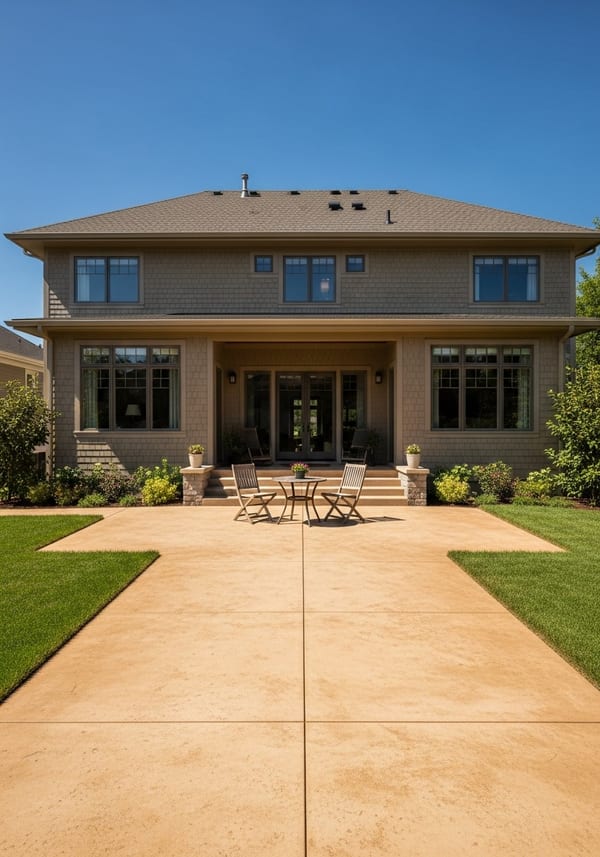
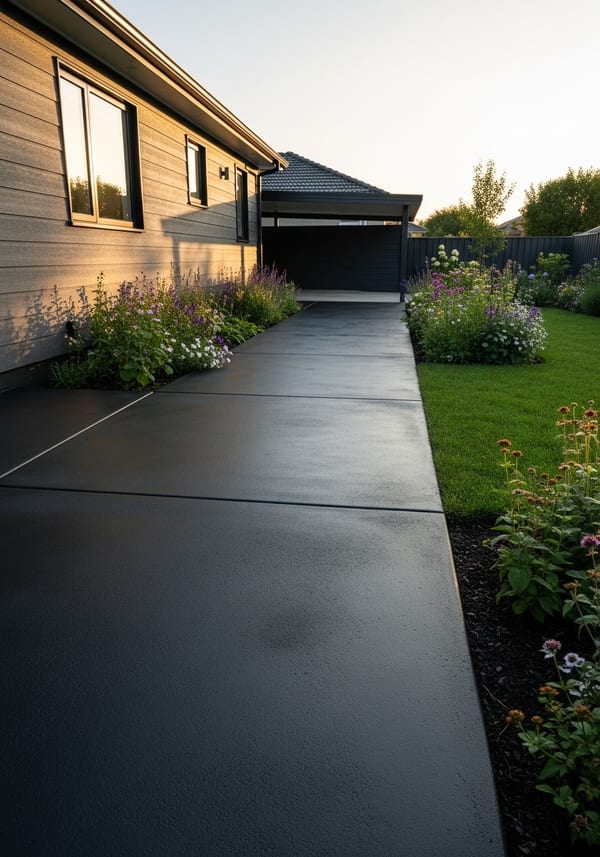
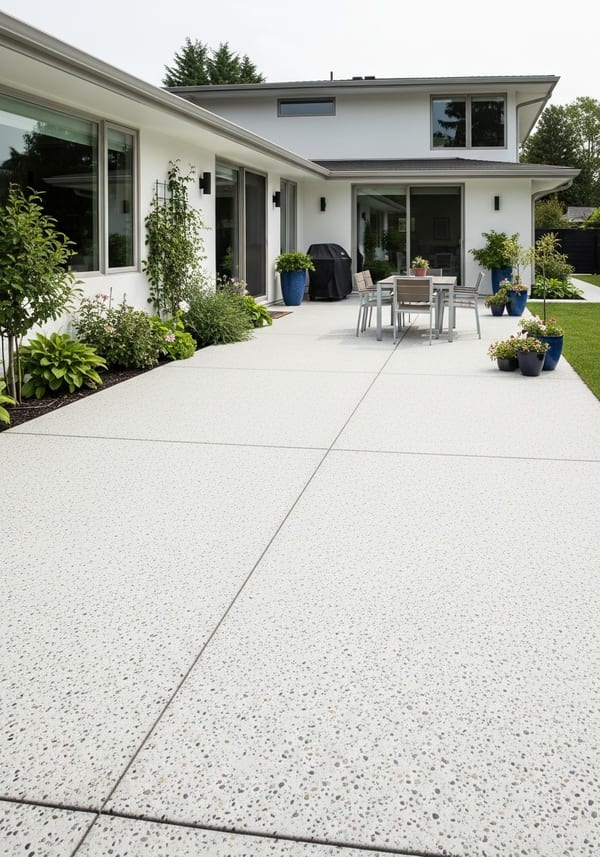
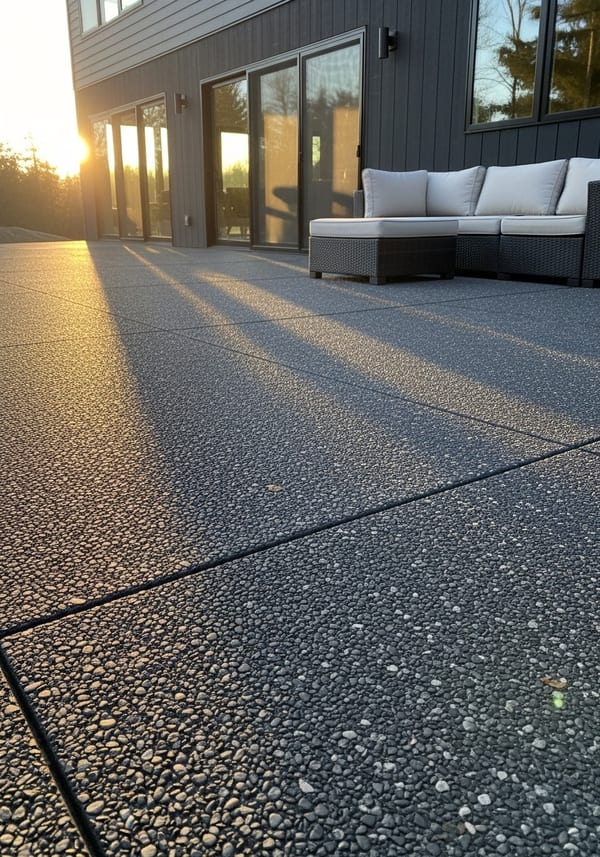
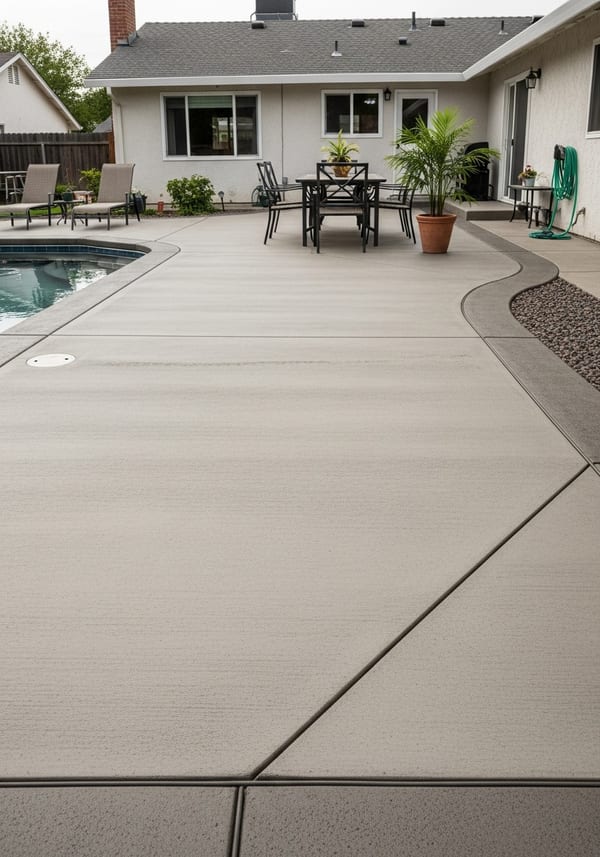
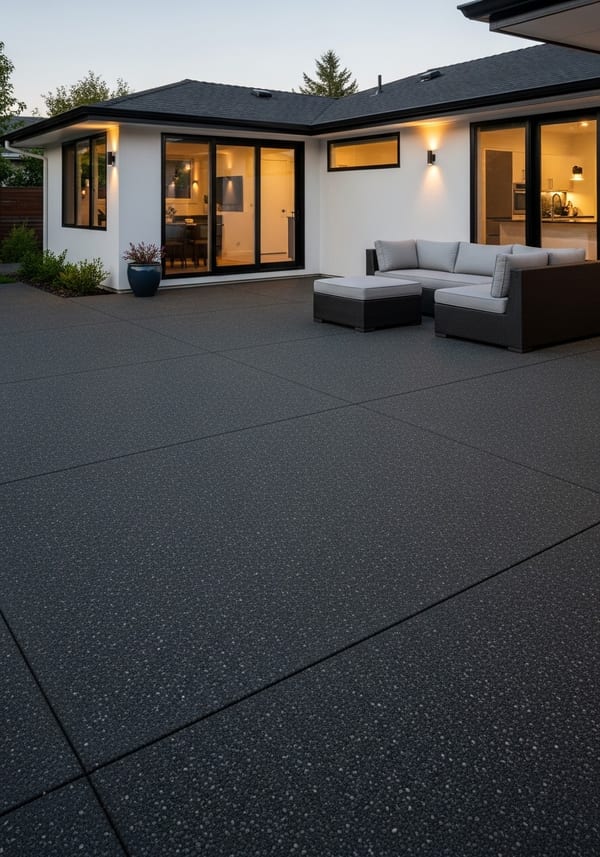
Broom finish produces a clean, uniform surface with fine parallel texture lines — it reads as minimal, modern, and intentional when paired with quality edging and a good color wash. It's a blank canvas that lets landscaping and furniture define the space. Exposed aggregate is a fundamentally different aesthetic: the revealed stones create a textured, speckled surface with natural color variation that reads as organic, earthy, and high-end. The appearance depends heavily on the aggregate mix — river pebble produces a rounded, warm look; crushed granite gives angular, contemporary texture. Choosing a decorative aggregate blend (imported stone rather than standard local gravel) adds $1–3/sq ft but dramatically changes the visual result. If you want the concrete to be the visual feature, exposed aggregate delivers more interest per square foot.
Slip Resistance: Both Grip Well When Wet
Both finishes provide adequate traction when dry — the broom texture and the aggregate stone surface both grip well under normal conditions. The difference shows when wet. When new, both finishes usually reach the top wet slip-resistance class in Australian pendulum testing summarized by the UNSW Home Modification Clearinghouse (P5 / R13 for wood-floated, broom and exposed-aggregate concrete). No published test compares the two finishes by number in U.S. terms. In practice, grip depends more on upkeep: a broom texture stays grippier when it runs across the walking direction, and any glossy film sealer reduces grip on either finish. For pool decks and rainy climates, both are good choices; choose a penetrating sealer, and on aggregate ask for small or polished stones for bare feet.
Maintenance Over 10 Years
Both finishes follow the same basic maintenance cycle: reseal every 3–5 years with a penetrating sealer ($0.15–0.25/sq ft DIY, $1–3/sq ft professional). The difference is in cleaning and repair. Broom finish is easy to sweep, mop, and pressure wash — the flat texture doesn't trap debris. Exposed aggregate's textured surface collects leaf tannins, dirt, and organic matter in the gaps between stones, requiring more careful cleaning; aggressive pressure washing can dislodge aggregate stones if the original wash was too deep. Patching broom finish is straightforward — a skim coat blends reasonably well. Patching exposed aggregate is nearly impossible to match because the stone pattern is random. Over 10 years, total maintenance cost is roughly similar — $600–1,200 for either finish on a 400 sq ft patio — but aggregate demands more attention to cleaning technique.
Durability and Lifespan
Both finishes last 25–30+ years on a properly prepared base with adequate drainage. The practical difference is how they age visually. Exposed aggregate hides wear, surface staining, tire marks, and minor discoloration because the multicolored stone surface camouflages imperfections — a 15-year-old exposed aggregate patio can look nearly identical to a new one. Broom finish shows dirt, leaf stains, oil spots, and tire marks more visibly, especially on lighter colors. A white or light-grey broom-finish patio adjacent to a driveway will show tire tracking within months. For high-traffic areas or surfaces adjacent to driveways and parking, aggregate's visual forgiveness is a real advantage. For covered or low-traffic patios, broom finish stays clean with minimal effort.
Best Use Cases: Patio, Driveway, Pool Deck, Walkway
Broom finish is the best choice for: budget-conscious projects where function matters more than decorative impact, pool decks where barefoot comfort is priority (aggregate stones can feel sharp underfoot in hot sun), and DIY-friendly projects where the homeowner is doing the finishing work. Exposed aggregate is the better choice for: driveways where tire marks and oil stains need to disappear into the surface, garden paths and walkway areas where the natural stone texture complements landscaping, and entertaining patios where the surface itself is a design element. The hybrid approach — exposed aggregate on the patio field with broom-finish borders, or aggregate walkways leading to a broom-finish pool deck — captures the strengths of both finishes and adds visual interest through contrast. Budget the border treatment at roughly the same per-sq-ft rate as the primary finish.
The Verdict
Broom finish is the right default for homeowners who want a clean, affordable, low-maintenance surface that works everywhere. At $6–10/sq ft, it's the most cost-effective concrete finish available, and it looks sharp when paired with integral color and quality sealing. Exposed aggregate is the upgrade worth paying for when visual impact, stain concealment, and wet-surface traction matter — the $2–4/sq ft premium over broom finish adds genuine functional and aesthetic value that holds up over decades. On a 400 sq ft patio, the aggregate premium is $800–1,600 — a one-time cost spread over 25+ years of use. For most homeowners building a primary entertaining patio, exposed aggregate is the stronger long-term value. For secondary surfaces, utility slabs, and tight budgets, broom finish delivers everything you need.
Plan it with a free calculator
- Concrete Finish SelectorRank 7 outdoor concrete finishes for your surface, climate, priority and style.
- Driveway Finish SelectorRank concrete driveway finishes for your climate, upkeep, budget and style.
- Pool Deck Finish SelectorRank concrete pool deck finishes for slip resistance, barefoot heat, climate and style.
Frequently Asked Questions
Is exposed aggregate more expensive than broom finish?
Yes. Exposed aggregate costs $8–14/sq ft installed versus $6–10/sq ft for broom finish. On a 400 sq ft patio, the difference is $800–1,600. The premium covers the surface retarder application and pressure-washing step required to reveal the aggregate stones.
Which is more slip-resistant: exposed aggregate or broom finish?
Both are among the most slip-resistant concrete finishes when wet. Research summarized by the UNSW Home Modification Clearinghouse puts new broom-finished and exposed-aggregate concrete in the same top wet slip class. Keep it that way with a penetrating sealer rather than a glossy film sealer, and broom across the walking direction.
Can you combine exposed aggregate and broom finish on one patio?
Yes, and it's a popular approach. A common layout uses exposed aggregate on the main patio field with broom-finish borders, or broom finish on the pool deck area with aggregate on the surrounding patio. The contrast between textures adds visual interest and lets you optimize each zone for its specific use.
How long does exposed aggregate concrete last compared to broom finish?
Both last 25–30+ years with proper installation and sealing maintenance. The practical difference is visual aging: exposed aggregate hides wear, stains, and tire marks better because the multicolored stone surface camouflages imperfections. Broom finish shows dirt and staining more visibly, especially on lighter colors.