

Concrete Patio Ideas
Updated May 25, 2026
Concrete patios range from $6 per sq ft for a basic broom finish to $20 per sq ft for multi-color stamped stone — and the right choice depends on your budget, style, and how you use the space. This guide covers 45+ real installations organized by finish type: stamped, modern scored, exposed aggregate, budget broom and salt finish, stained, pool deck, and small-patio layouts. Each section includes cost ranges, material notes, and contractor considerations so you can narrow down before requesting quotes.
Stamped Concrete Patio Ideas
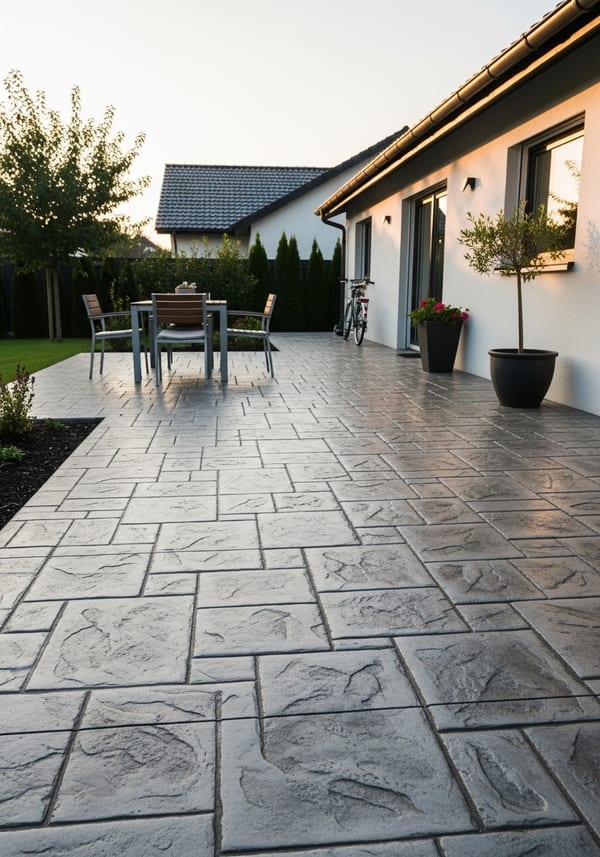
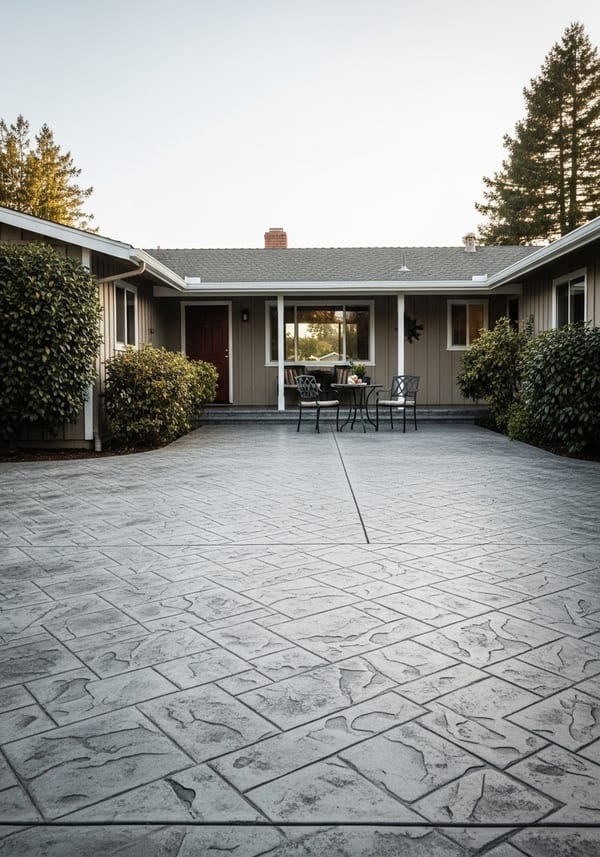
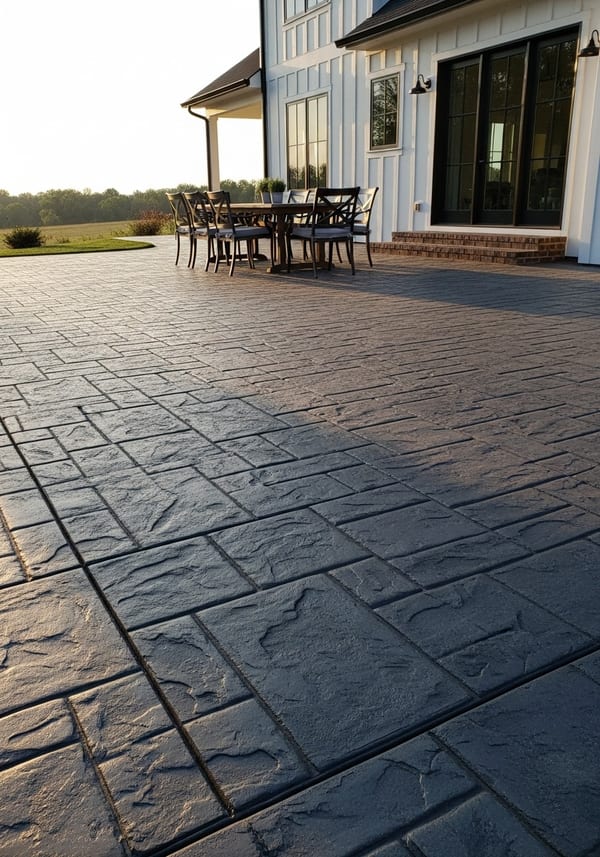
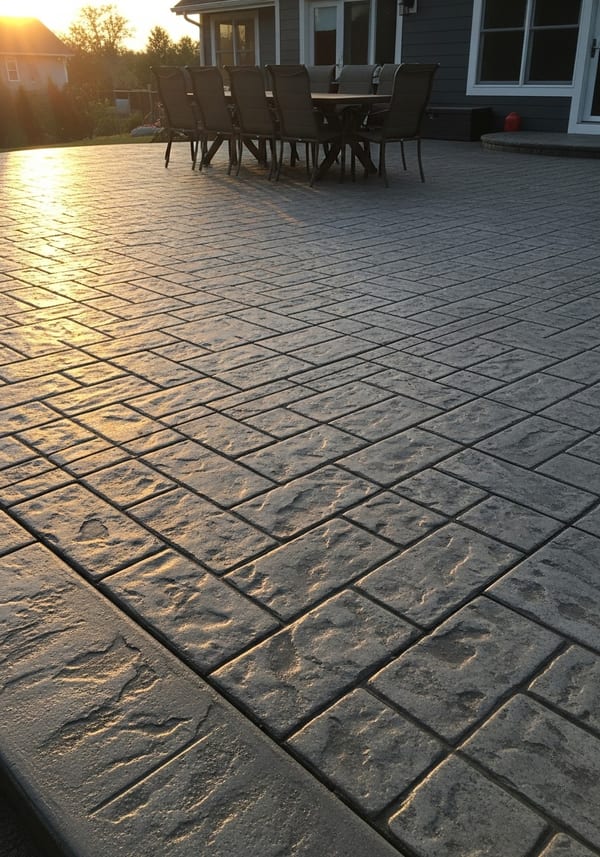
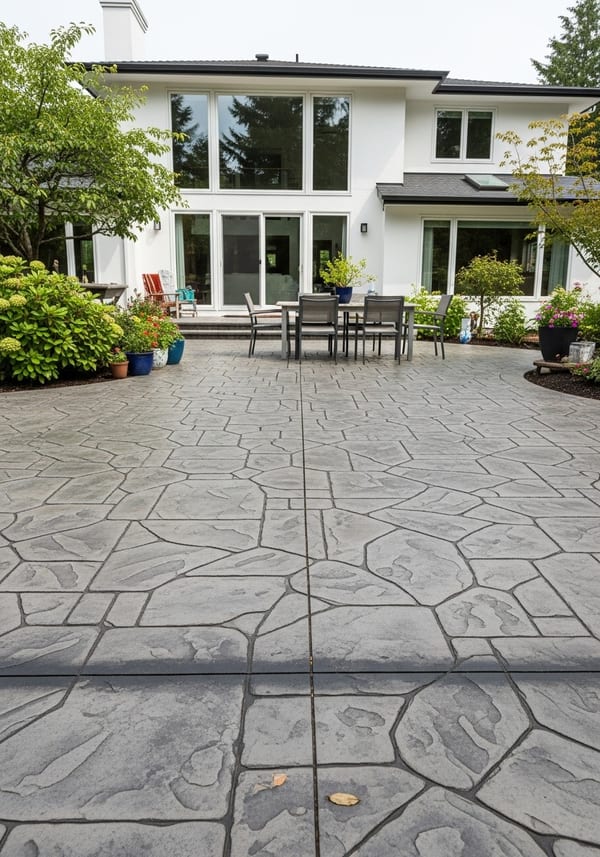
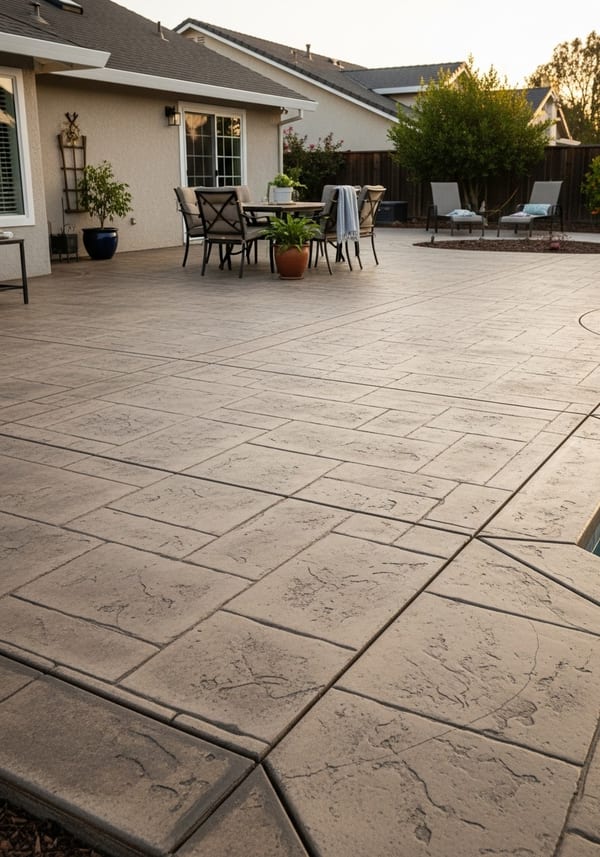
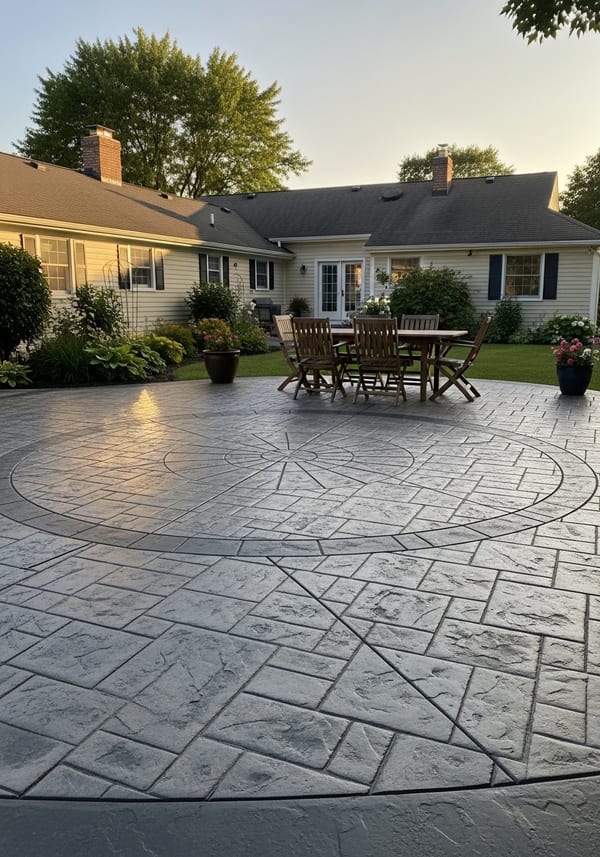
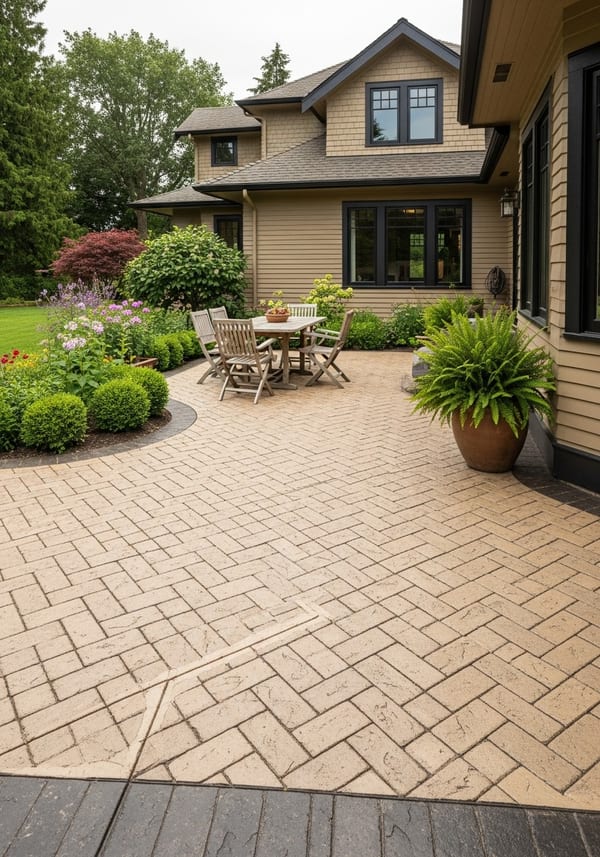
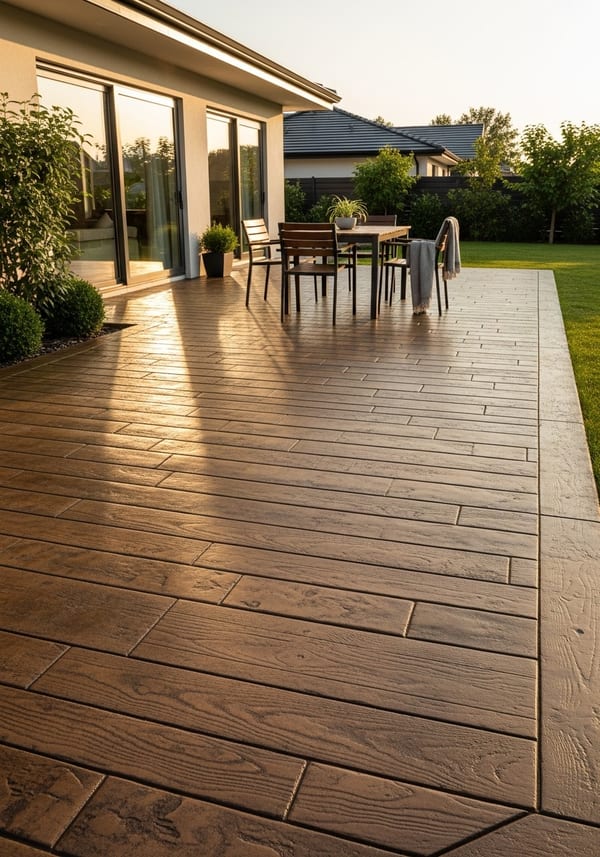
Stamped concrete is the most popular decorative patio finish in 2026, running $12–18 per sq ft installed. The three most requested patterns are ashlar slate (rectangular cut-stone look), cobblestone (old-world texture), and herringbone brick (classic interlocking diagonal). Single-color stamping with a release agent produces a subtle, natural variation. Multi-color release — where two or three accent tones are hand-applied over a base pour color — adds depth that reads as real stone from normal viewing distance. The cost difference between single and multi-color is $1–3 per sq ft, mostly labor. On a 300 sq ft patio, stamped concrete runs $3,600–5,400 total. Sealing every 2–3 years with a film-forming acrylic sealer maintains color depth and protects the surface from UV fading and freeze-thaw damage.
Modern Concrete Patio Designs
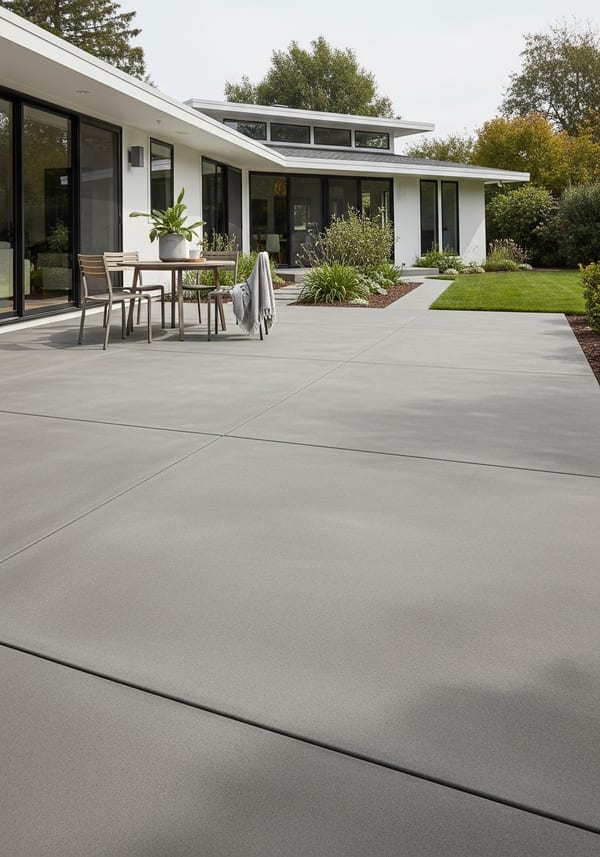
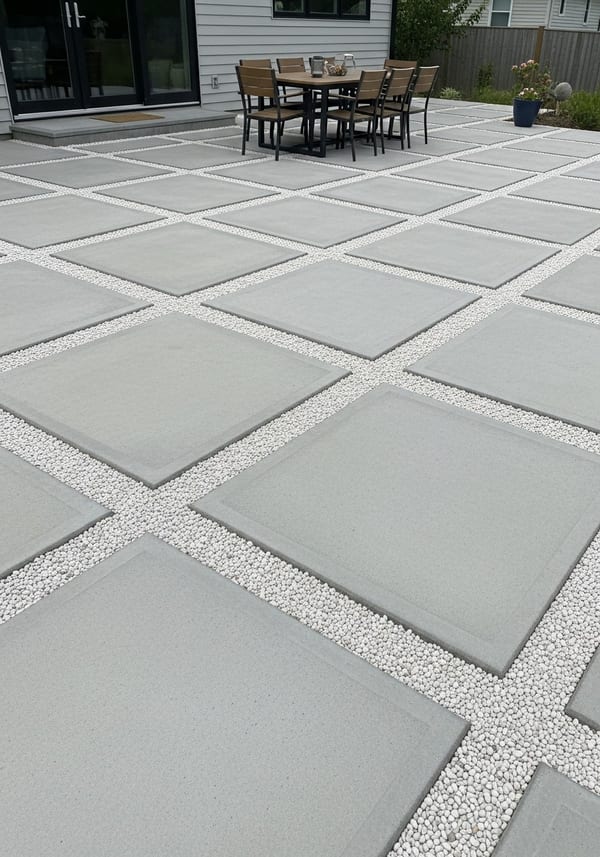
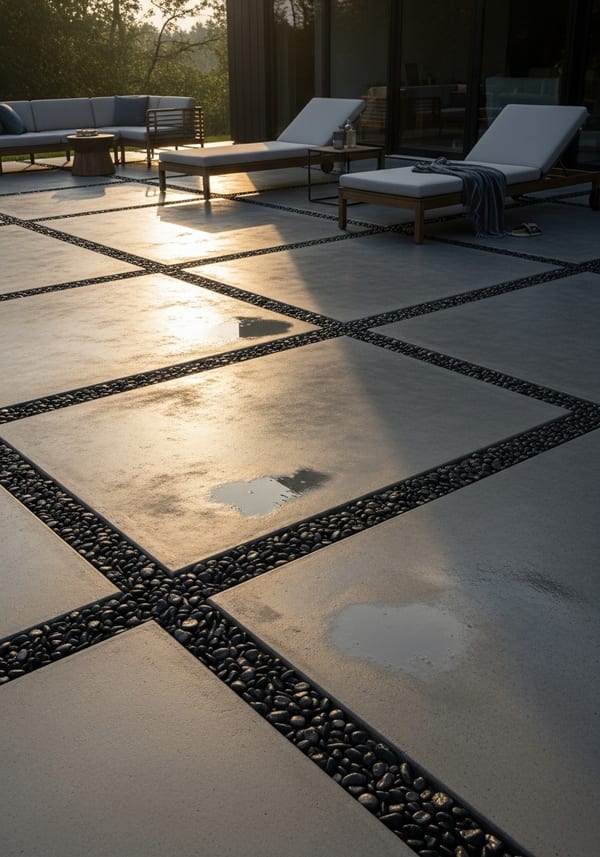
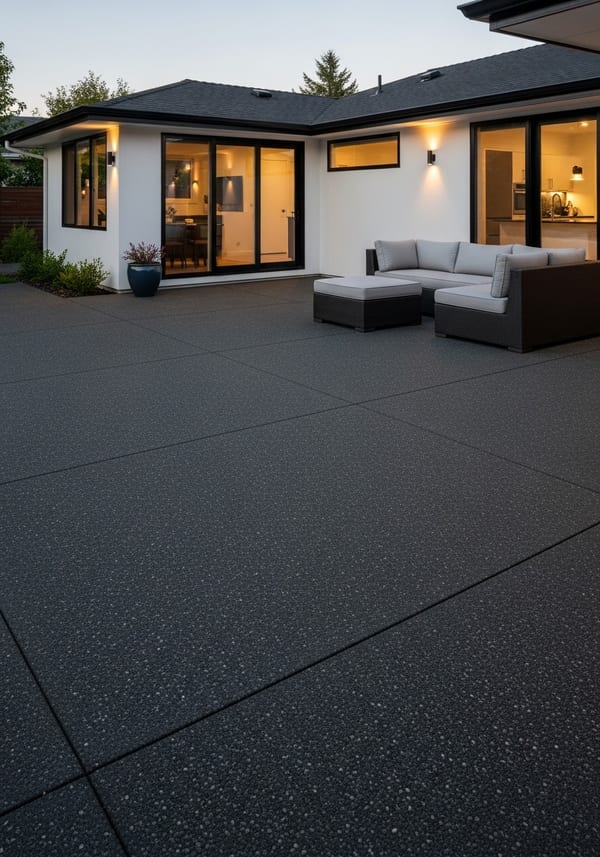
Modern concrete patios rely on clean lines, dark tones, and geometric scoring rather than stamped texture. Scored grid patterns — shallow saw cuts at 24–36 inch intervals — create a large-format slab look at $8–14 per sq ft, well below the cost of actual large-format pavers ($20–35/sq ft). Charcoal or dark grey integral pigment paired with a matte sealer gives the surface a contemporary, architectural quality. Minimalist scoring works best on patios 200 sq ft and larger where the grid has room to repeat. For smaller spaces, a single diagonal score line or an asymmetric pattern avoids the busy feel that tight grid spacing creates. River rock or pea gravel borders between scored sections add contrast without introducing a second material. The overall effect is restrained and intentional — closer to interior polished concrete than traditional outdoor stamping.
Exposed Aggregate Patio Ideas
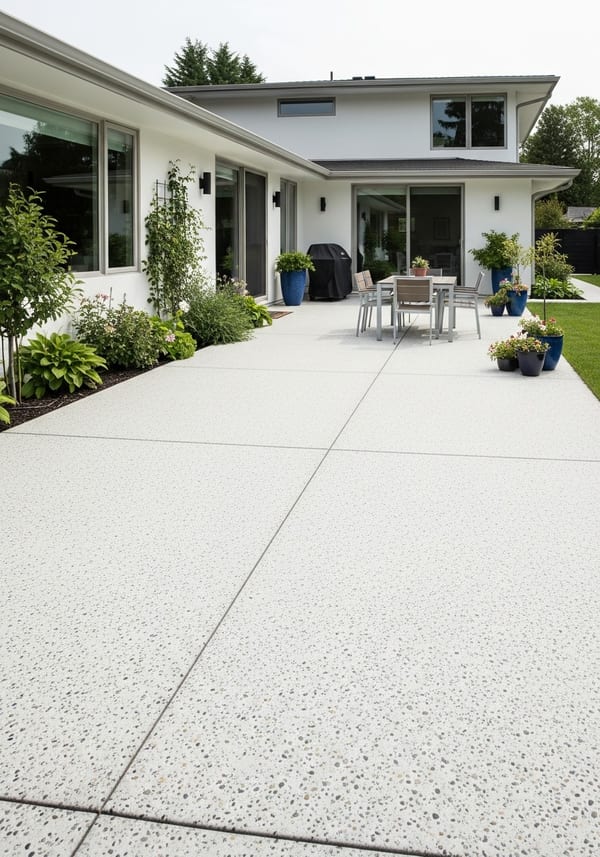
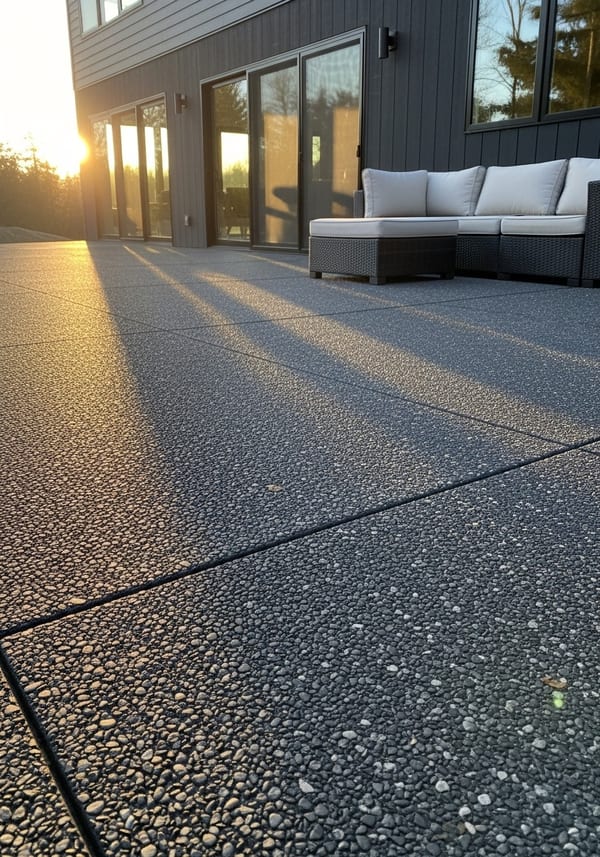
Exposed aggregate finishes reveal the natural stone within the concrete mix, creating a textured surface that's slip-resistant, durable, and visually interesting. Cost runs $8–14 per sq ft installed — a middle ground between plain and stamped. The finish is achieved by washing or chemically retarding the top layer of cement paste before it fully cures, exposing the aggregate below. Aggregate color selection drives the final look: warm buff and tan pebble mixes suit traditional homes; grey and charcoal river stone reads as contemporary. Exposed aggregate is one of the best choices for outdoor entertaining areas because it hides staining from food, drinks, and foot traffic better than any smooth surface. It also ages gracefully — the natural stone texture shows less wear over 10–15 years than stamped or colored finishes that depend on surface sealers for their appearance.
Budget Concrete Patio Ideas
Broom finish and salt finish are the two most cost-effective concrete patio options, running $6–10 per sq ft installed. Broom finish — parallel grooves drawn across fresh concrete — provides adequate grip and a clean, functional surface. Salt finish — rock salt pressed into wet concrete and washed out after curing — creates a subtle, organic pitting texture that looks more intentional than plain broom for roughly the same cost. Adding integral color ($2–4 per sq ft extra) transforms either finish from utilitarian grey to a warm sandstone, buff, or light charcoal that reads as a deliberate design choice. On a 300 sq ft patio, a colored broom-finish slab runs $2,400–4,200 total. Smart budget strategies: pour in fall when contractor demand drops 10–20%, bundle with a walkway or driveway pour to split mobilization costs, and skip decorative borders that add $2–4 per linear foot without proportional visual return on a budget project.
Stained and Colored Concrete Patios
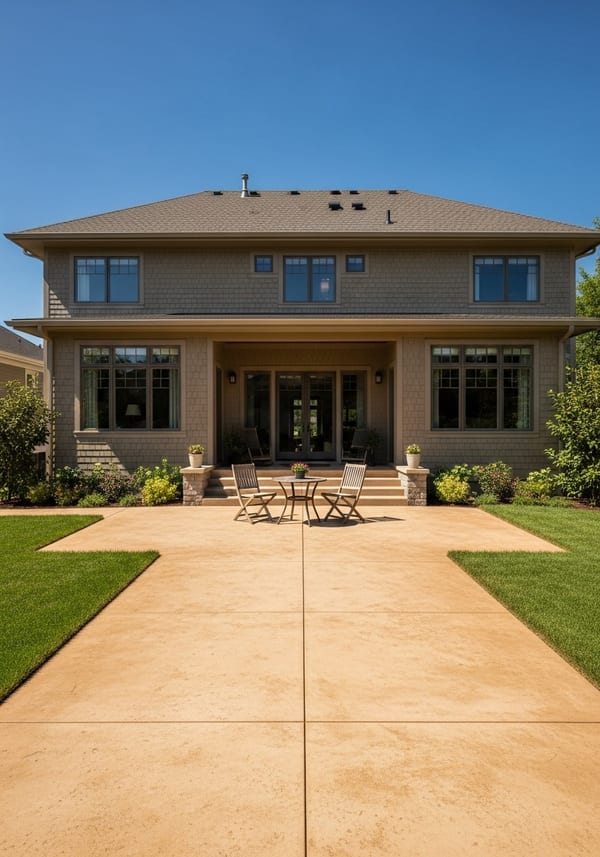
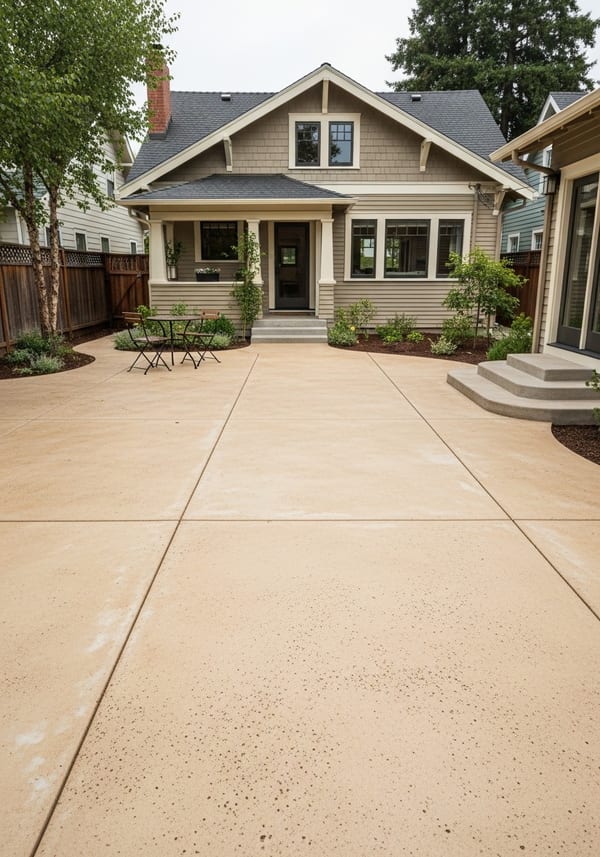
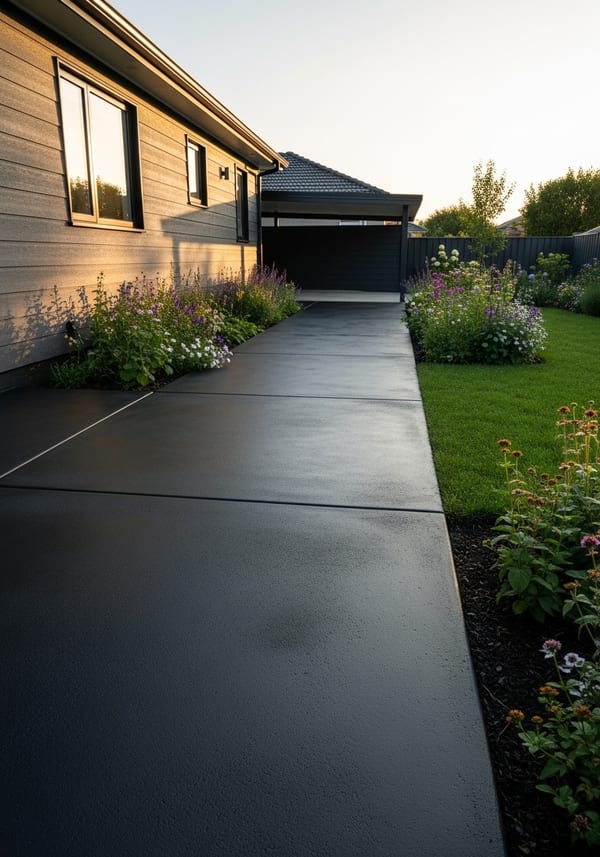
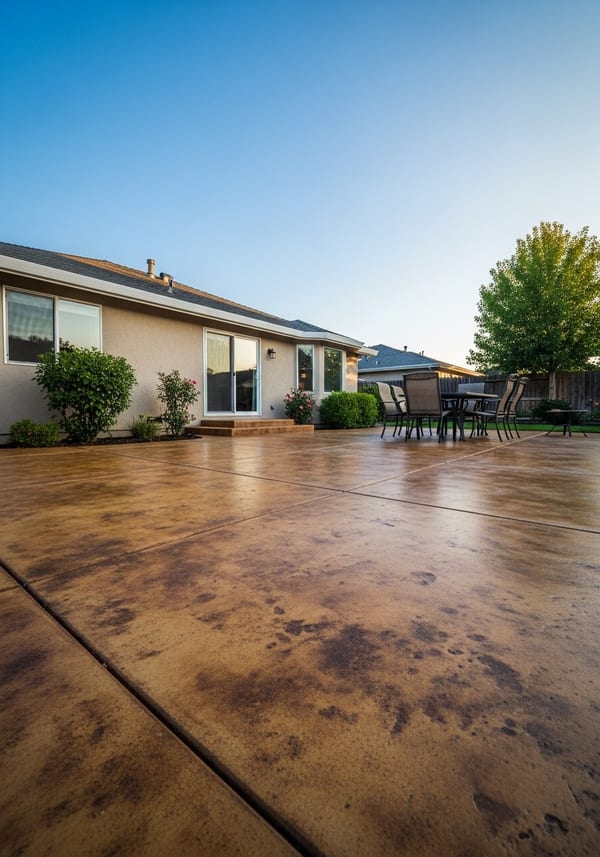
Three methods add color to concrete patios, each with different cost and durability profiles. Acid stain ($2–4 per sq ft applied) reacts chemically with the cement to produce translucent, mottled earth tones — browns, ambers, and blue-greens — that look organic rather than painted. Water-based stain ($1–3 per sq ft) offers a wider color palette including greys, blacks, and custom tones, with more uniform coverage than acid stain. Integral color ($2–4 per sq ft added to the mix) runs through the full slab depth and is the most durable option since chips and wear never expose a different-colored base. For new patios, integral color is the strongest long-term choice. For existing concrete, acid or water-based stain is the most cost-effective upgrade at $1–4 per sq ft — transforming a tired grey slab without demolition. All stained and colored surfaces require sealing every 2–3 years to maintain color depth and UV resistance.
Concrete Pool Deck Ideas
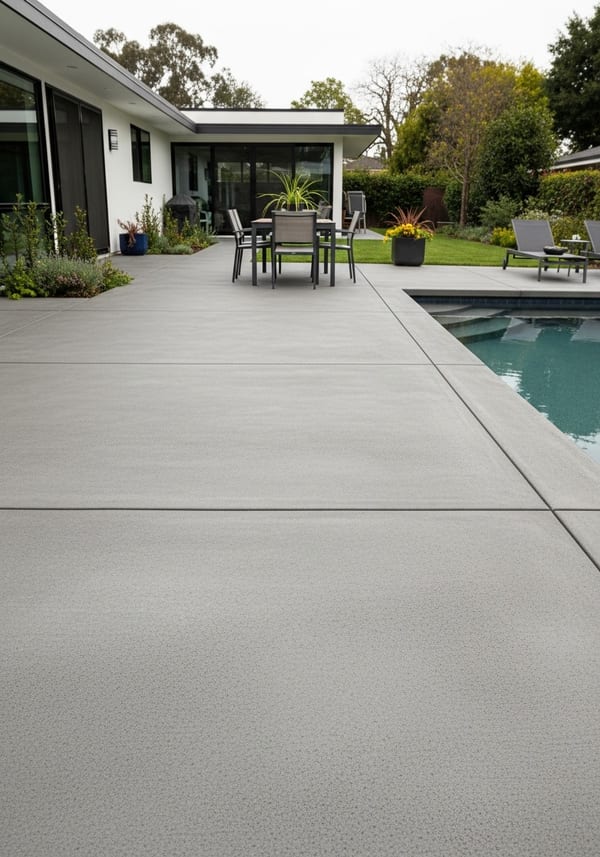
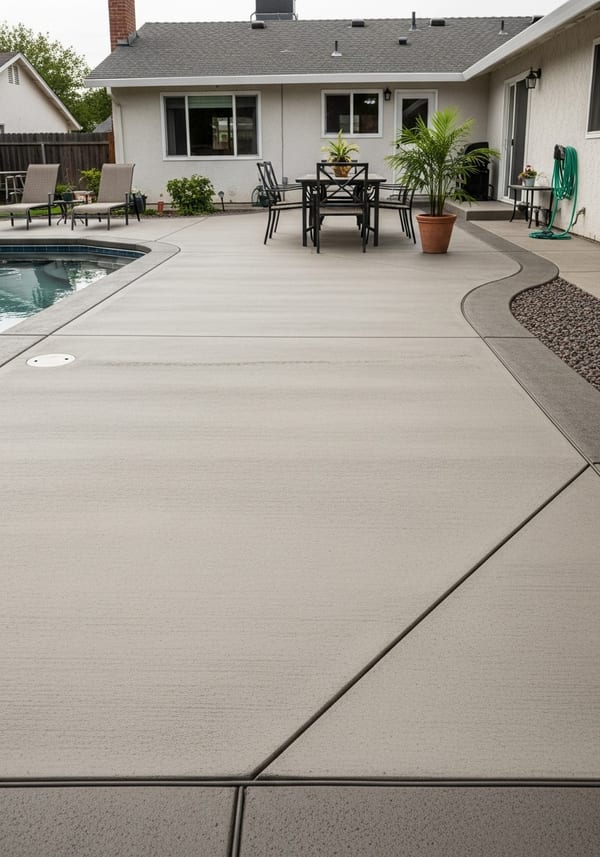
Pool deck concrete must balance three demands: slip resistance when wet, cool surface temperature in direct sun, and resistance to pool chemical staining. Broom finish ($6–10/sq ft) with a light integral color is the budget baseline — the texture grips wet feet and a buff or sandstone tone stays cooler than plain grey. Exposed aggregate ($8–14/sq ft) is the best all-around performer — naturally slip-resistant, hides chemical stains, and can be specified in a light aggregate mix that scatters heat. Travertine-look stamped concrete ($12–18/sq ft) delivers the highest visual impact but requires a non-slip sealer additive (silica sand broadcast into the wet sealer coat) for safety. Avoid dark colors on south-facing pool decks — charcoal concrete in direct afternoon sun can reach temperatures 40–60°F above air temperature, uncomfortable for bare feet. Light-colored finishes stay noticeably cooler and are the default recommendation for pool surrounds.
Small Concrete Patio Ideas
Patios under 200 sq ft benefit from design strategies that make limited square footage feel intentional rather than cramped. Circle patterns — a round patio poured with curved forms — eliminate corners and create a garden-room feel that reads larger than the same area in a rectangle. Geometric scoring at a 45-degree angle to the house pulls the eye toward the corners and expands perceived width. Light colors (buff, sandstone, light grey) reflect more light and open the space visually. Skip decorative borders on small patios — they add visual weight and shrink the usable area. Budget range for a small concrete patio: $1,200–3,000 for 100–200 sq ft depending on finish. At this size, the cost difference between plain and stamped concrete is $600–1,200 — small enough that the stamped upgrade is often worth considering if the rest of the exterior is polished.
Concrete Patio Style Comparison
This comparison table summarizes cost, best use, and maintenance for every major concrete patio finish covered in this guide.
All costs are per square foot installed in 2026 and assume standard site conditions. Regional labor, demo of existing surfaces, and site access can shift prices 20–50% above these ranges. Every finish benefits from a quality sealer application — the resealing schedule is the single most impactful maintenance habit for any concrete patio.
| Style | Cost/sq ft | Best For | Maintenance |
|---|---|---|---|
| Broom finish | $6–10 | Budget patios, pool decks | Reseal every 3–5 years |
| Salt finish | $7–11 | Pool decks, casual patios | Reseal every 2–3 years |
| Exposed aggregate | $8–14 | Entertaining areas, garden patios | Reseal every 2–3 years |
| Stained concrete | $8–14 | Covered patios, modern spaces | Reseal every 2–3 years |
| Stamped concrete | $12–18 | Outdoor living, high-traffic areas | Reseal every 2–3 years |
Plan it with a free calculator
- Patio Cost CalculatorCompare installed patio cost across concrete, stamped, pavers, brick, stone and porcelain.
- Paver Patio Cost CalculatorInstalled cost, materials vs labor and a full material list for any paver patio.
- Concrete Finish SelectorRank 7 outdoor concrete finishes for your surface, climate, priority and style.
Frequently Asked Questions
How much does a concrete patio cost?
A concrete patio costs $6–20 per sq ft installed depending on finish. Broom finish runs $6–10/sq ft, exposed aggregate $8–14, stained concrete $8–14, and stamped concrete $12–18. On a 300 sq ft patio, that translates to $1,800–6,000. Regional labor, site prep, and demo of an existing surface can push costs 20–50% higher. Integral color adds $2–4/sq ft to any base finish.
What is the cheapest concrete patio option?
Plain broom-finish concrete at $6–10 per sq ft installed is the cheapest option. On a 300 sq ft patio, that's $1,800–3,000. To save further: pour in fall when contractor demand drops 10–20%, bundle with a driveway or walkway pour to split mobilization costs, and skip decorative borders. Adding integral color ($2–4/sq ft extra) makes a plain slab look intentional without approaching stamped pricing.
What is the best concrete finish for a patio?
It depends on use. Stamped concrete ($12–18/sq ft) is the best choice for visual impact and curb appeal — ashlar slate and flagstone patterns look like natural stone. Broom finish ($6–10/sq ft) is the best budget option with low maintenance. Exposed aggregate ($8–14/sq ft) is the best for pool-adjacent patios and outdoor entertaining because it's slip-resistant, hides staining, and ages gracefully. All finishes last 25–40 years with proper sealing.
Can you pour a concrete patio yourself?
Small broom-finish slabs (under 100 sq ft) are manageable DIY projects if you have basic forming and finishing skills — expect to save 40–50% on labor versus hiring a contractor. Stamped, stained, and decorative finishes are not realistic DIY projects: the timing windows are tight, pattern consistency requires experience, and mistakes in decorative concrete are difficult to fix after the fact. A DIY broom-finish patio costs roughly $3–5/sq ft in materials; hiring a contractor for the same finish runs $6–10/sq ft.
How thick should a concrete patio be?
Standard residential patios should be 4 inches thick with a 4-inch compacted gravel sub-base. This handles normal foot traffic, patio furniture, and light grill loads. For hot tubs (2,000–5,000 lbs filled), heavy stone planters, or outdoor kitchen structures, pour 5–6 inches with reinforced wire mesh or rebar. Control joints should be cut every 8–10 feet in each direction to manage shrinkage cracking. Thicker slabs cost $1–2/sq ft more but prevent cracking under concentrated loads.