
Cool Deck vs Kool Deck: What's the Difference?
October 10, 2026
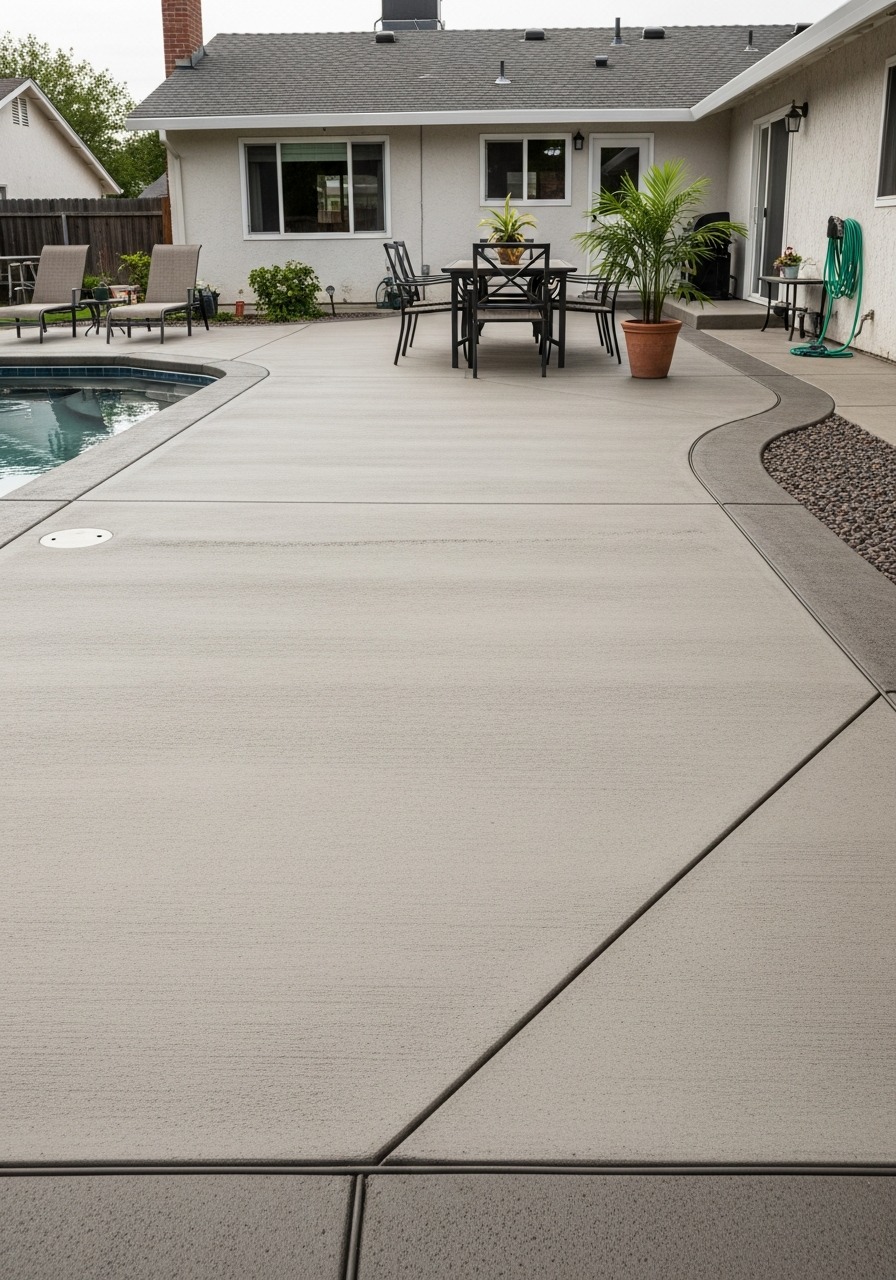
Kool Deck is a brand: a textured cement topping that Mortex invented in 1962 and still sells under that trademark. "Cool deck" is the generic name for any light, textured coating that keeps a pool deck cooler and less slippery than plain concrete. Both rely mainly on light color to stay cooler. A light-colored concrete mix can get much of the same benefit without a coating.
Cool Deck vs Kool Deck: Brand vs Category
The two terms get mixed up because one product named the whole category. Keystone Kool Deck was invented by Mortex in 1962, and Mortex lists Kool Deck as a trademark of Mortex Manufacturing Co. in Tucson, Arizona. When a pool builder says "cool deck", they may mean the Mortex product, a competing topping, or any light textured deck coating.
There are really three different options behind the name:
- Kool Deck (Mortex): a cement-based topping splashed onto fresh concrete on the day of the pour.
- Generic cool deck coatings: light-colored, spray-applied textured overlays, often acrylic-modified, that go over new or existing concrete. Concrete Network says these have been standard on Sun Belt pool decks for decades. It also notes they are not a pool deck paint.
- Light-colored concrete: no coating at all. A white-cement or light integral color mix with a grippy finish.
Ask your contractor which of the three is in the quote, and get the product name in writing.
How Kool Deck Is Installed
The Mortex contractor brochure describes a process tied to the concrete pour. The base slab is floated and given a single light broom pass so the topping can bond. The crew mixes the Kool Deck unit with white cement, 20-mesh marble sand and water into a thin, milky slurry. They splash it on twice with a dash brush, then trowel it flat while it is still wet.
The finished surface is meant to be about 40% smooth tops and 60% voids, which Mortex says prevents craze cracking. The topping should be no more than 1/8 inch thick. Applied to fresh concrete, it contains its own sealer and curing agents. Mortex advises keeping traffic and furniture off for about 21 days.
Because Kool Deck goes onto fresh concrete, it is a new-construction choice. Existing decks usually get a spray-applied cool deck coating or overlay instead.
Cool Deck vs Kool Deck vs Light Concrete Compared
| Factor | Kool Deck (Mortex) | Generic cool deck coating | Light-colored concrete |
|---|---|---|---|
| What it is | Cement topping, max 1/8 in thick | Spray-applied textured overlay | The slab itself, no topping |
| When applied | On fresh concrete, same day as the pour | New or existing concrete | At the pour |
| Texture | Knock-down splash, about 40% smooth / 60% voids | "Orange peel" spray texture | Broom, salt or exposed aggregate |
| Why it's cooler | Light color (manufacturer claim) | Light color plus texture | Light cement and pigment |
| Grip | Non-skid texture (manufacturer claim) | Textured; grit can go in the sealer | Depends on the finish |
Sources: Mortex, Concrete Network. The Concrete Network page promotes a coating brand, so treat its comfort claims as industry claims too.
How Much Cooler Is a Cool Deck?
Mortex says Kool Deck "significantly lowers the surface temperature of concrete" but publishes no number in its brochure, so treat that as a manufacturer claim. It also says its darker Designer Colors are warmer than standard Kool Deck colors. The physics behind every cool deck is independent of the brand. Surface heat follows solar reflectance (SR), the share of sunlight a surface bounces back.
- New cement concrete reflects about 0.30–0.50 of sunlight, falling to 0.20–0.35 as it ages and gets dirty. In one thermal image a light pavement was about 30°F (17°C) cooler than a dark one next to it (LBNL Heat Island Group).
- The cement matters most. In LBNL lab tests, white-cement concrete reflected 0.18–0.39 more than gray-cement concrete. Wet surfaces reflected less (Levinson & Akbari, LBNL).
- Color matters next. White-pigmented concrete measured 0.52–0.59, buff and sand 0.37–0.42, and dark tones 0.15–0.22 (Solomon Colors).
So the cooling comes mostly from light color, which a light concrete mix can also deliver. A pastel cool deck coating beats plain gray concrete. A charcoal one gives up most of the benefit.
Is Cool Deck Slippery?
Cool deck coatings are textured on purpose. Mortex calls Kool Deck a non-skid surface designed to reduce the risk of accidents when wet. That is a manufacturer claim, and we found no independent wet slip tests for it. Concrete Network says cool decking gives good traction while staying comfortable barefoot. If you want more grip, a clear plastic grit can be mixed into the sealer.
Sealer is where many decks get slick. Concrete Decor notes that film-forming sealers reduce a surface's built-in slip resistance, and recommends polystyrene grit on pool decks because it is gentler on feet than aluminum oxide. When a coated deck is resealed, ask for a low-sheen product with grit.
Cleaning, Repair and Recoating
Mortex's maintenance guidance for Kool Deck is simple:
- Hose off dirt and leaves, and rinse spills right away.
- Scrub stains with cleanser and a nylon brush. For heavier stains, scrub with a diluted granular dishwasher detergent.
- Expect gray mineral deposits where water evaporates over and over, such as at steps, sprinkler heads and diving boards. Mortex sells a cleaner for these.
- Patch chips with Mortex's premixed repair kit, which covers about 6 sq ft.
Mortex says the topping is unaffected by normal pool chemicals. Over years, cool deck surfaces fade, stain and wear smooth at the high points. They are commonly refreshed with a coating made for pool decks. If you recoat, keep it light-colored and low-sheen so you don't trade heat or grip for looks. Cracks in the slab below will show through any topping, so repair moving cracks first.
Cool Deck vs Salt, Broom and Exposed Aggregate
For a new pour, a textured concrete finish in a light color competes directly with a cool deck topping. This is how they compare:
| Finish | Barefoot feel | Wet grip | Watch out for |
|---|---|---|---|
| Cool deck / Kool Deck | Comfortable splash texture | Textured (manufacturer claim) | Topping wear; darker colors run warmer |
| Salt finish | Fairly smooth pits | Non-skid texture | Pits hold water in freeze-thaw climates |
| Broom finish | Can be harsh at medium texture | High; top wet class in testing | Ask for a light broom near the water |
| Exposed aggregate | Rough unless small or polished stone | Very high | Heat follows the stone color |
Sources: Concrete Network on rock salt finish, on broom finish and on exposed aggregate pool decks. Our pool deck finish selector ranks these for your climate. The full trade-offs are in best concrete finish for pool decks.
What Drives Cool Deck Cost
Published cool deck prices vary too widely to quote a reliable figure, so ask for itemized bids. Mortex says Kool Deck is less expensive than other deck surfacing products, which is a manufacturer claim. What we can give you is the base: as of 2026, plain poured concrete runs about $6–12 per sq ft installed. A Kool Deck topping is added on top of that new slab. A coating on an existing deck replaces demolition and a new pour.
Price drivers to compare across bids:
- New pour with topping vs coating an existing slab
- Crack repair and surface prep before coating
- Sealer type, and whether grit is included
- Color, since darker shades give up heat performance
To price the slab itself, use the patio cost calculator.
Which Should You Choose?
New deck in a hot climate: either a Kool Deck-type topping or a light concrete finish such as salt or light broom in a white or sand mix. Both rely on light color, so pick the texture you like underfoot. Existing deck that runs hot: a light cool deck coating is the practical fix, provided the slab isn't moving. Freeze-thaw climate: skip salt finish. Check any topping's cold-weather guidance, and use the concrete finish selector to see which finishes hold up. For layout ideas, browse these concrete pool deck ideas.