
Salt Finish Concrete
October 10, 2026
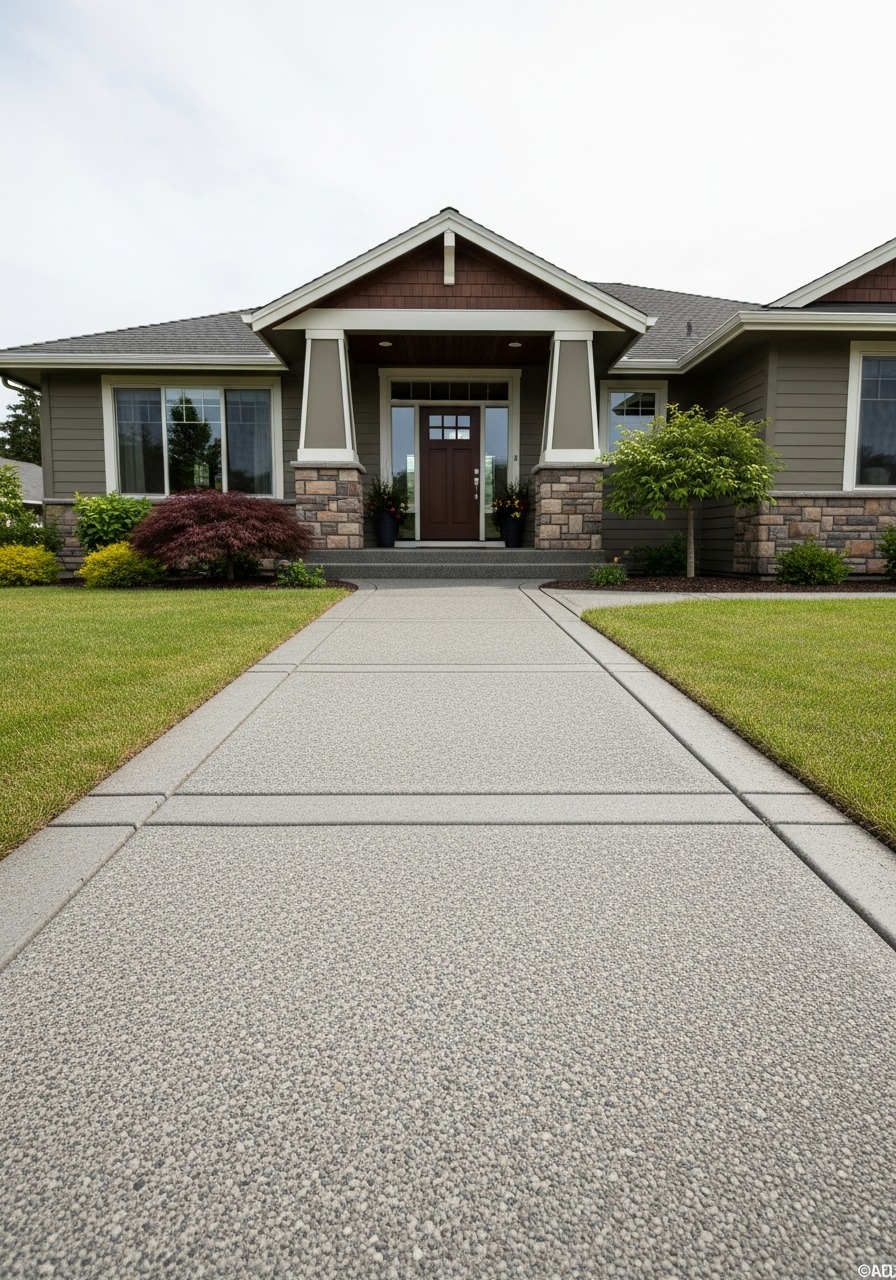
Salt finish concrete is plain or colored concrete with coarse rock salt pressed into the surface and washed out after it sets, leaving shallow pits that give non-skid grip. It costs about $1 per sq ft more than a plain slab, or roughly $7–13 installed. It suits patios and pool decks in warm climates. Where slabs freeze, water sits in the pits and can spall the surface.
Pros
- +About $1 per sq ft more than plain concrete
- +Non-skid texture favored by pool contractors
- +Smoother underfoot than a medium broom finish
- +Works with plain gray or integrally colored concrete
- +Non-directional texture suits curved and irregular slabs
Cons
- −Pits hold water that can freeze and spall in cold climates
- −Needs a sealer, applied only after the pits dry fully
- −Pits collect dirt and grit
- −Not a usual choice for driveways or heavy traffic
- −Dark colors run hot around pools
What Is Salt Finish Concrete?
A rock salt finish is a texture, not a coating. According to Concrete Network, the crew uses coarse rock salt, the kind sold for water softeners or as a deicer, with crystals 1/8 to 3/8 inch across. The salt is scattered over the slab when the concrete is just beginning to set, about when a finger leaves a 1/4 inch imprint. A steel roller presses each crystal in to about half its diameter. After the slab hardens, usually around 24 hours, the salt is power-washed away. Every crystal leaves a small hole behind.
Every trace of salt has to come out, or the surface can discolor. The only extra tool is the roller, which Concrete Network puts at around $100, so most flatwork contractors can offer the finish. The texture goes over a normal floated slab, so it works with plain gray concrete, integral color, or a colored concrete mix.
What a Rock Salt Finish Looks Like
Concrete Network describes the look as a speckled pattern of shallow indentations, similar to slightly pitted, weathered rock. From a few steps away the slab reads as a fine, even grain. Up close you see real surface depth. Unlike a broom finish, the texture has no direction, so it doesn't fight curved edges or odd-shaped patios.
Color changes the effect a lot. In buff or sand tones the pits soften into a stone-like surface. In charcoal they catch shadow and look more graphic. Contractors also use salt texture as a border around broom or stamped fields, or in large scored panels. Compare real examples: a salt finish walkway, a salt finish patio and a charcoal salt finish patio.
Is Salt Finish Concrete Slippery?
No. A salt finish is used because it grips. Concrete Network says it adds skid resistance to plain or colored concrete, and that it is still popular with pool contractors because of its non-skid texture. No published wet slip test isolates salt finish from other textures, so treat it as a grippy finish rather than a rated one.
Two details decide how it performs in practice. First, pigment doesn't change grip: Cement Concrete & Aggregates Australia found color has no effect on slip resistance. Second, the sealer does. The same research measured much higher wet readings with penetrating sealers than with film-forming coatings, and Concrete Decor's slip resistance guide notes that film sealers reduce a surface's built-in grip. On a pool deck or a sloped walk, use a penetrating sealer, or add a grit additive if you want a film sealer.
Salt Finish in Freeze-Thaw Climates
Climate is the main limit of this finish. Concrete Network warns that in areas with freezing weather, water collects in the indentations and freezes, which can cause spalling. That is why salt finish is common in the warm West and South. The same source adds that good-quality concrete with a waterproofing sealer should hold up in any climate. That is a best-case condition, not a guarantee.
If you live where slabs freeze, the general rules for exterior concrete from NRMCA still apply. Use air-entrained concrete, about 6% air for typical 3/4 to 1 inch aggregate. Use no deicers in the first winter. Never use ammonium- or magnesium-based deicers. Seal with a breathable silane or siloxane.
| Climate | Patio | Walkway | Driveway | Pool deck |
|---|---|---|---|---|
| Warm, no hard freeze | Good fit | Good fit | Possible | Good fit |
| Occasional freeze | Seal well | Seal well, no deicers | Choose broom | Seal well |
| Regular freeze-thaw with deicers | Only sealed, no deicers | Avoid | Avoid | Avoid |
Not sure where your project falls? The concrete finish selector flags salt finish automatically when you choose a freeze-thaw climate.
Plan it with a free calculator
Sealing a Salt Finish
Sealing matters more on a salt finish than on broom concrete, because every pit can hold water and dirt. Concrete Network gives the key timing rule: don't seal until the surface and the small recesses left by the salt have dried completely. Sealer trapped over damp pits can cloud.
Choose the sealer type for your climate and use:
- Cold climates: a breathable penetrating silane or siloxane, applied in late summer, as NRMCA recommends for freeze-thaw slabs. Concrete Decor warns that too much surface water breaks down film sealers and turns colored concrete white.
- Pool decks: a penetrating sealer keeps the most grip. A film sealer needs a grit additive.
- Colored or charcoal slabs: a sealer with UV protection helps keep the tone even.
Expect the pits to collect some grit. A hose and a stiff brush are usually enough, and pressure washing at moderate settings clears what settles in. For product types and schedules, see our concrete patio sealing guide.
Salt Finish Concrete Cost
As of 2026, plain poured concrete runs about $6–12 per sq ft installed for patios and walks. Concrete Network puts a basic salt finish at as little as $1 more per square foot, so a salt finish lands around $7–13 per sq ft. Integral color or added decorative work raises the price further.
| Project | Plain concrete | Salt finish (about +$1/sq ft) | Exposed aggregate |
|---|---|---|---|
| 200 sq ft walkway | $1,200–2,400 | $1,400–2,600 | $1,600–3,200 |
| 400 sq ft patio | $2,400–4,800 | $2,800–5,200 | $3,200–6,400 |
| 600 sq ft pool deck | $3,600–7,200 | $4,200–7,800 | $4,800–9,600 |
That makes salt one of the cheapest decorative upgrades. Exposed aggregate runs $8–16 per sq ft. Budget for sealing too, and for resealing over time. To price your own size and compare it with pavers or stamped concrete, use the patio cost calculator.
Salt Finish Pool Decks in Warm Climates
A pool deck is where salt finish makes the most sense. The pits give wet grip, and the texture is smoother underfoot than a medium broom, which Concrete Network says can be harsh on bare feet. In the Sun Belt, freeze-thaw risk is low.
Heat depends on color, not on the salt texture. Lawrence Berkeley National Laboratory reports that new cement concrete reflects about 30–50% of sunlight (solar reflectance 0.30–0.50), falling to 0.20–0.35 as it ages. Integral color moves that a lot. In Solomon Colors test data, white-pigmented concrete measured 0.52–0.59, buff and sand tones 0.37–0.42, and dark tones such as slate and bark 0.15–0.22. Dark integral color reflects roughly half as much sun as light tones. A charcoal salt finish looks sharp on a patio, but around a pool in full sun, pick a light buff, sand or white mix.
For decks that are already poured, a textured coating may be the better route. Read cool deck vs Kool Deck for how those coatings compare. To rank every finish for your deck, try the pool deck finish selector.
Salt Finish vs Broom vs Exposed Aggregate
These three are the common textured options for flat concrete. They differ most on climate tolerance, comfort barefoot and price.
| Factor | Salt finish | Broom finish | Exposed aggregate |
|---|---|---|---|
| Installed cost/sq ft | $7–13 (about +$1) | $6–12 | $8–16 |
| Look | Fine, random pits | Parallel lines | Exposed stones |
| Wet grip | Non-skid (no rated data) | High | Very high |
| Barefoot feel | Fairly smooth | Can be harsh at medium texture | Rough unless small or polished stone |
| Freeze-thaw | Weak: pits hold water | Standard exterior finish | Good when sealed |
| Sealing | Needed, after pits dry | Optional; advised in cold areas | Penetrating sealer lasts about 7–10 years |
Sources: Concrete Network for salt finish, NRMCA and Concrete Network for broom, Concrete Decor for exposed-aggregate sealing. For the head-to-head between the other two, see exposed aggregate vs broom finish, or read the full exposed aggregate guide.
When to Choose a Salt Finish
Choose salt finish when you want more texture than broom, you're on a budget, and your slab won't see hard freezes. That covers most patios, pool decks and garden paths in warm regions. It also works as a border around a broom or stamped field.
Skip it for driveways and walks in snow country, where deicers and freeze-thaw cycles work on the pits, and for areas you want to keep spotless, since the pits collect grit. If you're torn between finishes, the concrete finish selector ranks salt, broom, exposed aggregate, stamped and sandblasted concrete for your surface, climate and priorities. For pool surrounds, see the best concrete finish for pool decks.
Salt Finish Concrete in the real world


